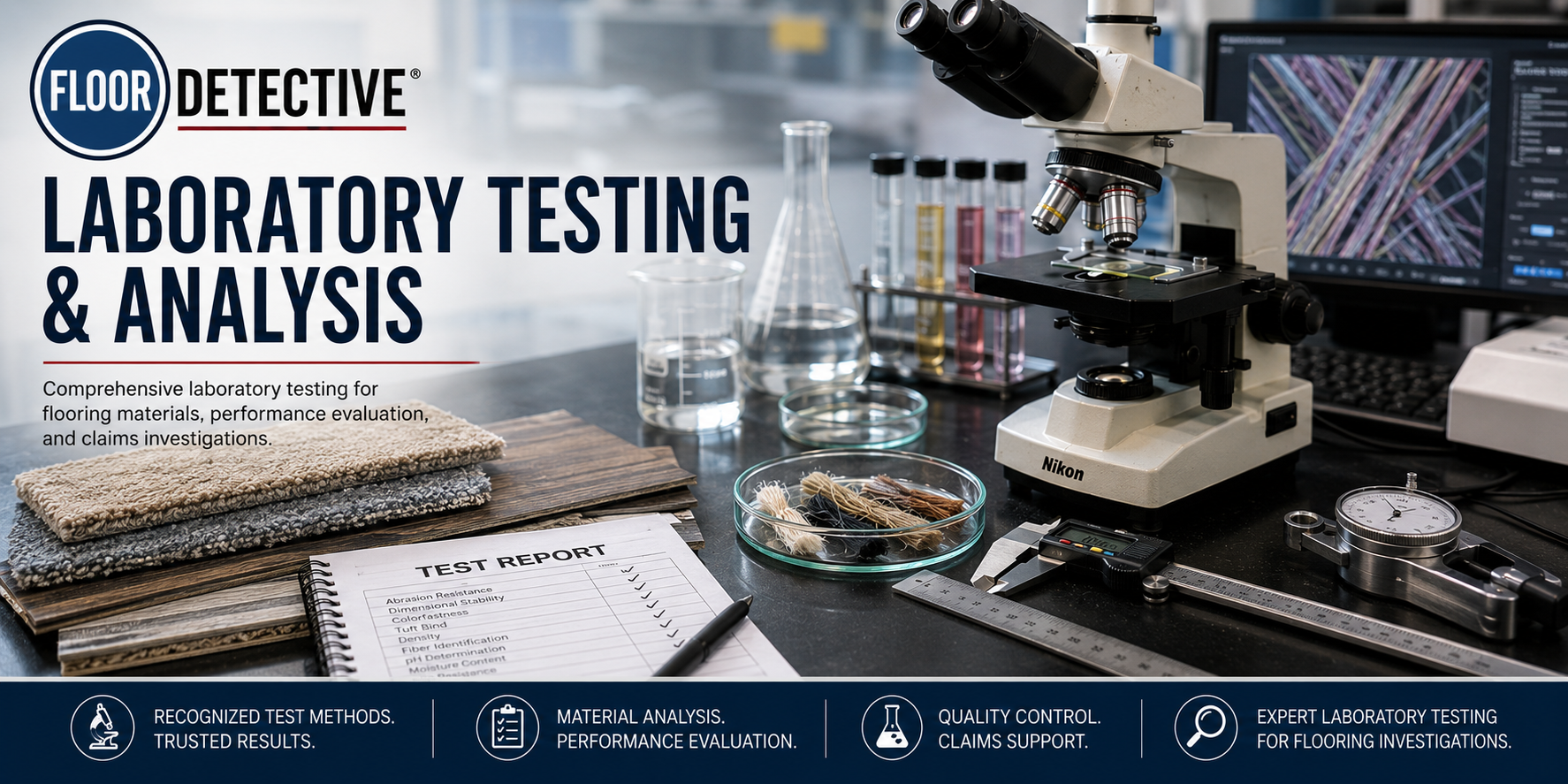
Flooring Laboratory Testing and Analysis
Floor Detective® Laboratory Testing Reference
Summary
Flooring laboratory testing assists in evaluating claims involving dimensional stability, appearance retention, bond integrity, surface wear, moisture influence, contamination, chemical exposure, slip resistance, material composition, construction properties, and environmental performance. Laboratory analysis is intended to supplement a comprehensive field inspection rather than replace it. Most flooring conditions result from the interaction of materials, installation methods, substrate conditions, environmental exposure, maintenance practices, and service use. Laboratory findings should therefore be interpreted together with field observations, installation history, environmental conditions, and observed pattern distribution. Test results alone do not independently establish product defect, cause, responsibility, or warranty coverage.
The Floor Detective® Laboratory Testing Library currently contains more than 45 laboratory test references covering carpet, resilient flooring, hardwood flooring, laminate flooring, ceramic tile, and related flooring materials. New laboratory references are added regularly.
Floor Detective® Laboratory Testing Reference pages summarize commonly used laboratory procedures encountered during flooring claims investigations. Each page explains the purpose of the evaluation, the general testing procedure, interpretation of laboratory results, limitations of the method, and how findings may relate to field conditions. These references are intended for educational purposes and should not replace the complete published laboratory standard or the professional interpretation of qualified laboratory personnel.
What You Need to Know
• Laboratory testing evaluates specific flooring characteristics under controlled conditions.
• Testing may assist when field observations alone are insufficient to evaluate the reported condition.
• Proper sample selection and field documentation are critical to meaningful interpretation.
• Laboratory findings must be correlated with installation history, environmental conditions, and field observations.
• Passing laboratory results do not automatically eliminate installation, maintenance, or environmental contributors.
• Failing laboratory results do not independently establish manufacturing defect or responsibility.
Purpose of Laboratory Testing
• Evaluate flooring material performance using recognized laboratory procedures.
• Compare field samples with known construction or performance characteristics.
• Assist in evaluating dimensional movement, wear, contamination, bond integrity, appearance change, or physical construction.
• Help distinguish material-related conditions from installation, maintenance, or environmental contributors.
• Provide analytical information that supports broader inspection and claims evaluation.
Field Correlation and Sample Selection
• Representative sample selection is essential to reliable laboratory interpretation.
• Samples should be selected based on the reported condition, affected areas, exposure history, and inspection findings.
• Improper sample selection may produce results that do not accurately represent the installation.
• Chain-of-custody documentation may be important in disputed claims or litigation matters.
• Laboratory findings should always be interpreted together with field observations, measurements, photographs, and installation context.
Limitations of Laboratory Testing
• Laboratory procedures evaluate specific characteristics only and do not replicate every real-world service condition.
• Many flooring claims involve multiple interacting contributors that may not be fully reproduced through laboratory simulation.
• Workmanship, substrate preparation, adhesive application, environmental fluctuation, maintenance exposure, and service conditions may significantly influence field performance.
• Laboratory analysis should be considered one component of a comprehensive flooring investigation rather than a standalone conclusion.
Carpet & Textile Laboratory Tests
• Aachen Dimensional Stability Test (Carpet Tile)
• AATCC 107 Colorfastness to Water Test
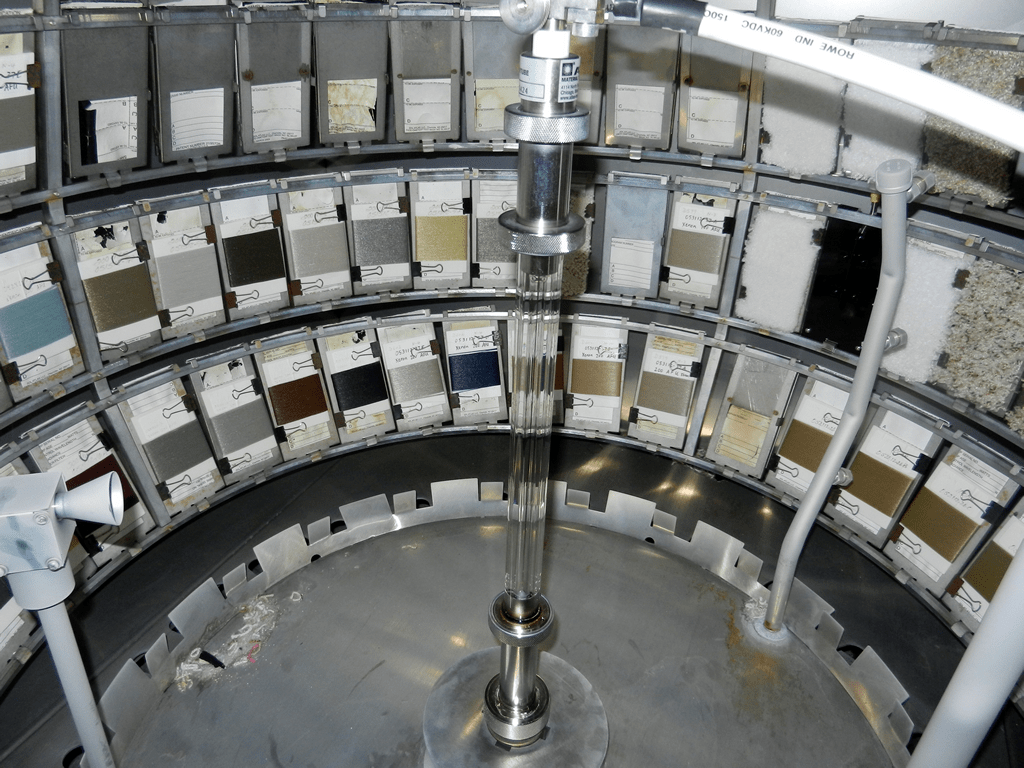
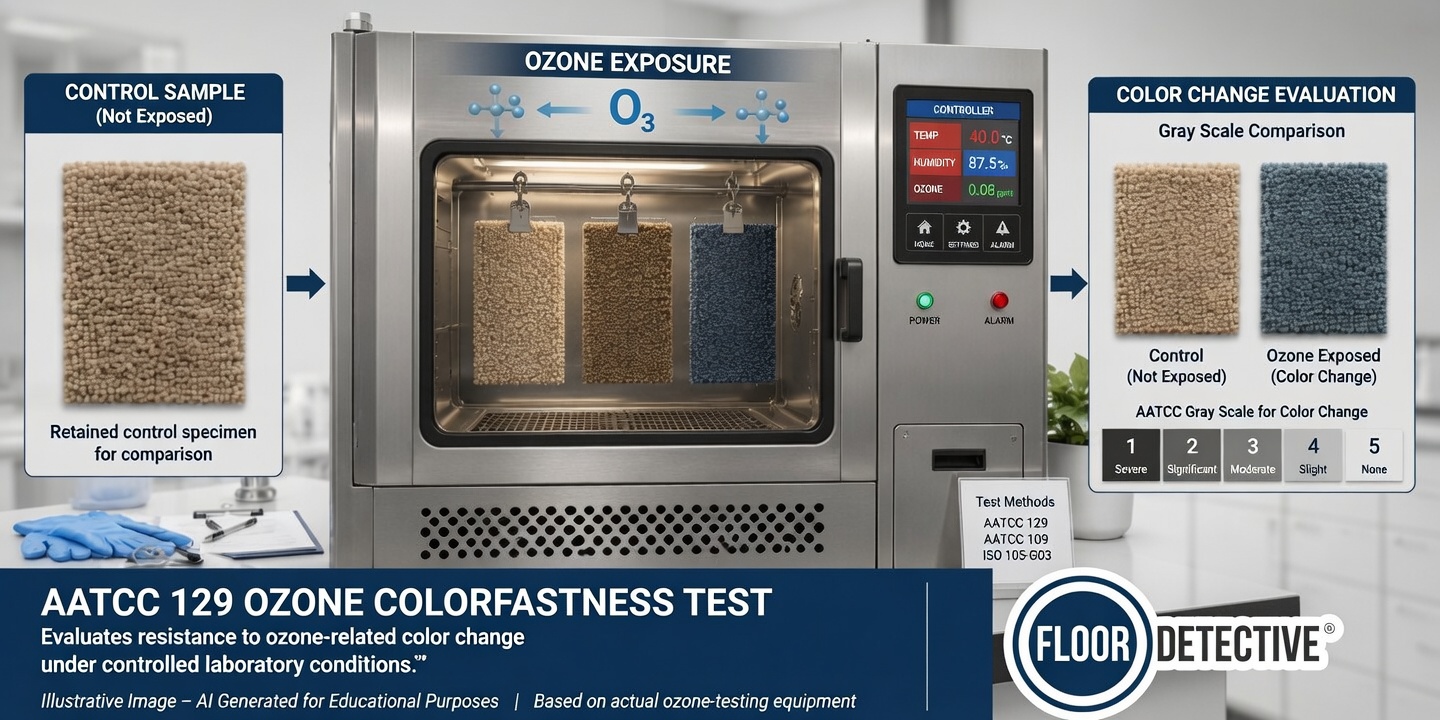
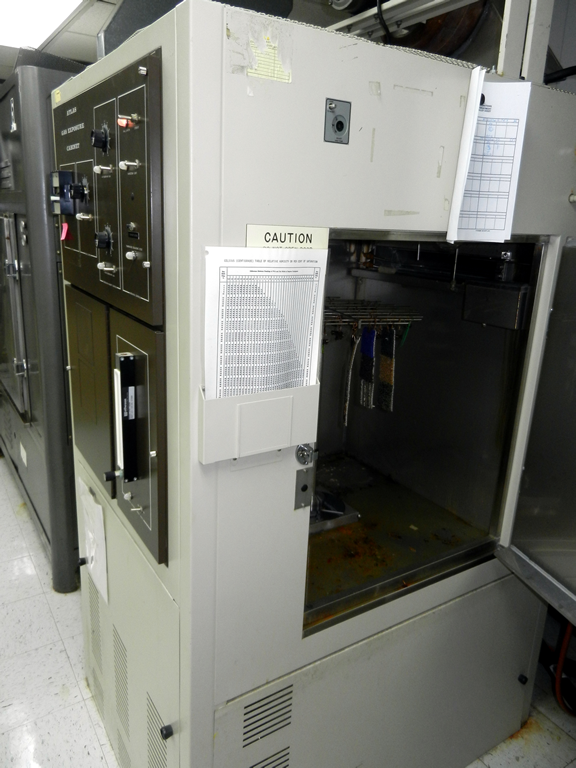
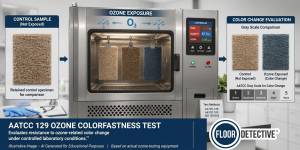
• AATCC 129 Ozone Colorfastness Test
• AATCC 138 Shampooing Test
• AATCC 165 Crocking Test / Carpet Color Transfer Resistance
• AATCC 16E Colorfastness to Light Test
• AATCC 171 Hot Water Extraction Test
• AATCC TM164 Colorfastness to Nitrogen Dioxide
• AATCC TM20 Fiber Identification Test
• Accelerated Soiling
• ASTM D1335 Tuft Bind Test
• ASTM D2257 Extractable Matter
• ASTM D5252 Hexapod Walker Test
• ASTM D5417 Vetterman Drum Test
• ASTM D5793 Gauge / Pitch / Shot
• ASTM D5793 Stitches Per Inch Test
• ASTM D5823 Pile Height / Tuft Height Test
• ASTM D5848 Pile Weight Test
• ASTM D7267 Edge Ravel Resistance Test
• Bundlewrap and Penetration Carpet Testing
• Carpet Appearance Retention Test / ASTM D6119 Contract Walker
• CRI Carpet Appearance Retention Scales
• Delamination of Secondary Backing
• Density of Textile Flooring Test
• DuPont Spot Bleed Test
• Fiber Degradation Test
• GMW 3205 Odor Evaluations
• Latex Weight Test (Carpet)
• pH Determination (Textile Fibers / Carpet)
• Phillips Roll Chair Test / Carpet Backing Stability
• Pile Thickness
• Presence of Benzoyl Peroxide
• Presence of Chlorides Test
• Tropical Fade Evaluation (Carpet)
• Velcro Roller Test
Hard Surface & Resilient Laboratory Tests
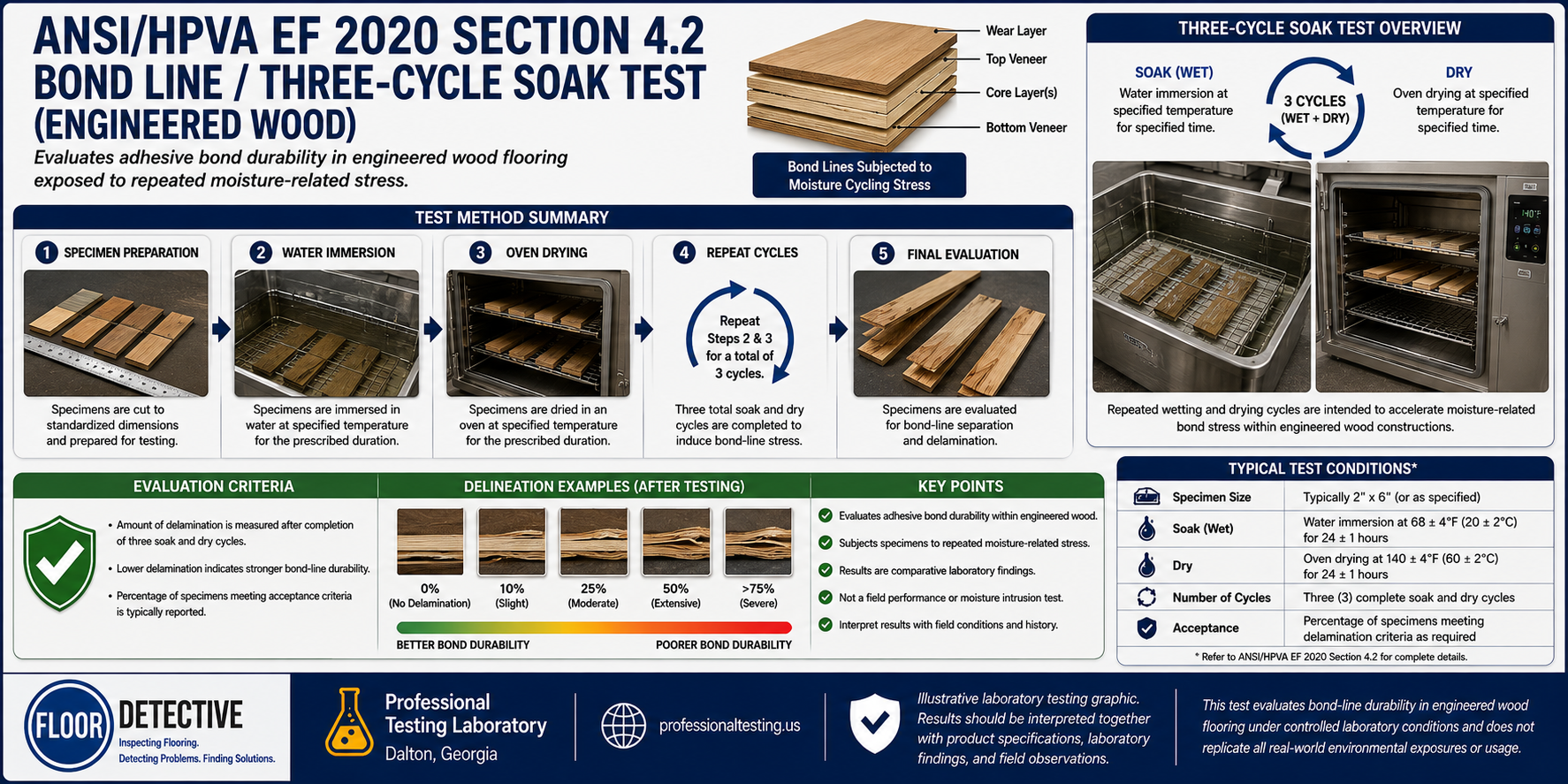
• ANSI/HPVA EF 2020 Section 4.2 Bond Line Three-Cycle Soak Test
• ASTM D2047 Static Coefficient of Friction Test
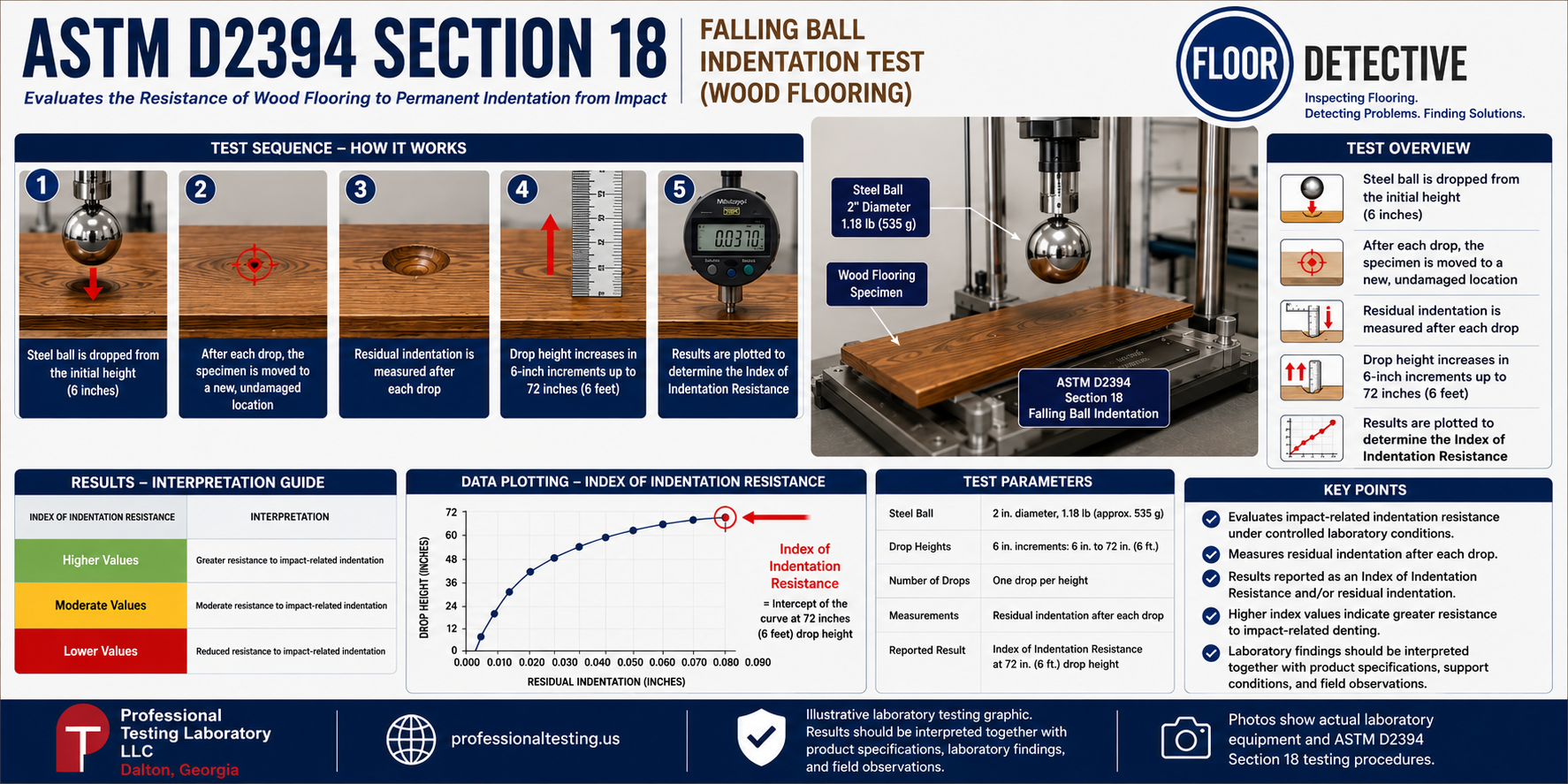
• ASTM D2394 Section 18 Falling Ball Indentation
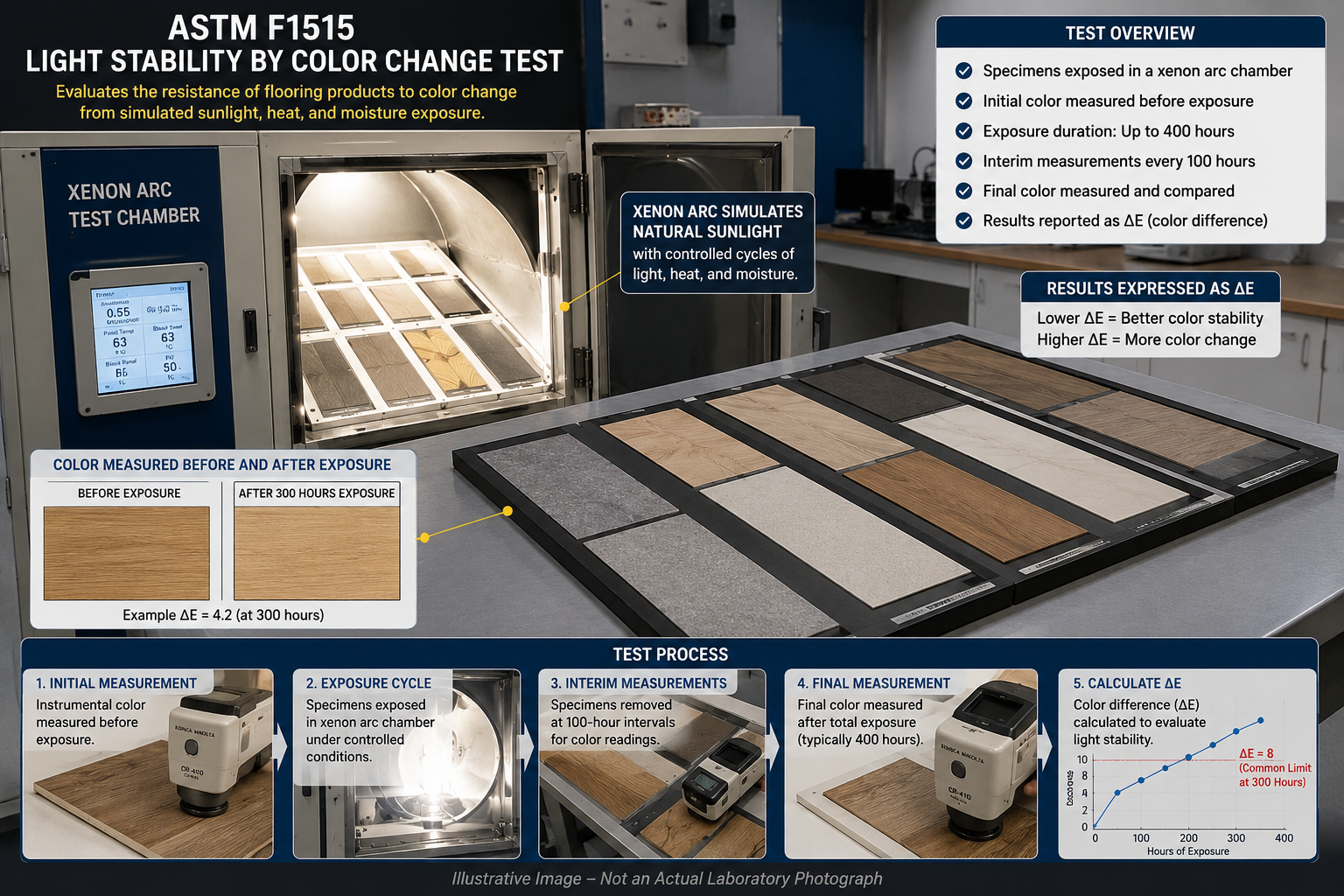
• ASTM F1515 Light Stability by Color Change Test
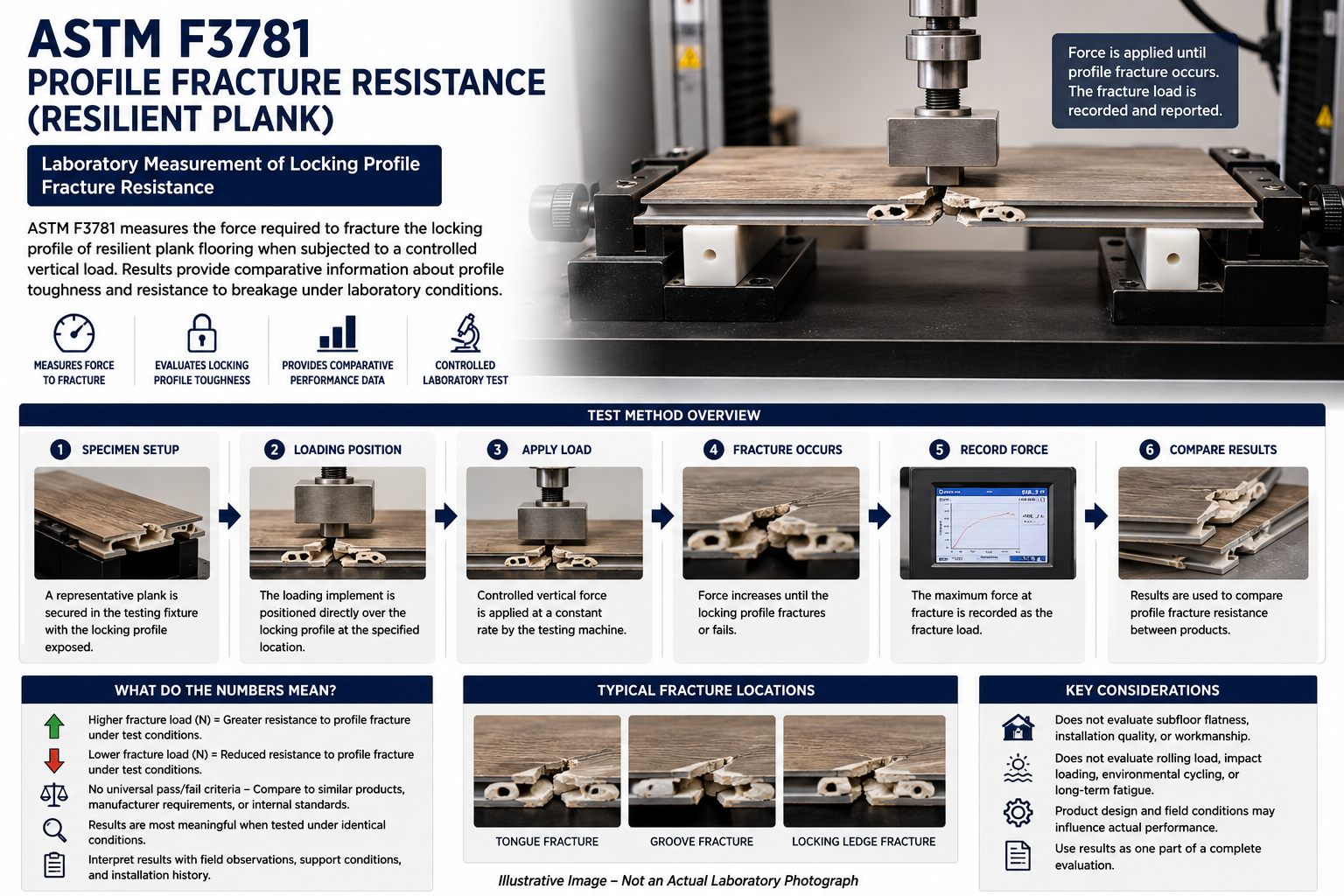
• ASTM F3781 Profile Fracture Resistance / Resilient Plank
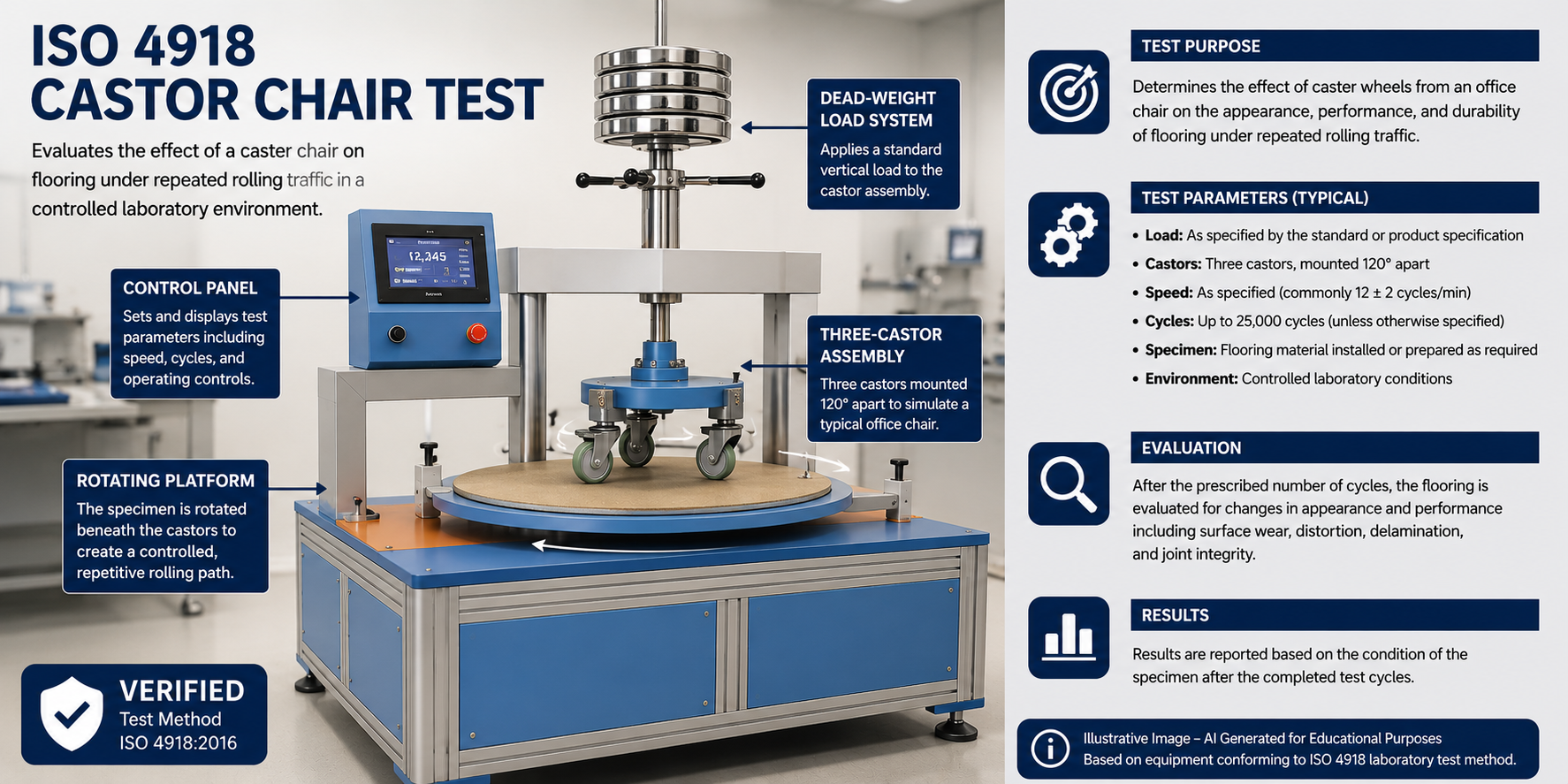
• Castor Chair Test ISO 4918
• EN 16094 Microscratch Test
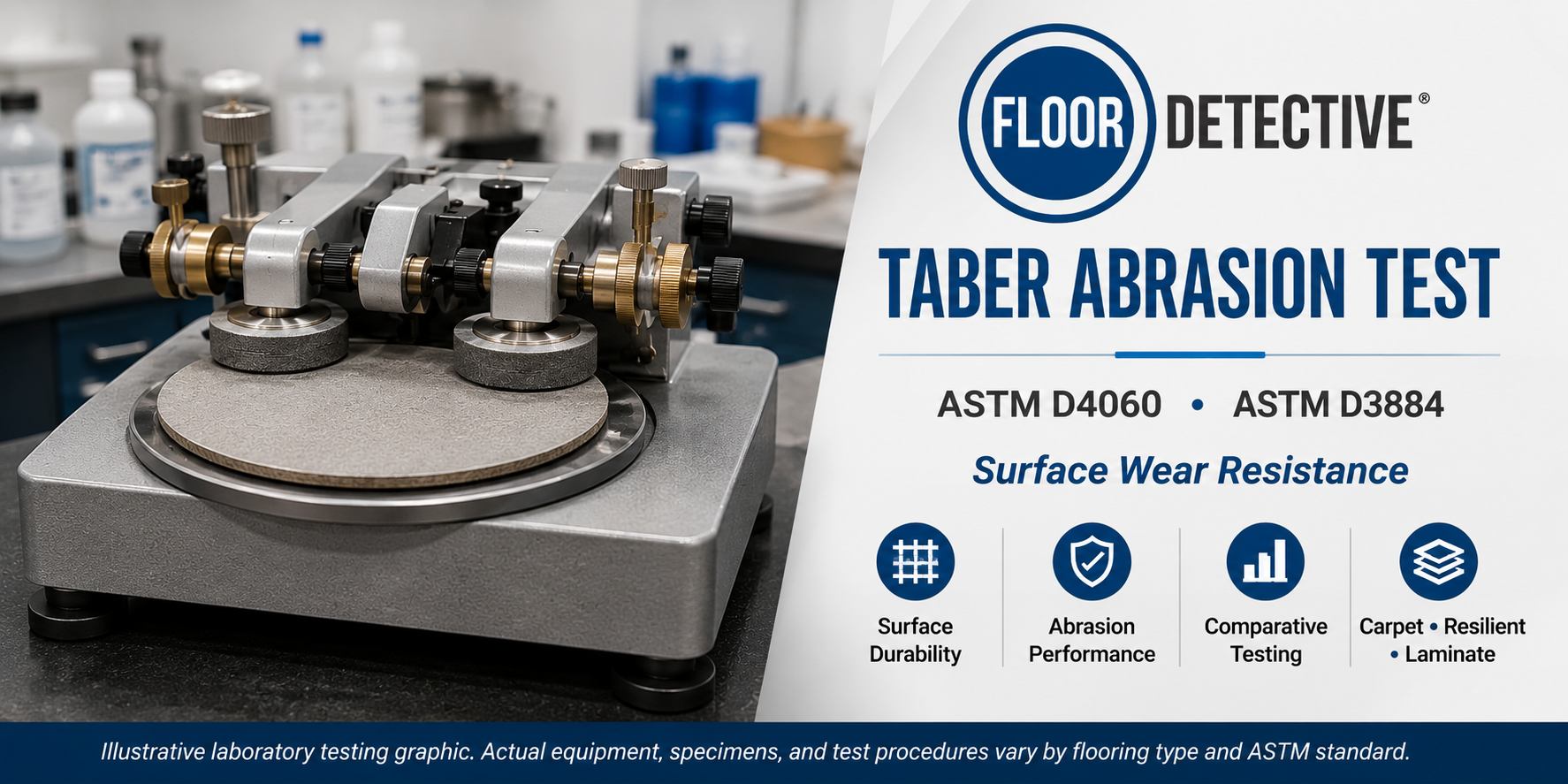
• Taber Abrasion Test
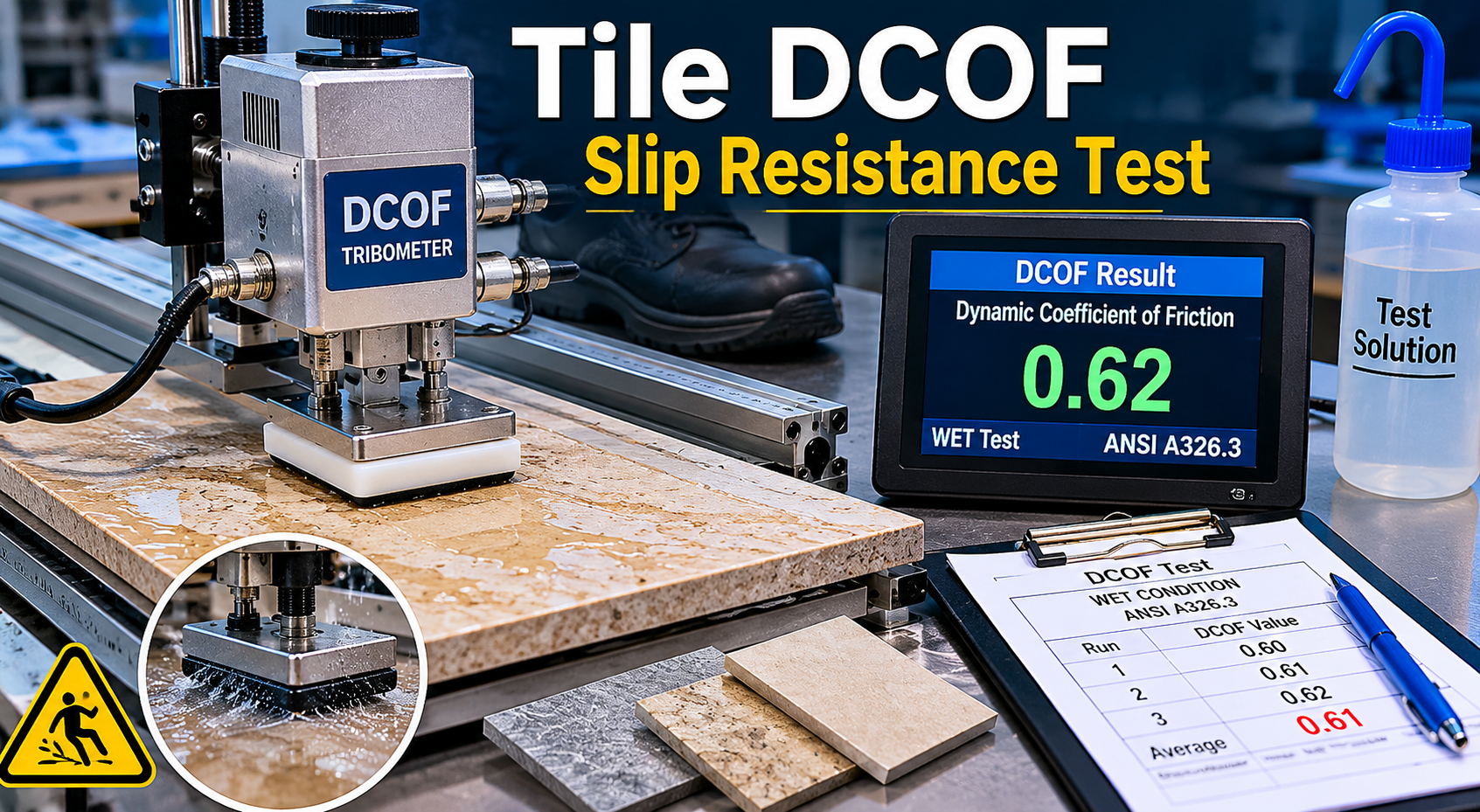
• Tile DCOF Slip Resistance Test
Laboratory Testing Context
• Independent flooring laboratories perform physical, chemical, dimensional, microscopic, and material analyses that may assist flooring claims investigations.
• Laboratory testing evaluates specific material characteristics under controlled conditions but cannot duplicate every field installation or service environment.
• Proper interpretation requires correlation of laboratory findings with field observations, installation methods, environmental exposure, maintenance history, and product construction.
• Independent laboratories such as Professional Testing Laboratory (PTL) provide analytical testing used throughout the flooring industry for product evaluation, quality control, and claims investigation.
Key Terms
• Dimensional Stability — Ability of a flooring material to maintain original size and shape under environmental exposure.
• Appearance Retention — Ability of a flooring material to maintain appearance under traffic or simulated use exposure.
• Bond Integrity — Strength and continuity of adhesion between flooring system components.
• Coefficient of Friction — Measurement of surface traction or slip resistance characteristics.
• Field Correlation — Interpretation of laboratory findings together with field observations and installation conditions.
• Material Analysis — Laboratory evaluation of a flooring material’s physical, chemical, or construction characteristics.
Related Pages
• ASTM D1335 Tuft Bind Test
• AATCC TM20 Fiber Identification Test
• ASTM D5252 Hexapod Walker Test
• Taber Abrasion Test
• ASTM D2047 Static Coefficient of Friction Test
Contributors
Professional Testing Laboratory (PTL)
David Zack
© 2015–2026 Floor Detective®
Current Revision Date: 06/13/2026
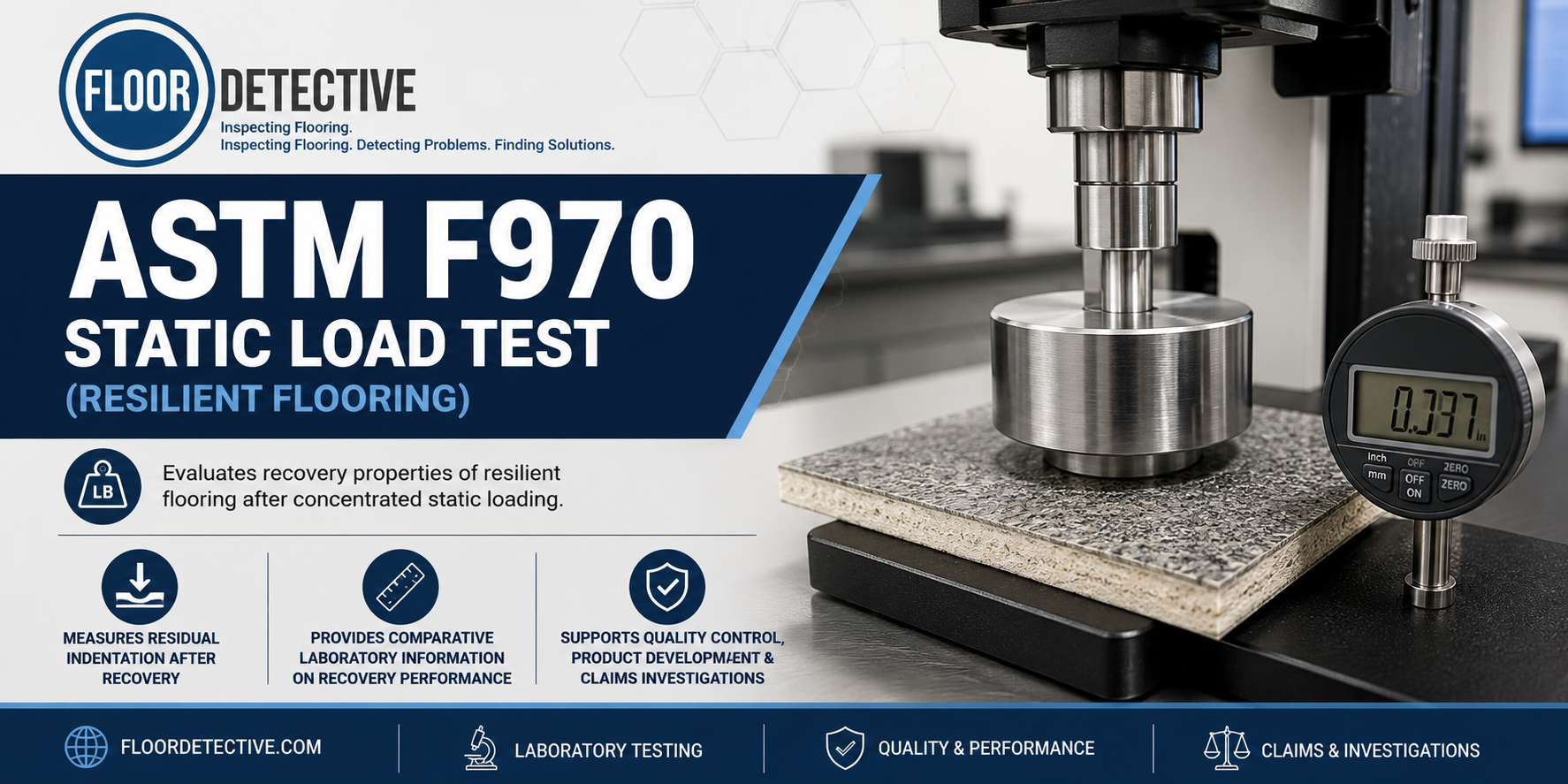
ASTM F970 Static Load Test (Resilient Flooring)
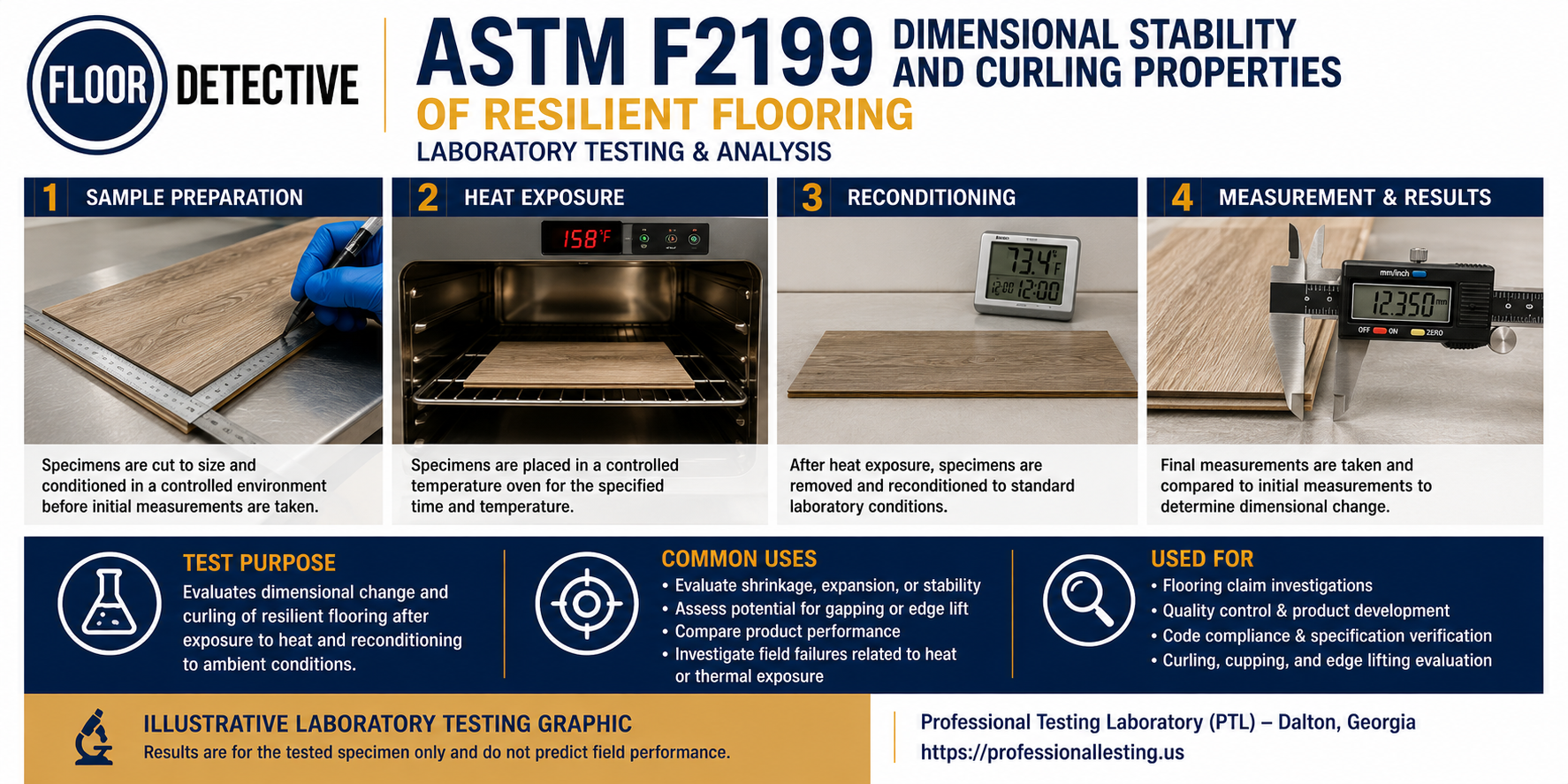
ASTM F2199 – Dimensional Stability and Curling Properties of Resilient Flooring
Tile DCOF Slip Resistance Test (ANSI A326.3)
Flooring Laboratory Testing and Analysis
ASTM F3781 – Profile Fracture Resistance (Resilient Plank)
Taber Abrasion – Surface Wear Resistance (Carpet, Resilient, Laminate)
Castor Chair Test ISO 4918
ASTM D2394 Section 18 Falling Ball Indentation
ASTM F1515 Light Stability by Color Change Test
ANSI/HPVA EF 2020 Section 4.2 – Bond Line / Three Cycle Soak Test