Laminate Floor Problems
Laminate Floor Problems
Floor Detective® Claims and Conditions Guide
Summary
Laminate floor problems commonly develop from moisture interaction, movement restriction, substrate irregularity, locking-system stress, or support-related conditions within the floating-floor assembly. Laminate flooring systems typically utilize high-density fiberboard (HDF) cores that remain dimensionally responsive when exposed to changing moisture conditions. Many visible conditions develop when moisture enters seams or edges, when expansion becomes restricted, or when unsupported movement repeatedly stresses the locking system. Damage patterns may include swelling, peaking, gaps, broken joints, surface wear, noise, or vertical movement depending on the exposure pathway and stress mechanism involved. Proper evaluation focuses on distribution pattern, environmental exposure, floating-floor behavior, substrate support, and locking-system response rather than appearance alone. See also Waterproof Laminate Information, Locking Systems, and Floating Floor Requirements for broader context.
What You Need to Know
• Laminate floor problems commonly involve moisture interaction, floating-floor restraint, support conditions, or locking-system stress.
• Most laminate flooring systems utilize fiber-based HDF cores that remain dimensionally responsive to moisture exposure.
• Joint areas, cut edges, and perimeter conditions are common locations for moisture intrusion and stress concentration.
• Floating-floor systems require adequate expansion space and uniform substrate support for proper movement behavior.
• Surface wear, impact damage, and environmental conditions may influence appearance and long-term performance.
• The visible condition alone does not independently establish cause and must be evaluated within the overall flooring-system context.
Primary System Mechanisms
• Moisture absorption may contribute to edge swell, core expansion, joint stress, or dimensional instability.
• Restricted movement may create compressive stress within the floating-floor assembly.
• Deflection or inadequate support may increase stress directly at locking edges and plank joints.
• Surface wear or abrasion may alter appearance without affecting structural integrity.
• Environmental conditions influence dimensional response, joint movement, and long-term flooring behavior.
Moisture and HDF Core Behavior
• Laminate flooring commonly utilizes high-density fiberboard (HDF) core construction.
• HDF cores absorb and release moisture depending on surrounding environmental conditions.
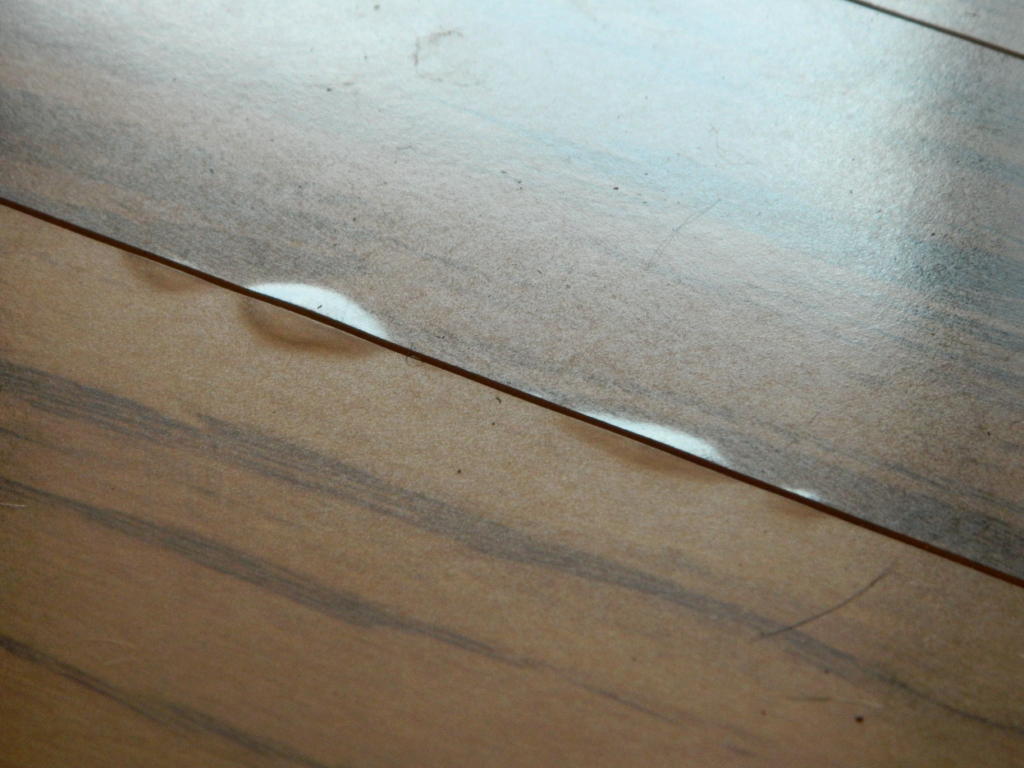
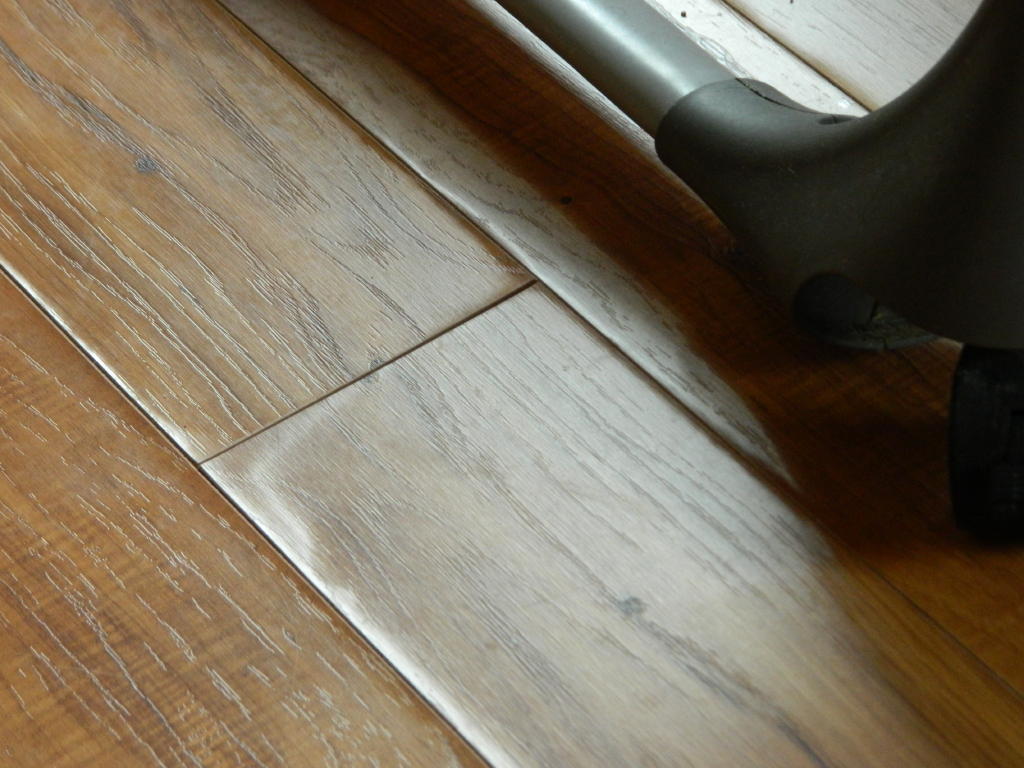
• Moisture intrusion through seams, edges, cut ends, or beneath the flooring may result in dimensional expansion.
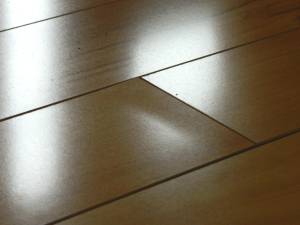
• Edge swell, peaking, joint stress, or locking damage may develop when expansion exceeds available movement space.
• Topical spills, wet cleaning, elevated humidity, plumbing leaks, or substrate moisture may influence system response differently depending on exposure pathway and duration.
Floating-Floor Movement and Restraint
• Laminate flooring systems are designed to move laterally as environmental conditions change.
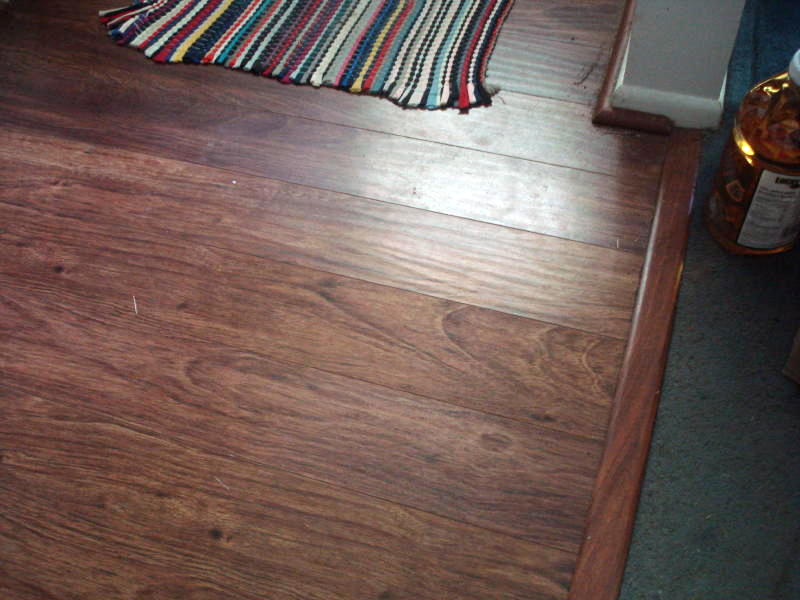
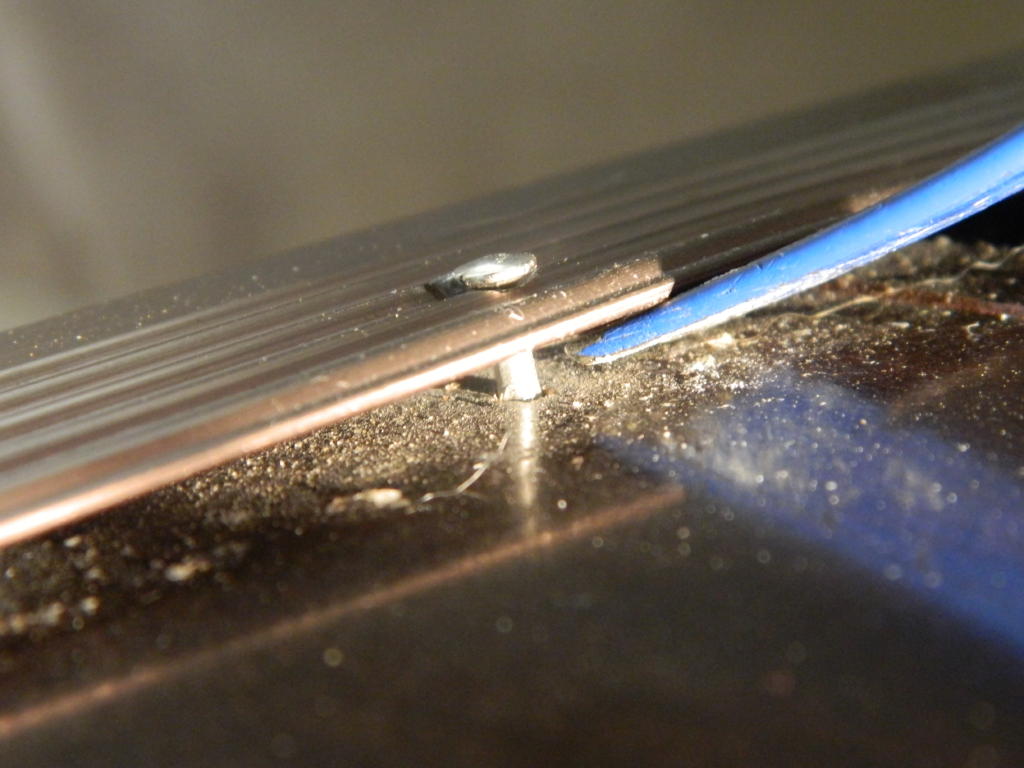
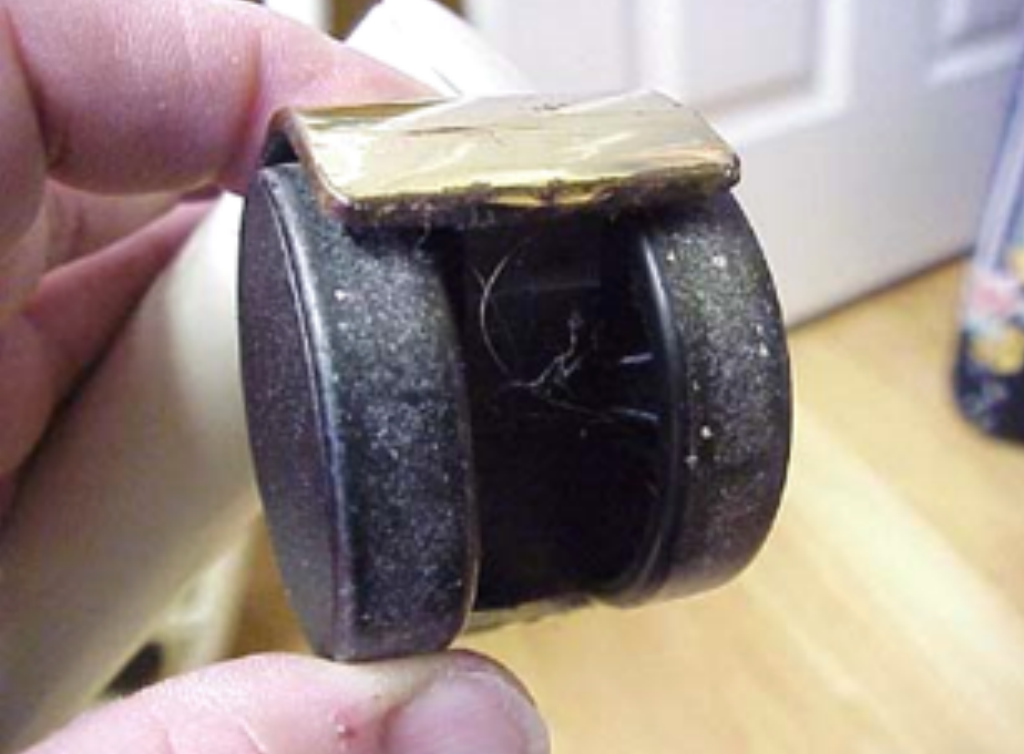
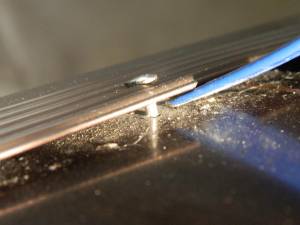
• Inadequate expansion space, restrictive trim, fixed cabinetry, heavy point loads, or pinch points may limit intended movement.
• Restricted expansion may transfer compressive stress directly into locking joints and plank edges.
• Missing transitions or oversized continuous runs may increase stress across multiple plank rows.
• Movement-related conditions commonly appear near doorways, perimeter restrictions, transitions, or fixed vertical surfaces.
Support, Deflection, and Subfloor Influence
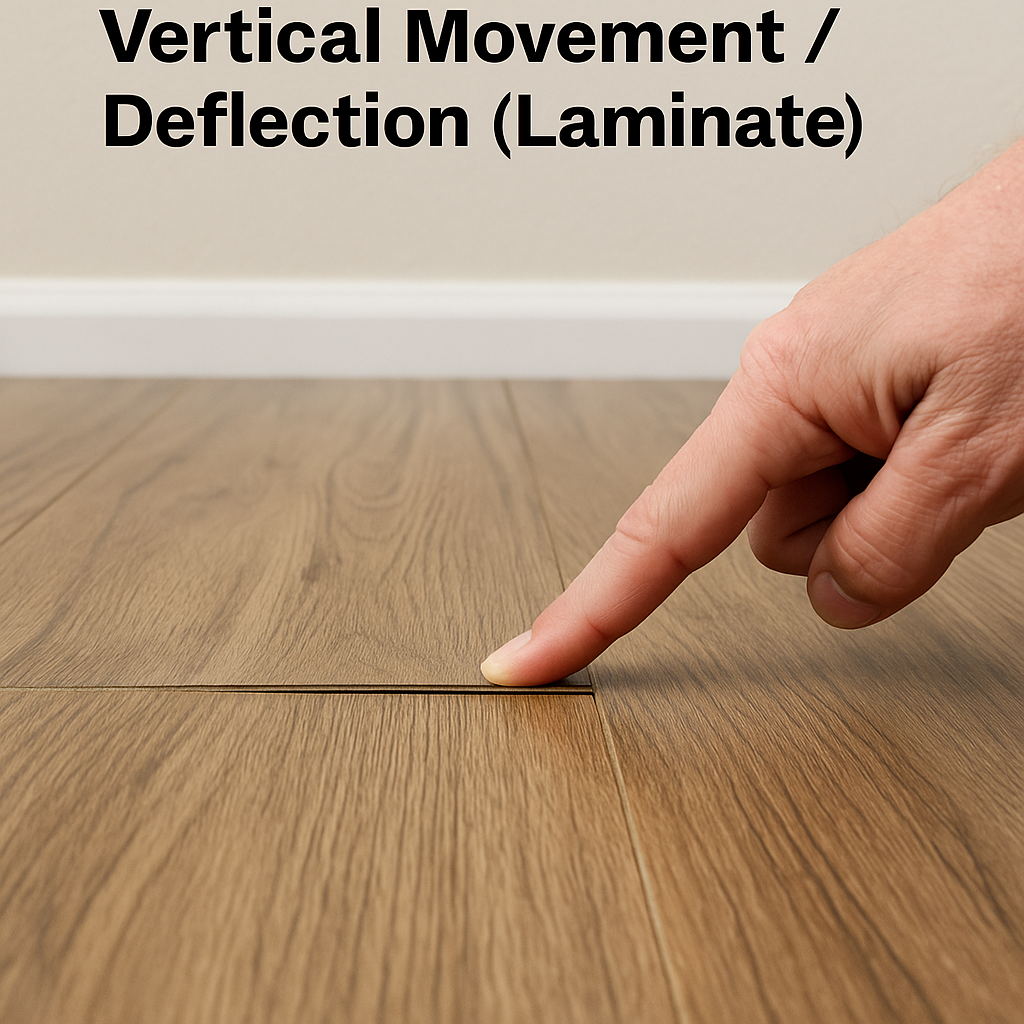
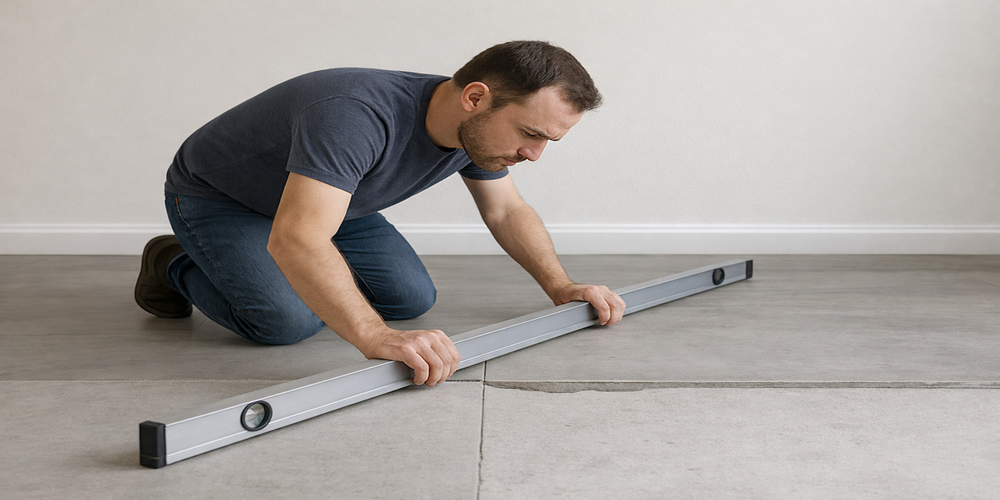
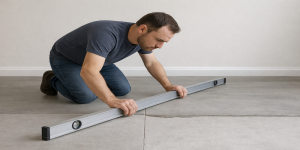
• Uneven subfloors or unsupported areas may contribute to excessive flexing under load.
• Vertical movement concentrates stress at locking edges and short-end joints.
• Excessively soft or thick underlayments may increase movement within the floating-floor system.
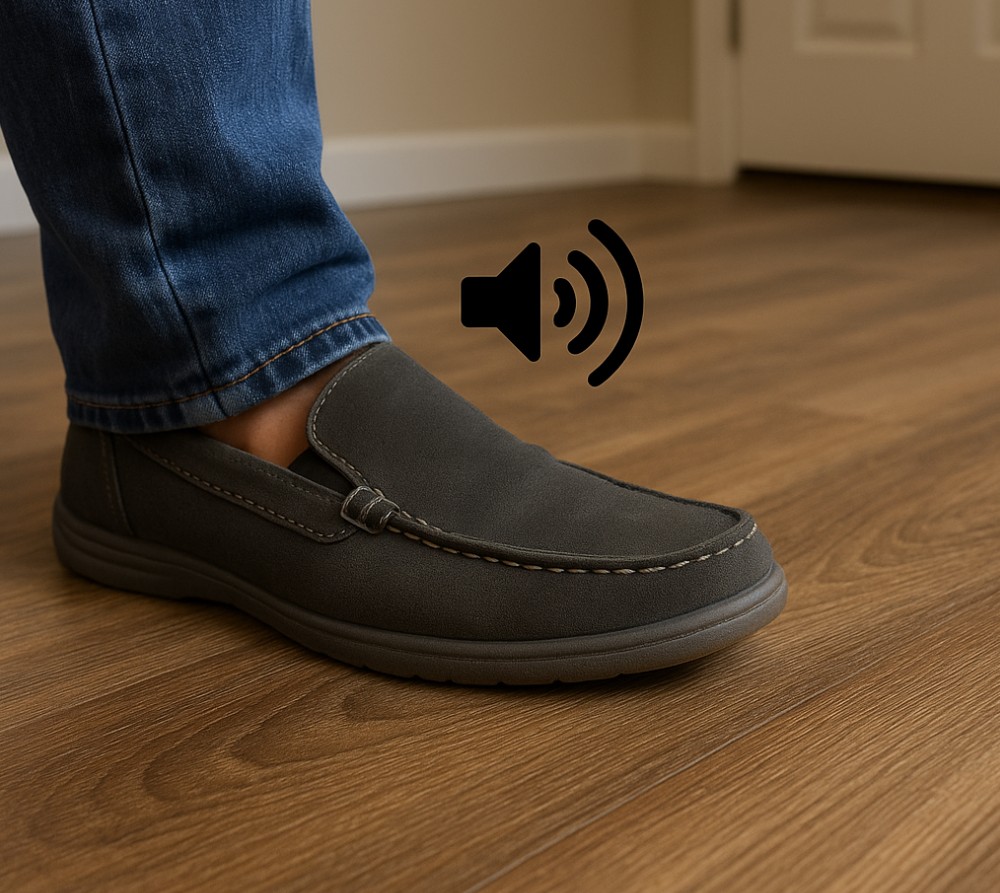
• Deflection-related conditions commonly include noise, joint fatigue, vertical movement, or broken locking edges.
• Subfloor flatness and support consistency influence overall flooring stability and load distribution.
Common Laminate Floor Problems
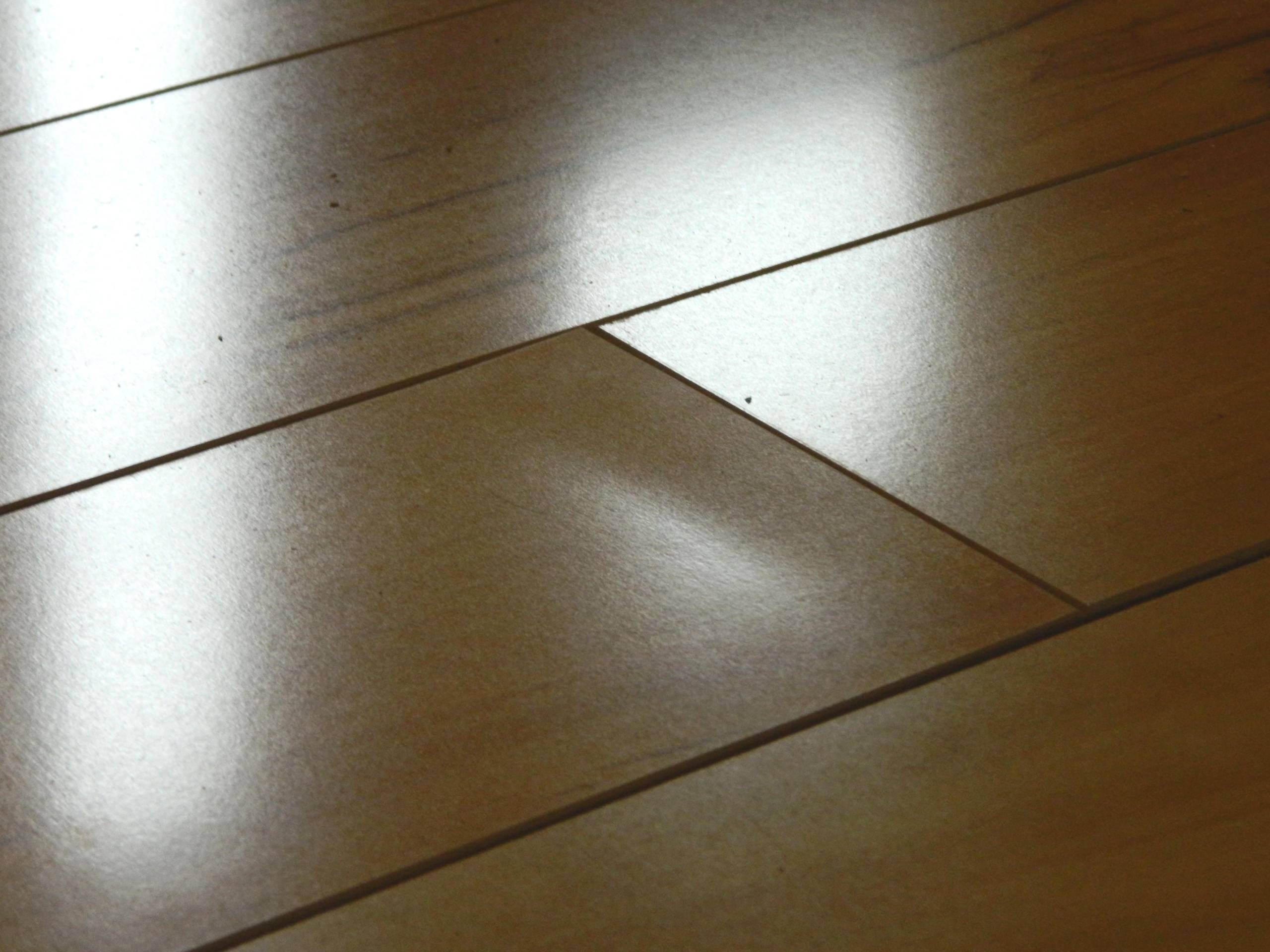
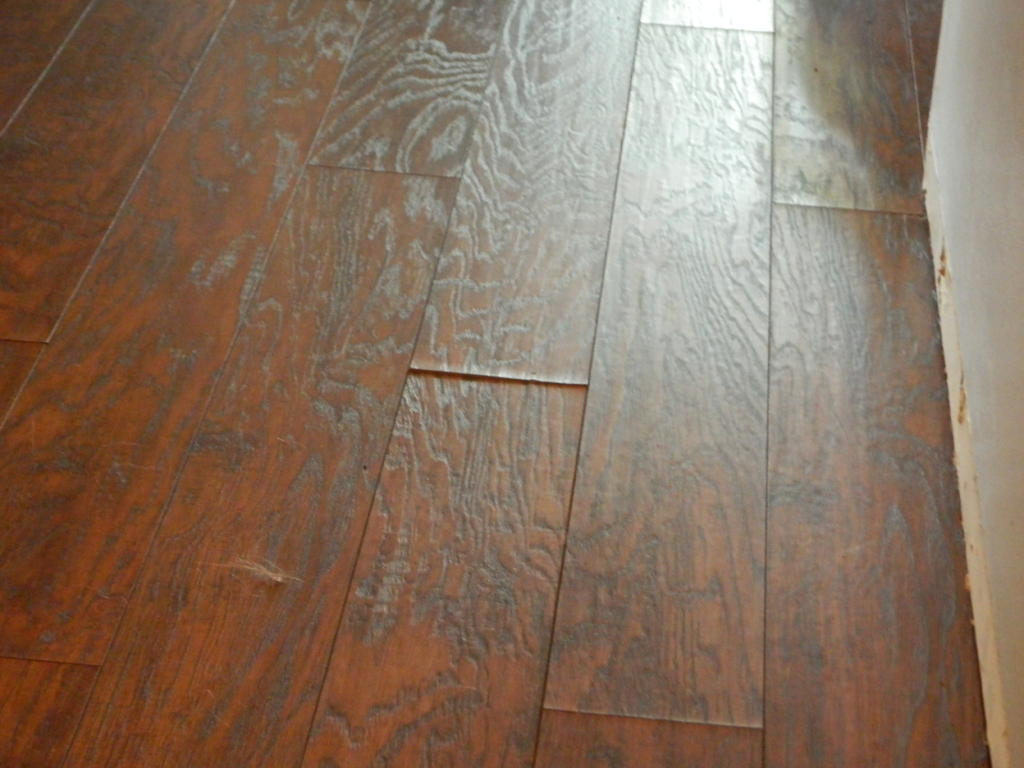
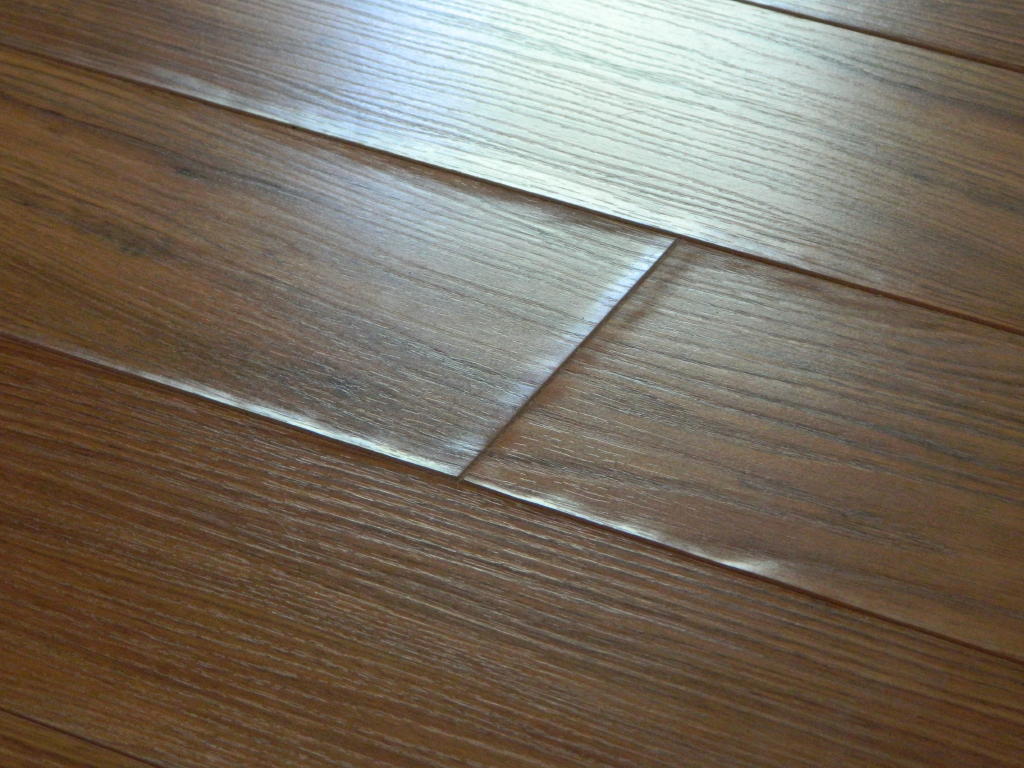
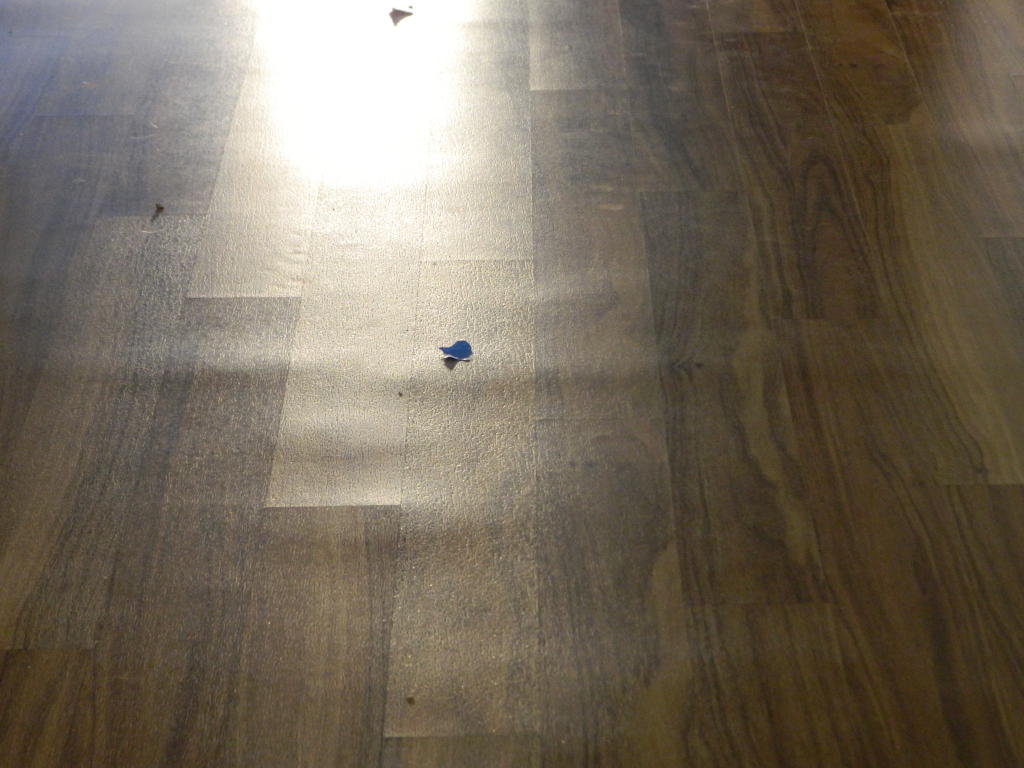
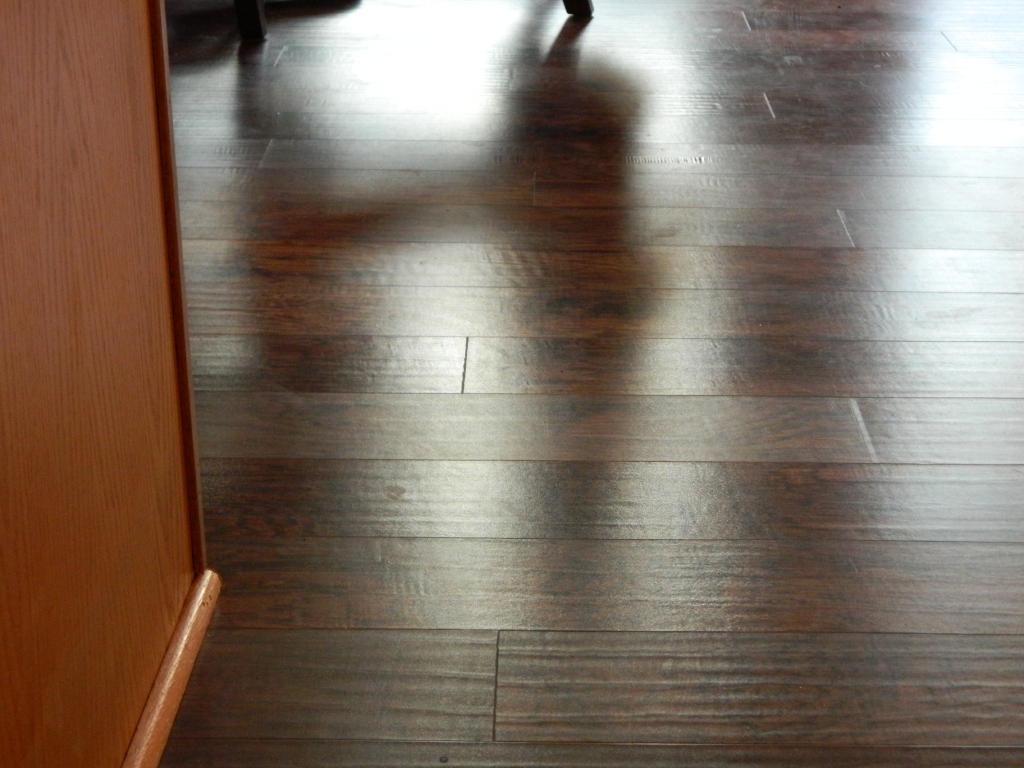
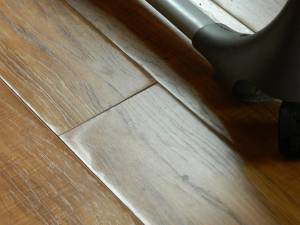
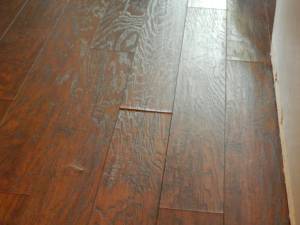
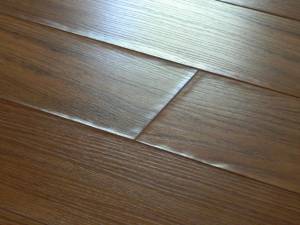
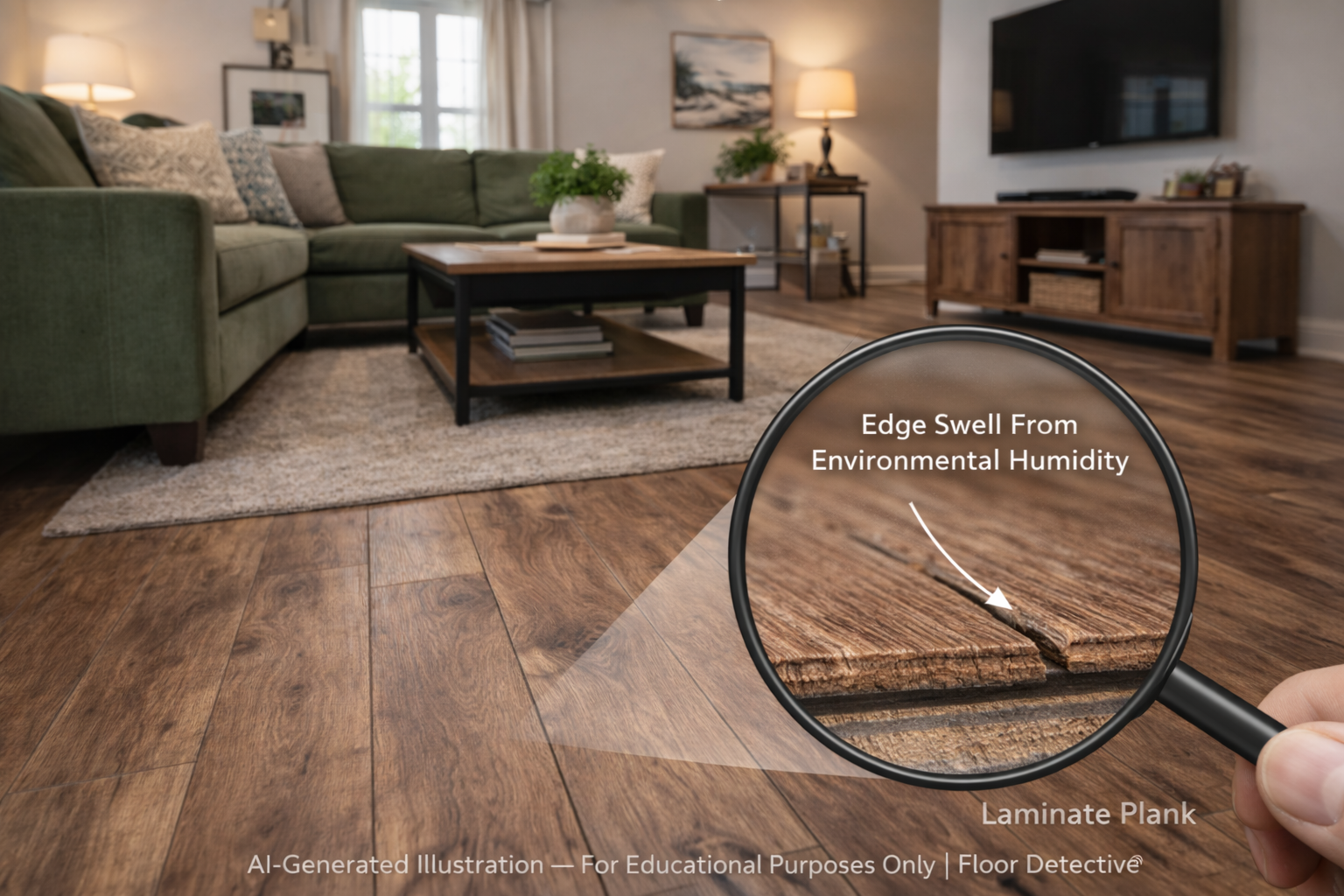
• Bubbling or Swelled Edges — Moisture-related expansion concentrated near plank edges or seams.
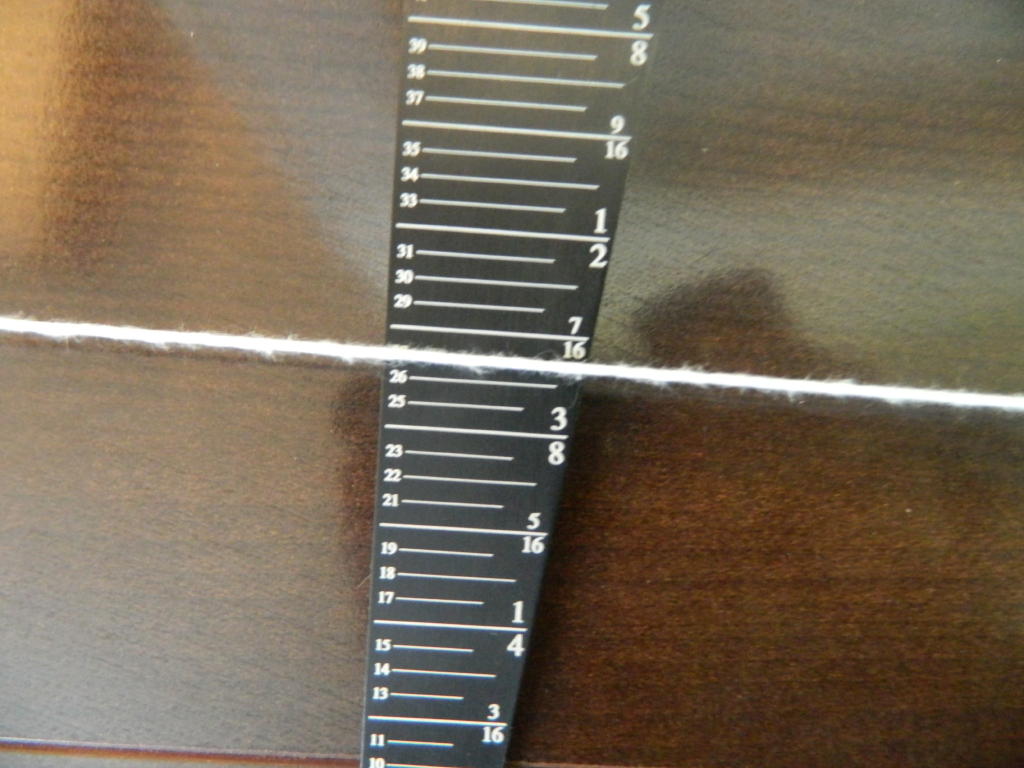
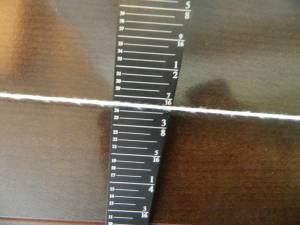
• Gaps — Separation between planks caused by movement, contraction, or locking stress.
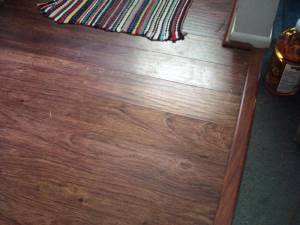
• Buckling — Upward displacement caused by expansion pressure under restraint.
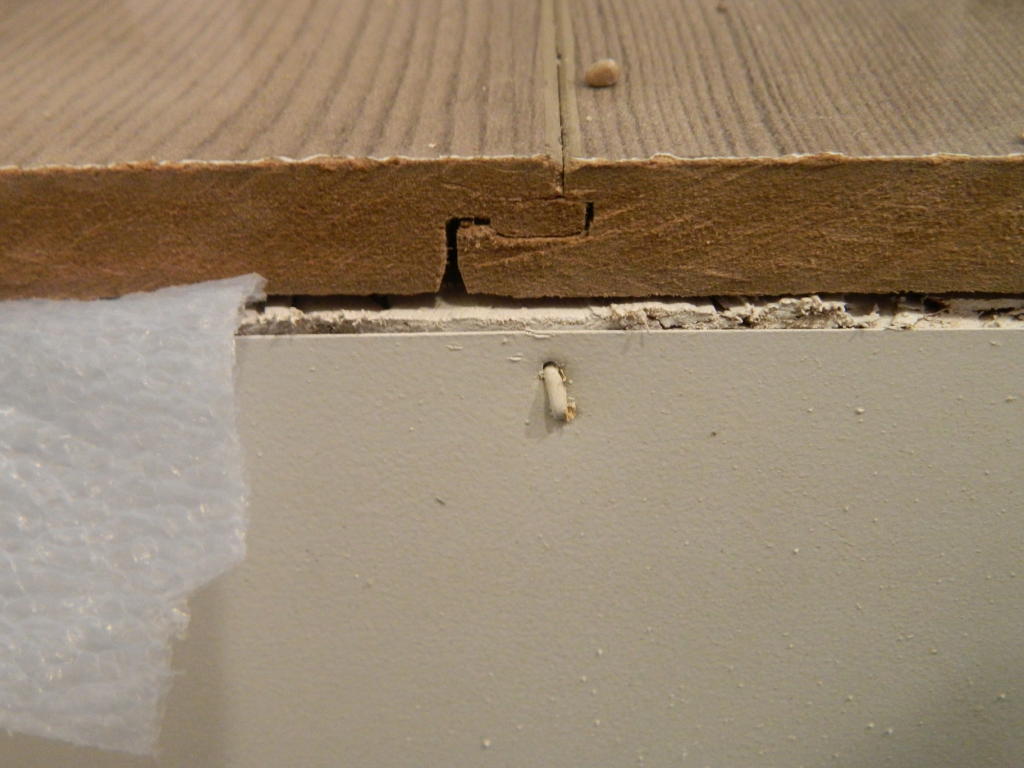
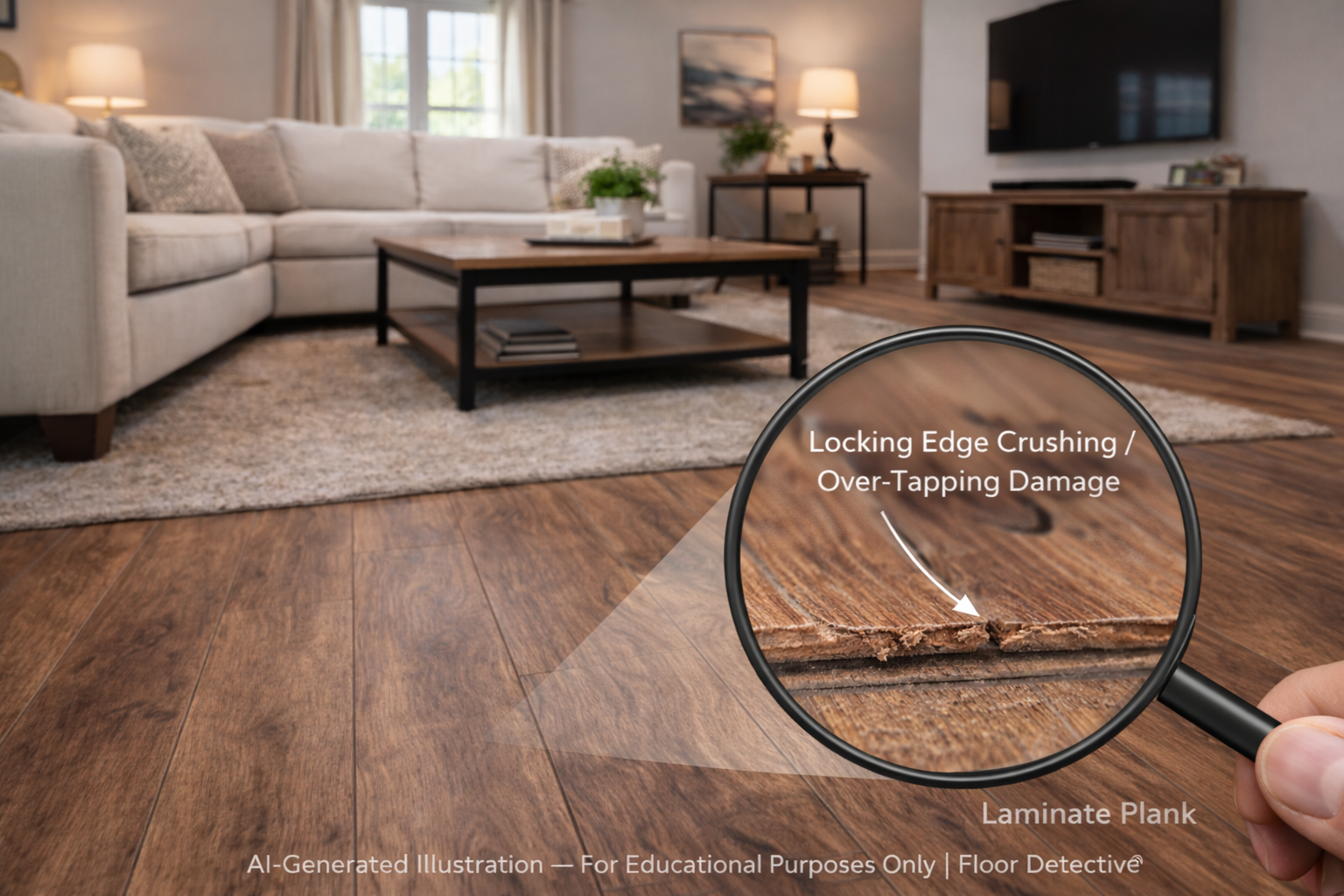
• Broken Joints — Cracked, crushed, or disengaged locking edges within the floating system.
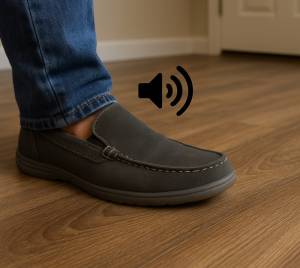
• Laminate Flooring Noise — Clicking, squeaking, or movement-related sound generation.
• Proud Edges — Visible height variation or edge displacement between adjoining planks.
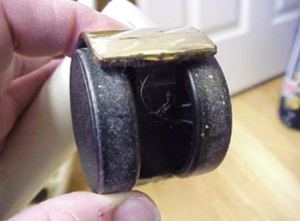
• Scratches and Abrasions — Surface wear caused by traffic, debris, or concentrated contact.
• Delamination and Core Separation — Separation involving decorative layers or core integrity.
Field Evaluation
• Evaluation documents the type, severity, location, and distribution pattern of the observed condition.
• Inspection considers environmental conditions including temperature, relative humidity, and potential moisture sources.
• Subfloor flatness, support consistency, underlayment selection, and expansion clearance are evaluated.
• Locking edges may be reviewed for crushing, disengagement, swelling, or impact-related damage.
• Distribution patterns assist in differentiating moisture-related conditions from restraint, support, or loading stress.
• Field evaluation documents observed conditions without independently assigning responsibility.
Laboratory Evaluation Context
• NALFA and manufacturer laboratory procedures may evaluate edge swell, dimensional stability, wear resistance, locking performance, and moisture-related expansion behavior.
• Laboratory analysis may assist when HDF-core response, locking integrity, coating performance, or material characteristics are disputed.
• Controlled laboratory testing does not fully replicate long-term occupancy conditions, restraint stress, repeated wetting cycles, or substrate-related movement.
• Laboratory findings must be correlated with installation conditions, environmental exposure, and field observations.
• Additional analytical testing may be available through Professional Testing Laboratory.
Repair and Remediation Considerations
• Localized conditions may sometimes allow selective plank replacement where surrounding material remains stable.
• Moisture-related core swelling commonly requires board replacement when dimensional change becomes permanent.
• Correcting restraint, support, or moisture conditions is separate from restoring surface appearance.
• Widespread instability or locking-system fatigue may require broader corrective scope evaluation.
• Repair feasibility depends on locking integrity, product availability, installation accessibility, and extent of damage distribution.
Interpretation and Claim Perspective
• Laminate floor problems commonly reflect interaction between moisture exposure, movement behavior, support conditions, and locking-system performance.
• Many visible conditions are interconnected and should be evaluated as part of the overall flooring-system response.
• The presence of a visible condition alone does not independently establish manufacturing defect or installation failure.
• Evaluation considers exposure pathway, restraint conditions, support characteristics, environmental history, and distribution pattern together.
• Classification focuses on mechanism and system behavior without independently assigning responsibility.
Find a Flooring Inspector
• If you are experiencing laminate floor problems, a qualified flooring inspector may assist in documenting conditions and identifying contributing factors.
• Floor Detective® maintains a directory of certified flooring inspectors across North America.
• Inspectors are available in many major cities and surrounding regions.
• Find a Flooring Inspector near you to locate inspectors by flooring type and location.
Key Terms
• HDF Core — High-density fiberboard core commonly used in laminate flooring construction.
• Edge Swell — Dimensional expansion concentrated near plank edges or seams.
• Floating Floor — Flooring system not mechanically fastened to the substrate.
• Locking System — Mechanical joint profile connecting adjoining planks.
• Restraint — Restriction of intended floating-floor movement.
• Deflection — Vertical flexing movement occurring under load.
Related Pages
• Subfloor Flatness Issues
• Expansion Restriction / Pinning
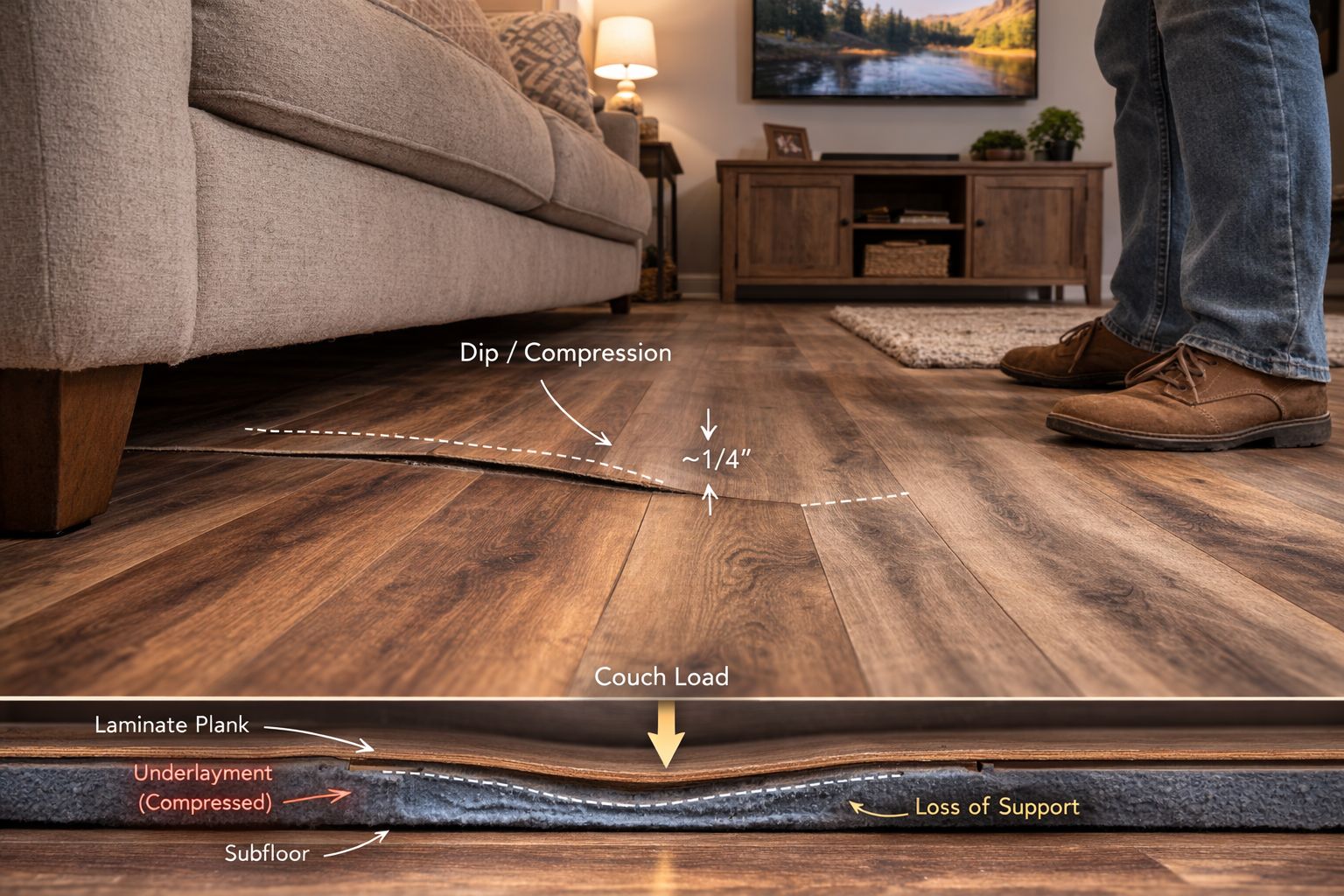
• Underlayment Compression
• Vertical Movement / Deflection
Contributors
Independent peer review (non-authoring) — this page only
NALFA, Drew Kern, Mike Harde, Fred Gamble, David Zack, Claudia Lezell, Roy Reichow
© 2015–2026 Floor Detective®
Last revised: 05/12/2026
Laminate Problems
Underlayment Compression / Support Loss (Laminate)
Static Electricity Generation (Laminate)

Pattern Repeat / Visual Repetition (Laminate Flooring)
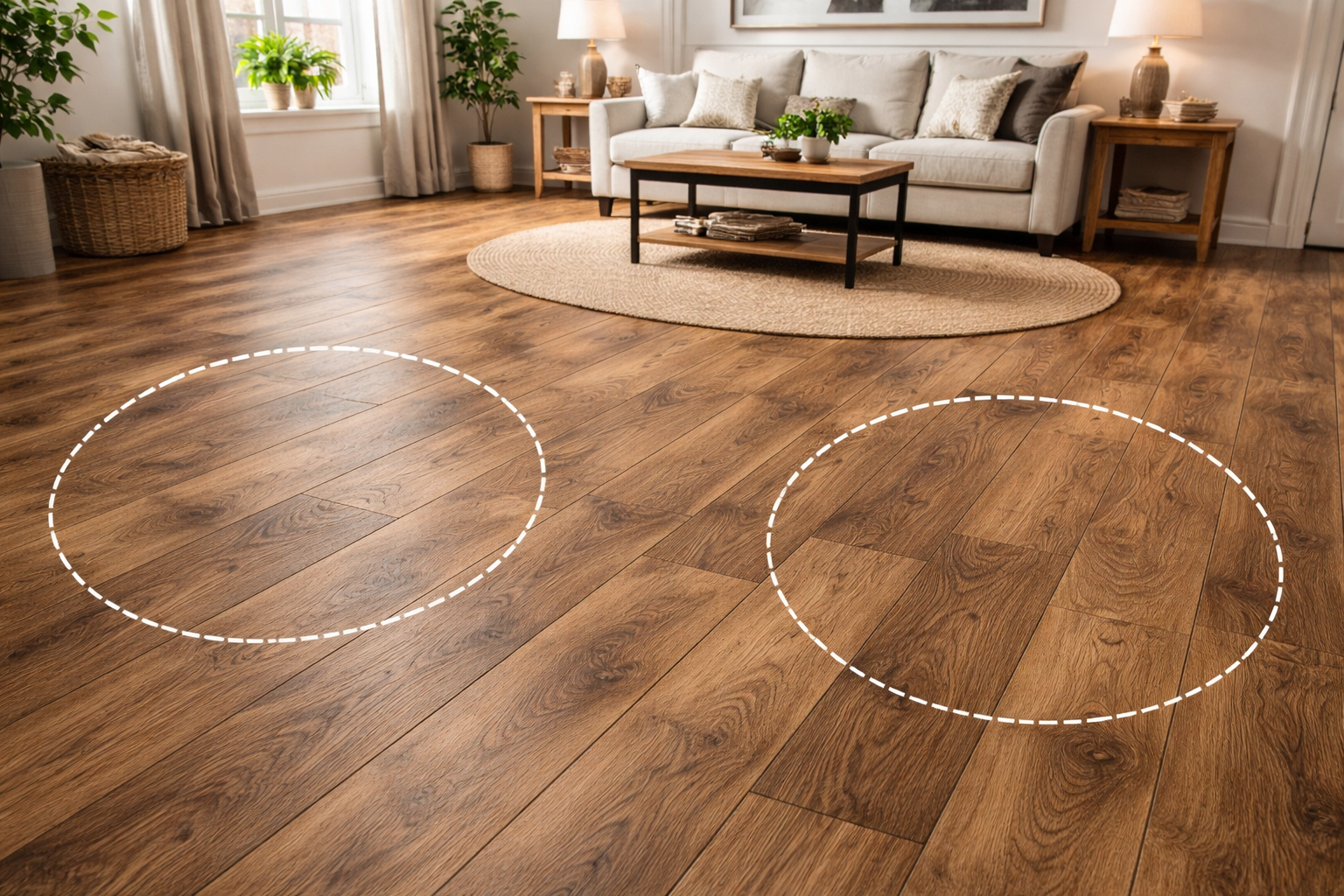
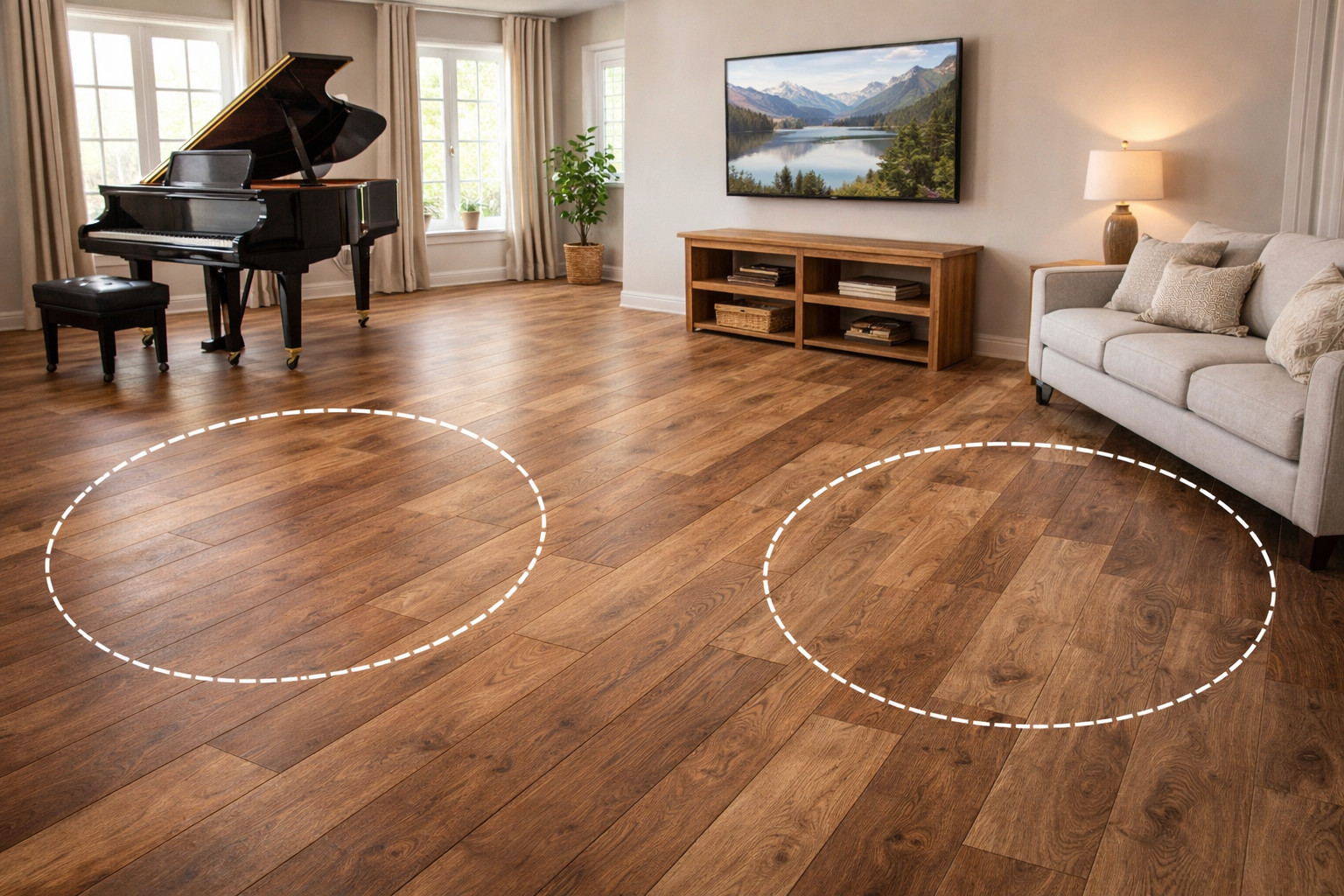
Color Lot Variation (Laminate)
Locking Edge Crushing / Over-Tapping Damage (Laminate)
Edge Swell From Environmental Humidity (Laminate)
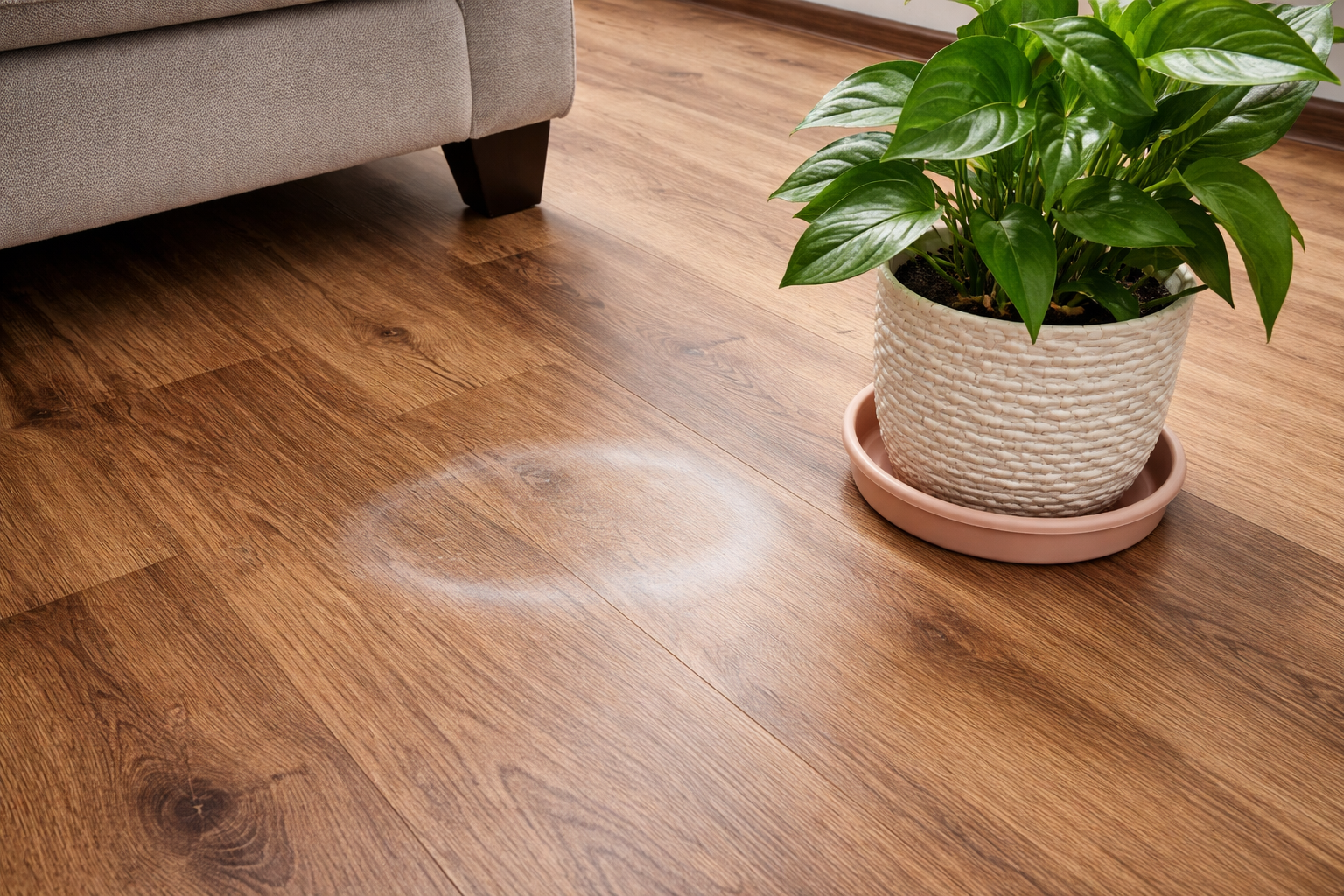
Surface Whitening from Topical Moisture Entrapment
Hollow Sound / Acoustic Resonance (Laminate)coincidence whipping melt
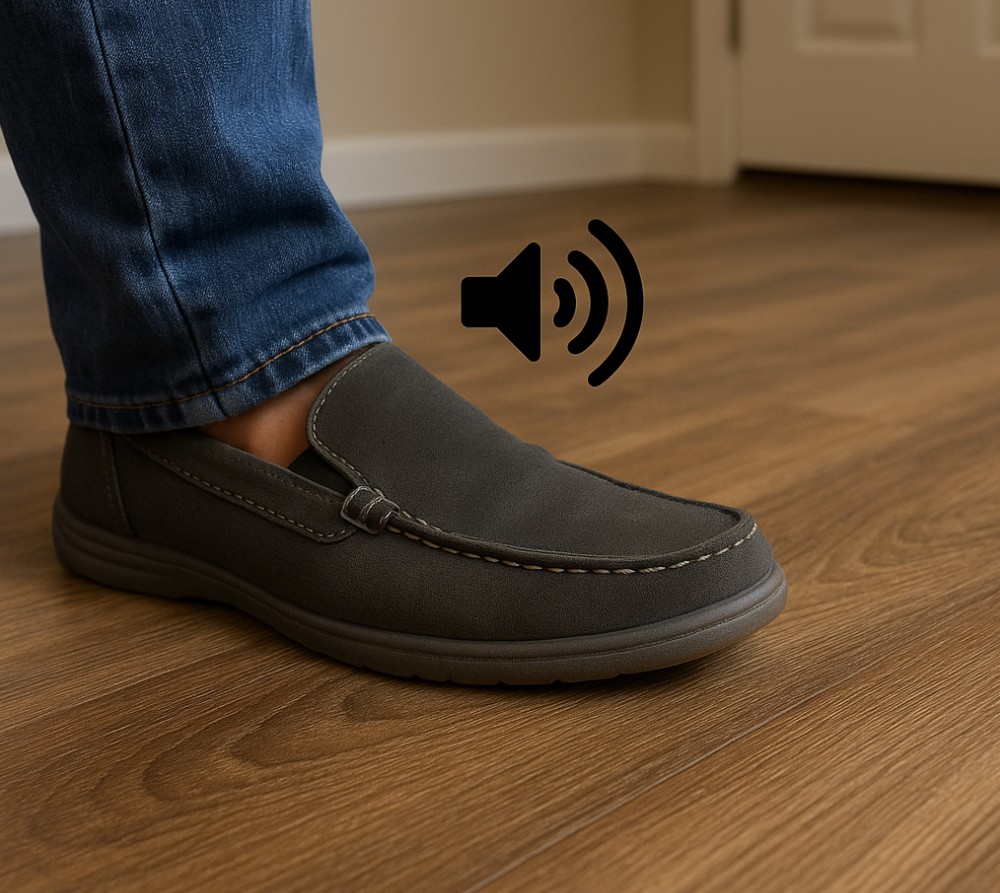
Vertical Movement / Deflection (Laminate