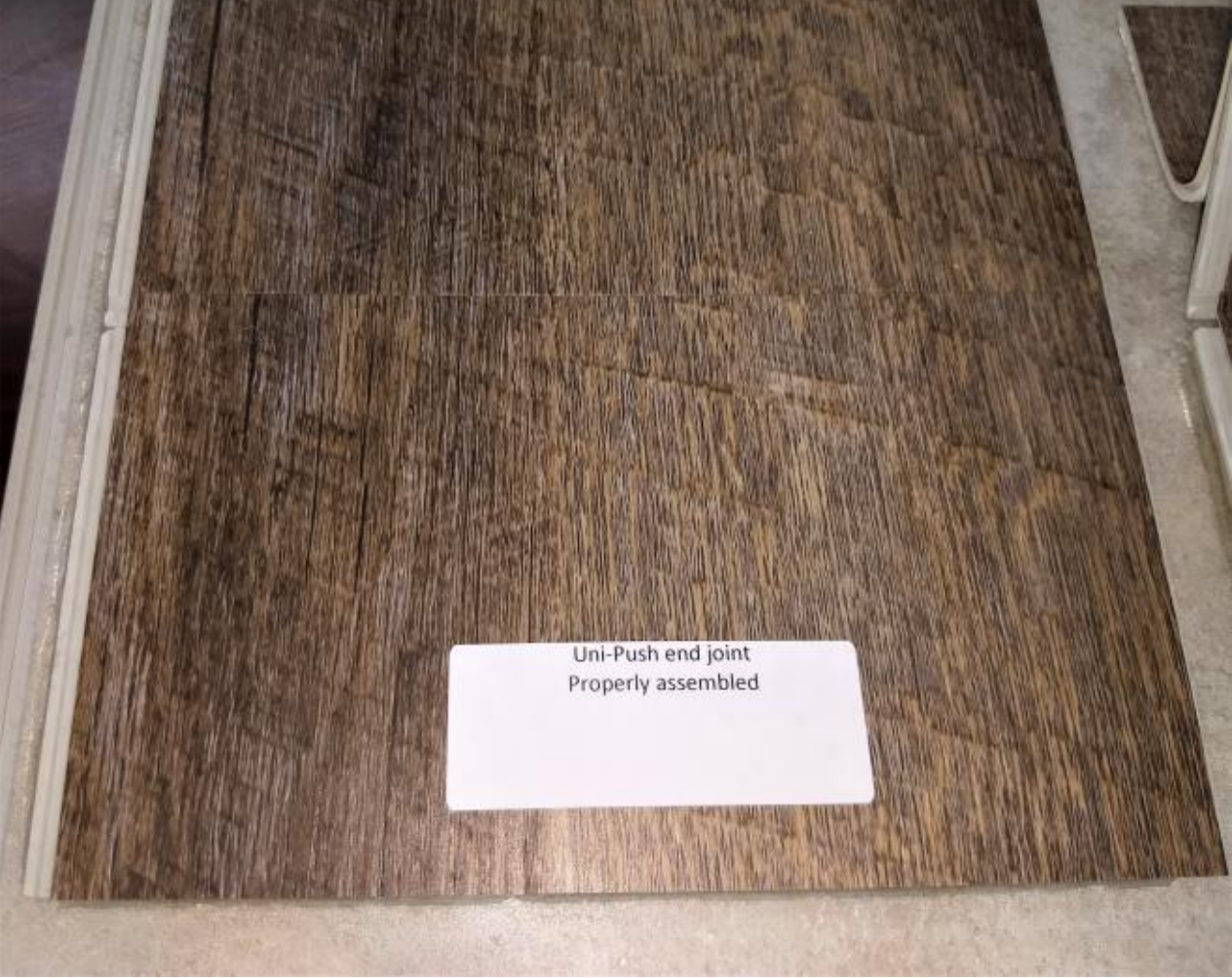
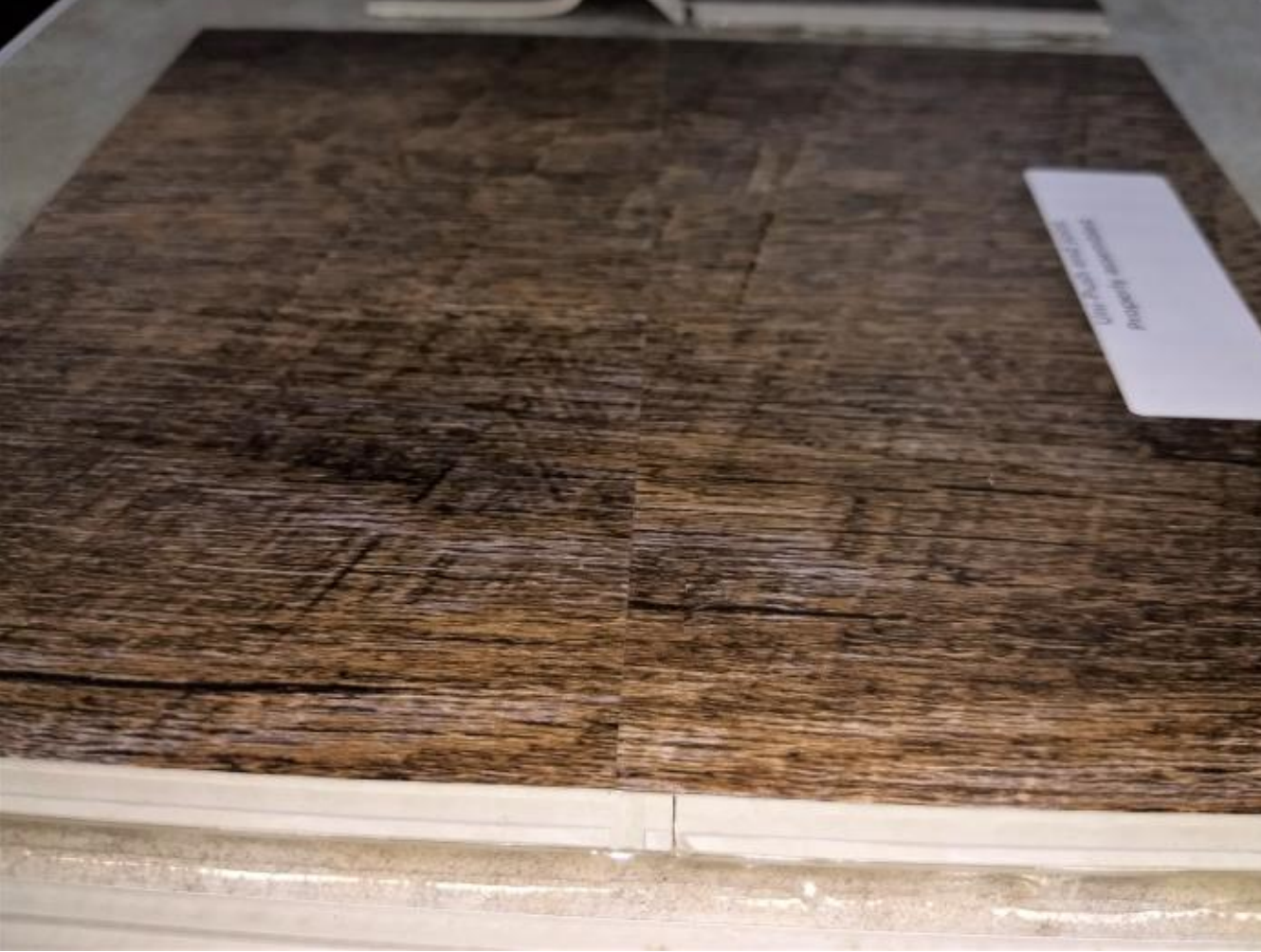
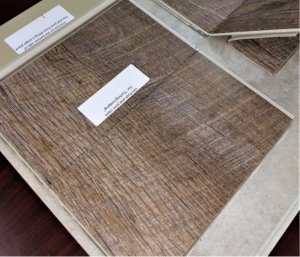
Properly Assembled end joint
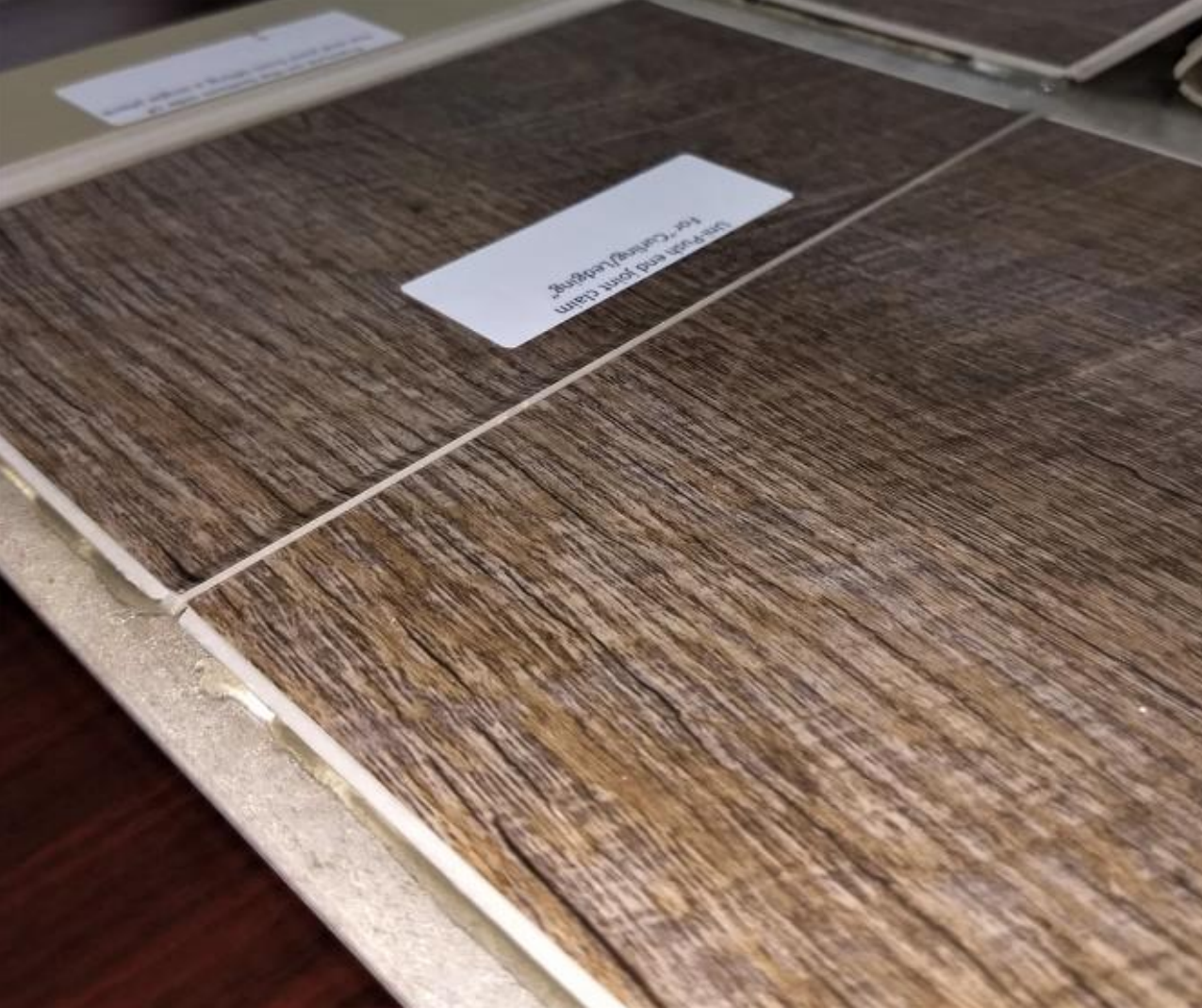
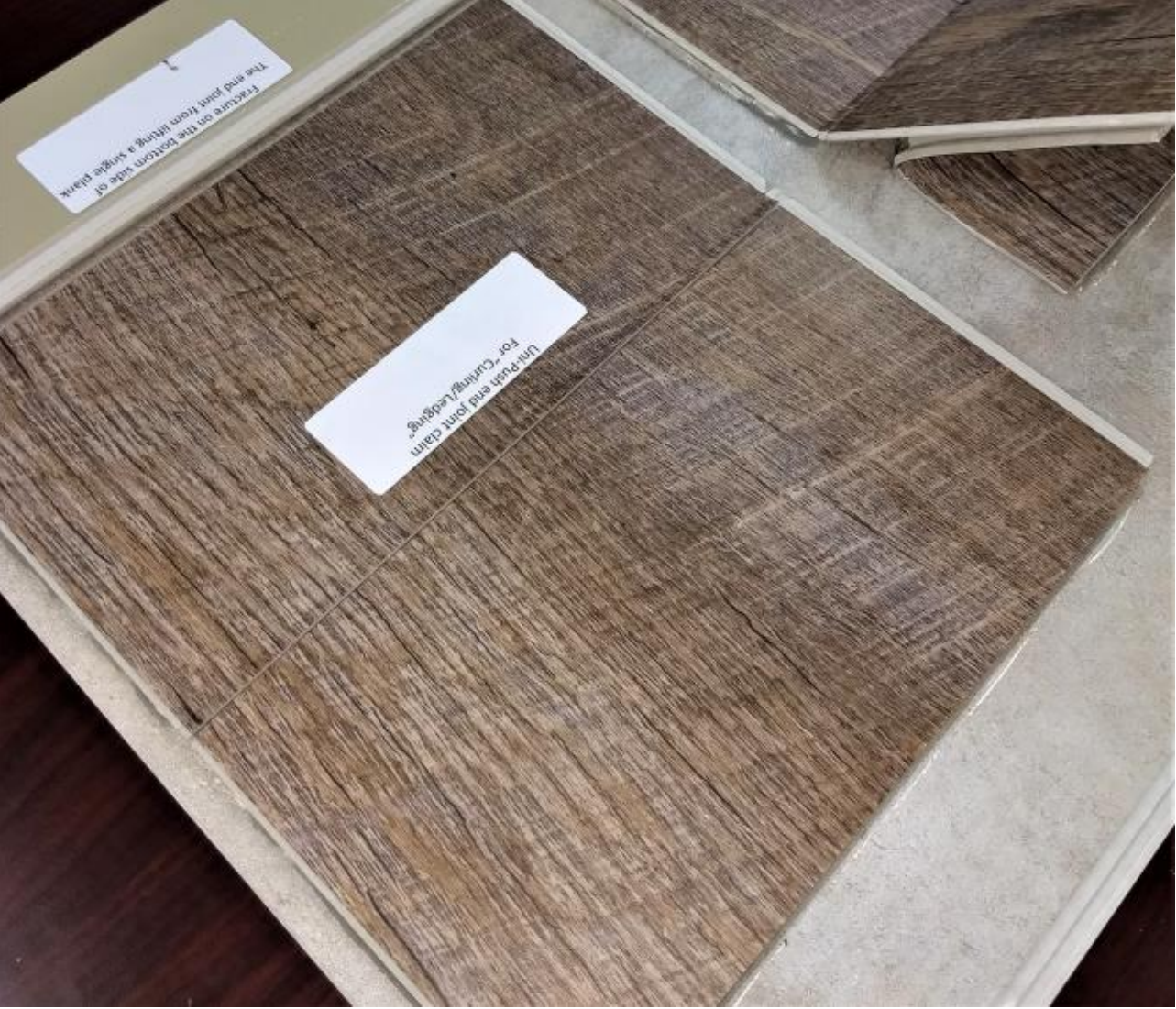
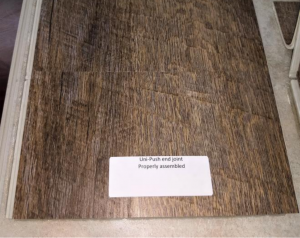
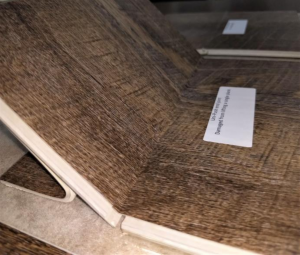
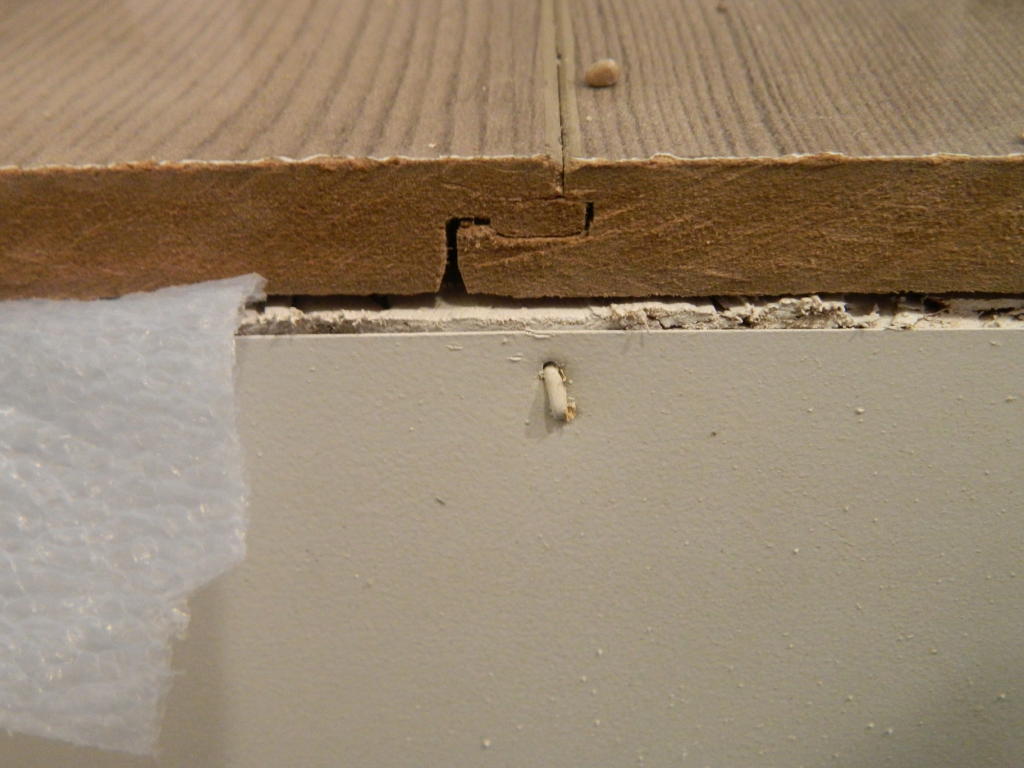
Properly assembled end joint
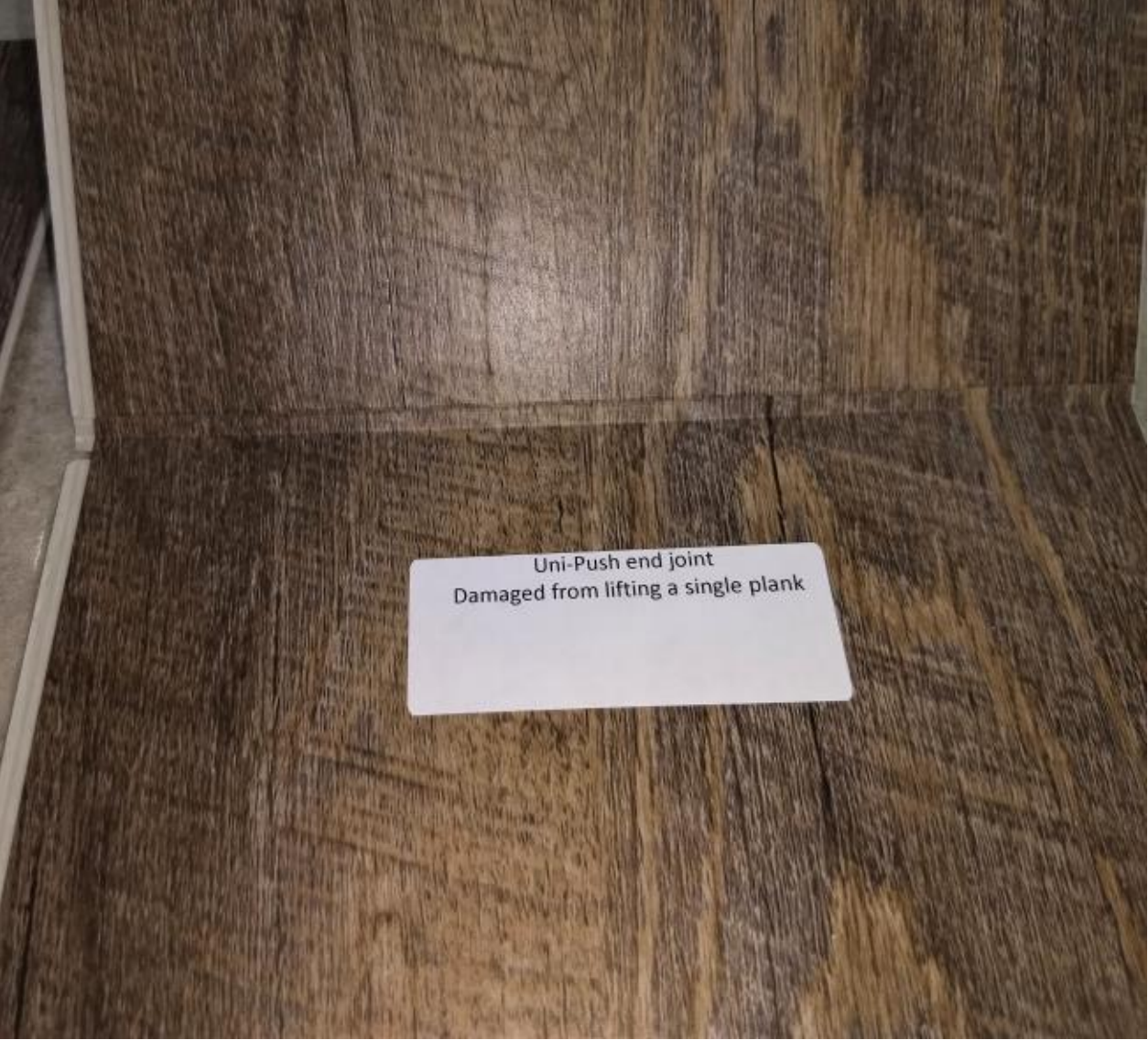
When a plank is lifted the upper edge of the
profile will bend and remain attached
When a plank is lifted the upper edge of the
profile will bend and remain attached
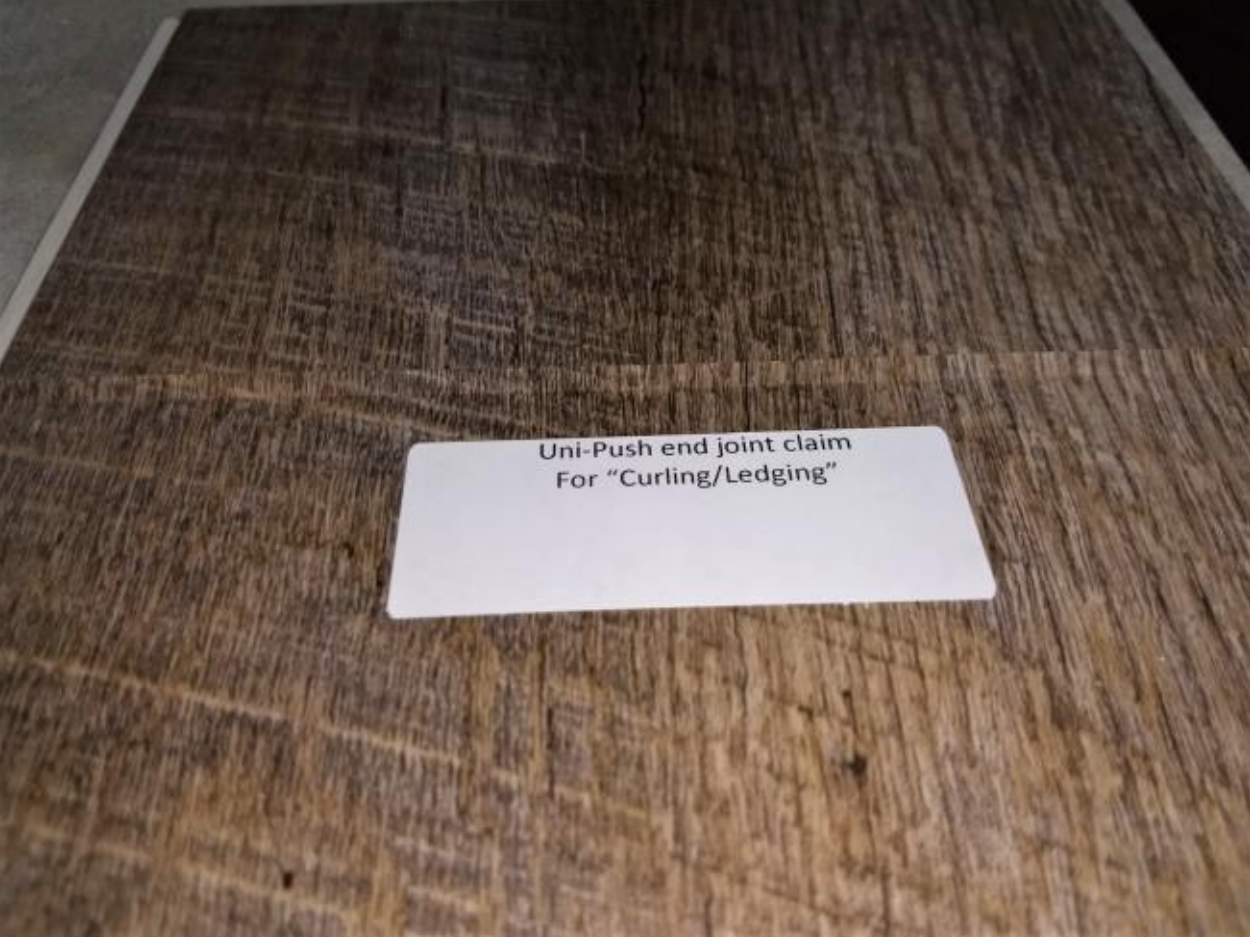
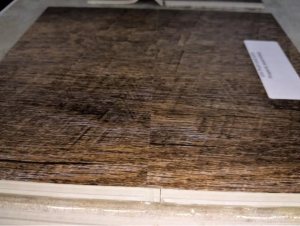
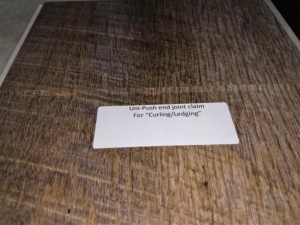
End view of plank with raised edge. This is an
installation condition.
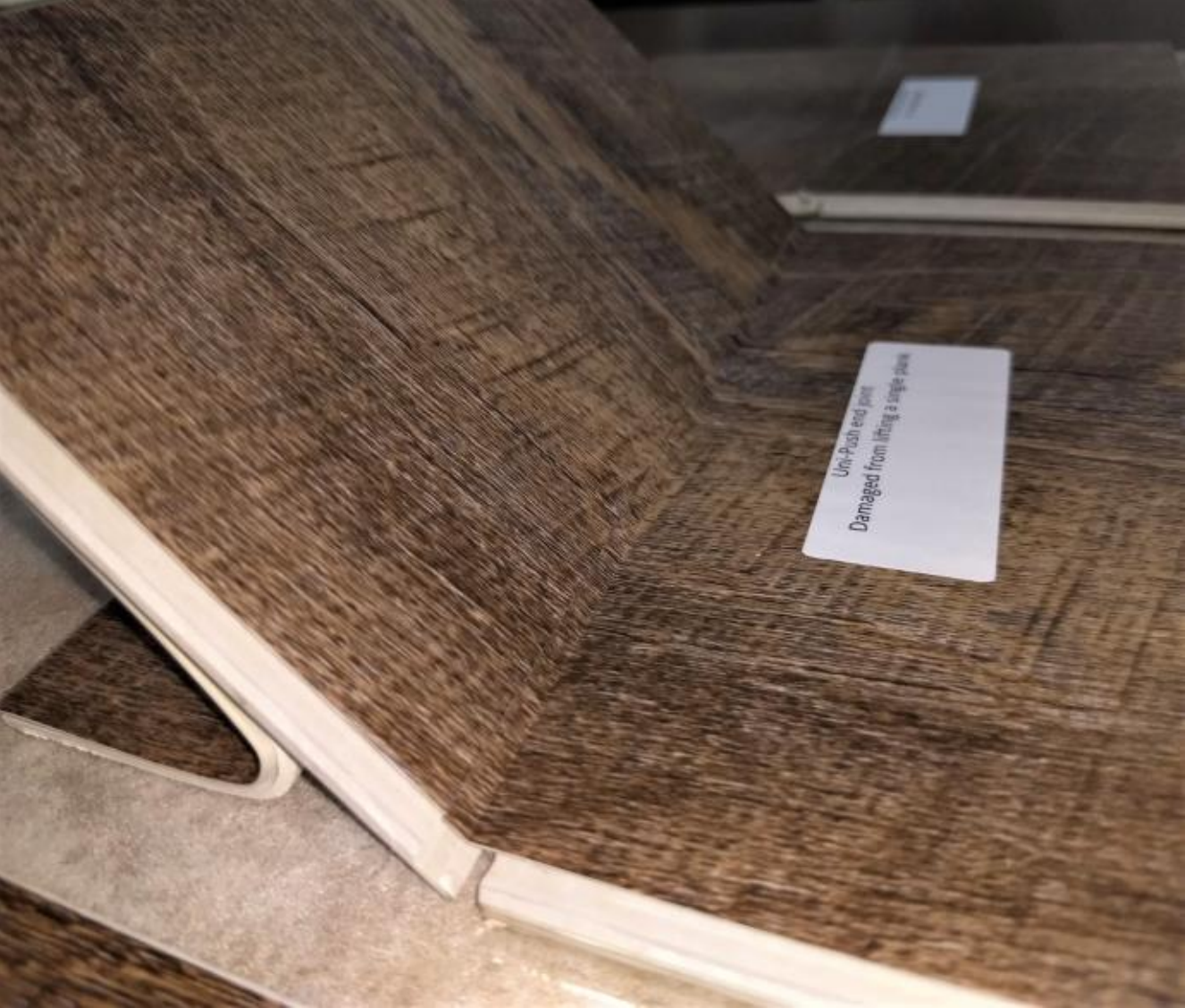
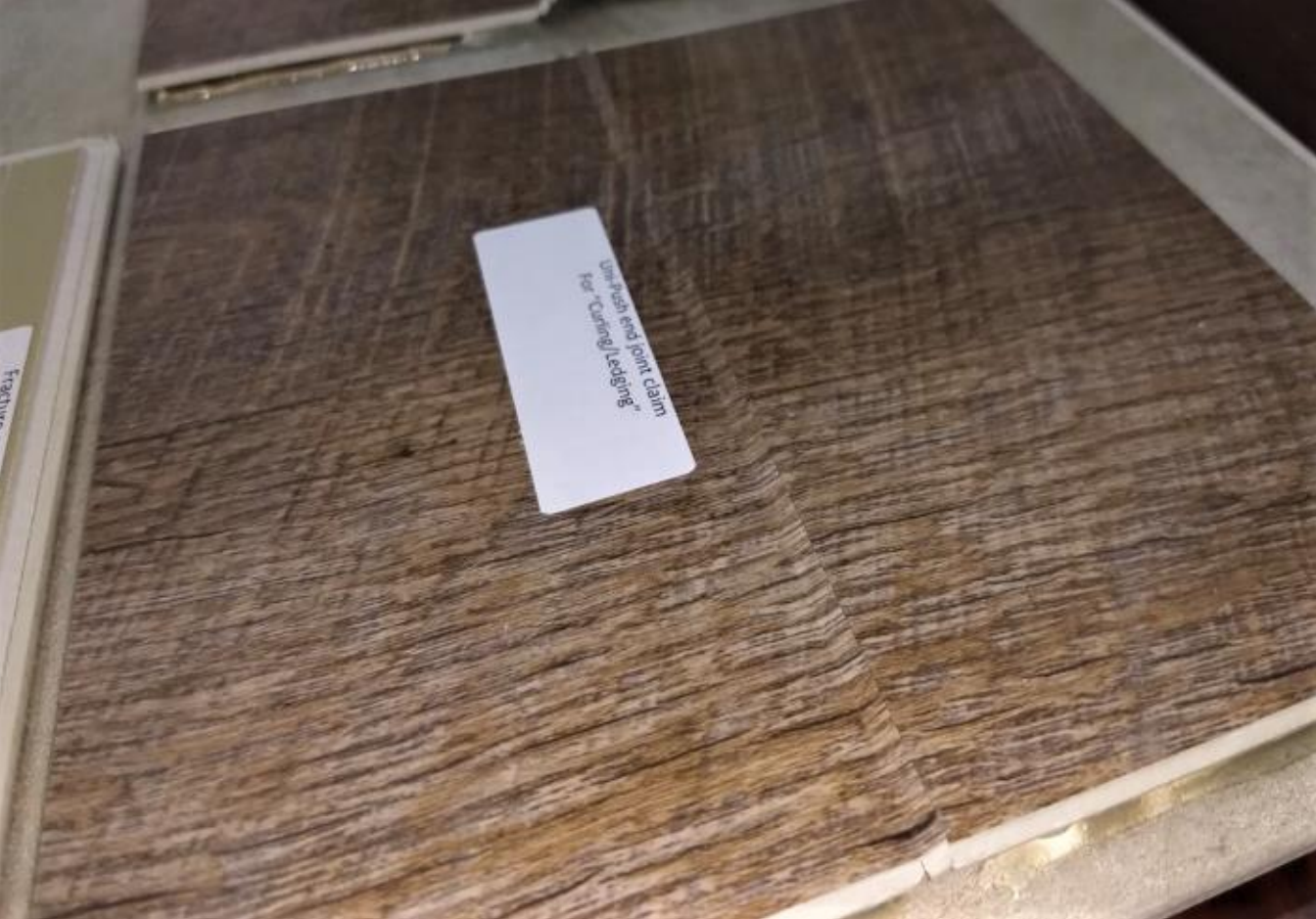
Side view of plank with raised edge. This is
an installation condition.
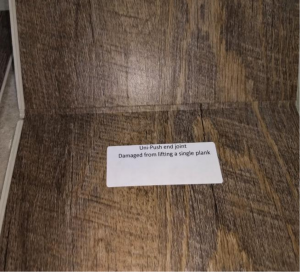
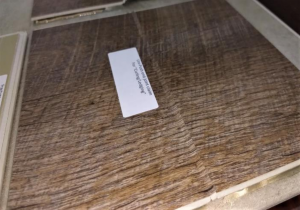
Looking into the raised end of the damaged
Uni-Push end joint.
Looking down towards the raised end of the
damaged Uni-Push end joint.
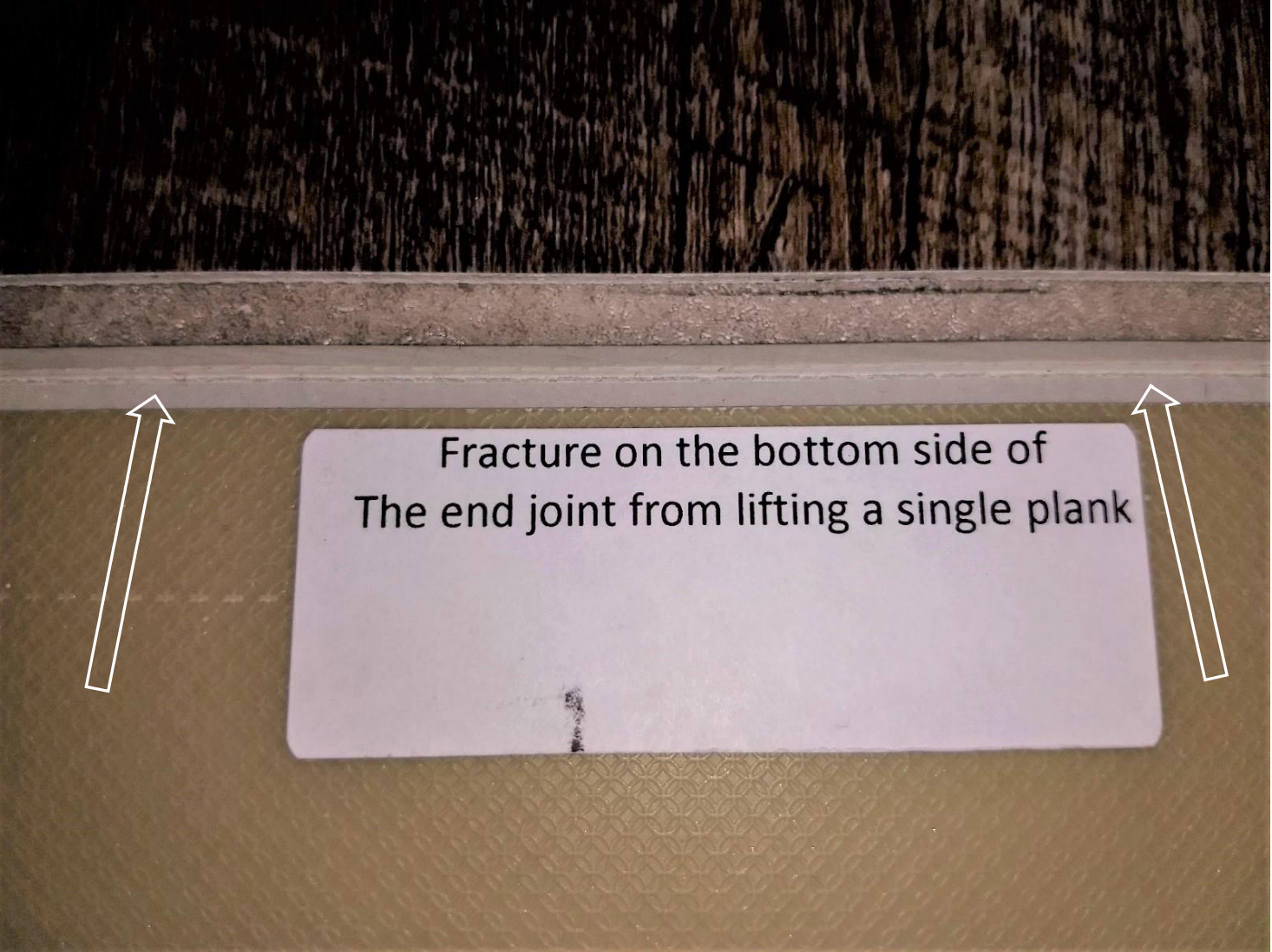
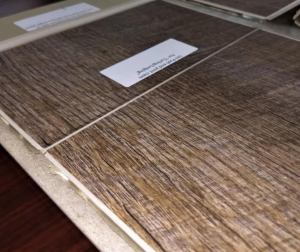
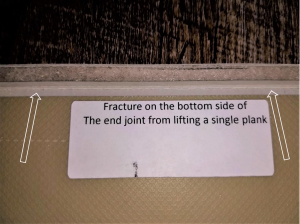
The bottom side of the end joint will fracture. This fracture will never be noticed by the installer when being installed. The upper portion will show a raised edge (as seen in other pictures). If the installer forced the edge back down the integrity of the joint will never remain stable and will ev...
Mechanical Joint Compromise (Resilient Plank)
Floor Detective® Claims and Conditions Guide
Summary
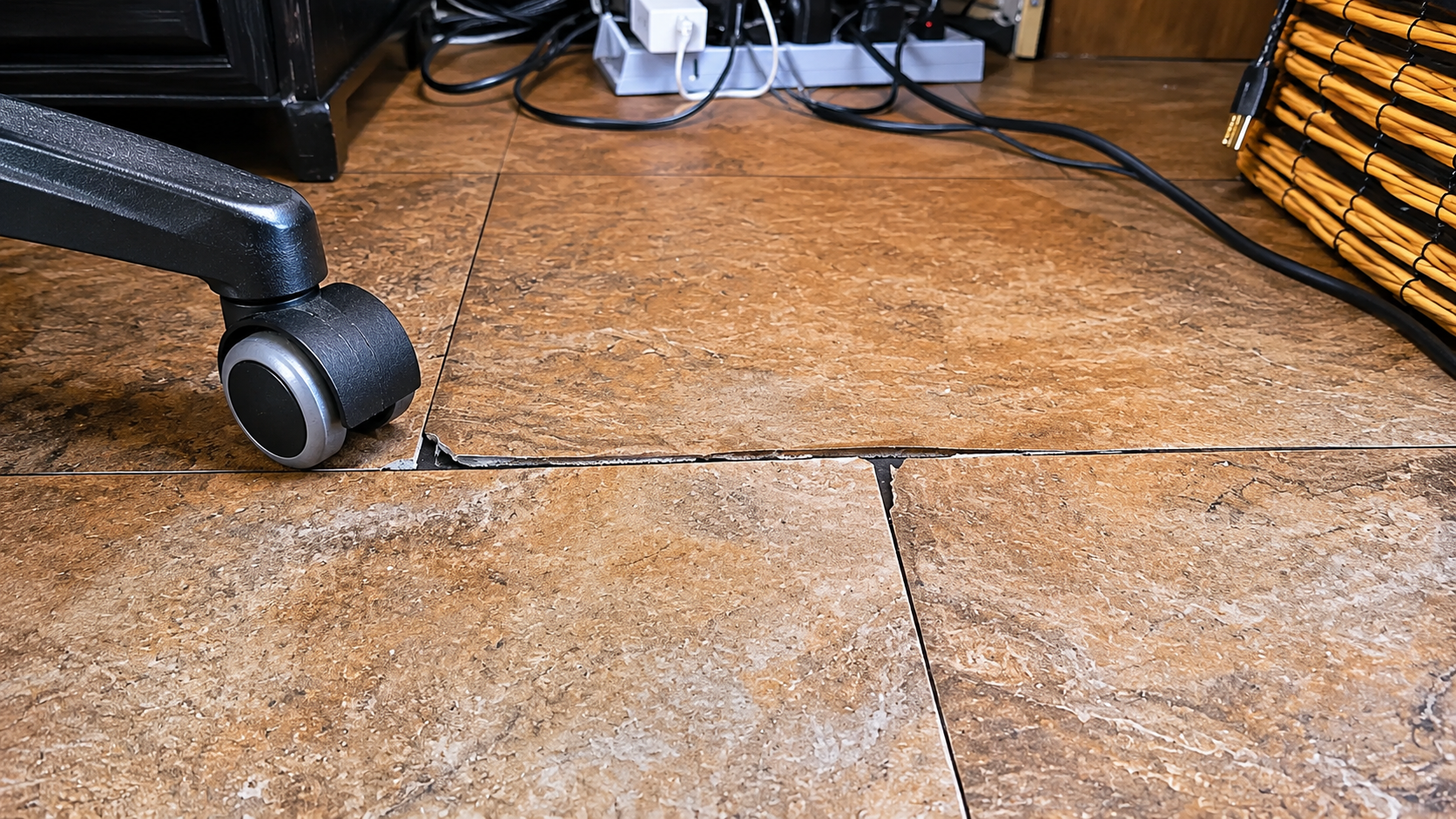
Mechanical joint compromise in resilient plank flooring refers to functional degradation, deformation, or partial structural weakening of the locking system without complete profile fracture. Click-lock systems rely on precise geometry to maintain engagement, transfer load, and resist separation. When installation force, disengagement stress, localized deflection, or cyclic loading alters the intended geometry, joint performance may be reduced even if no complete breakage is visible. Compromise may present as looseness, repeat gapping, clicking, vertical play, or progressive separation. Complete structural fracture of the locking profile is addressed separately under “Broken Locking Profiles / Profile Fracture.” The presence of joint compromise does not
Please subscribe to see all content
June 22, 2026
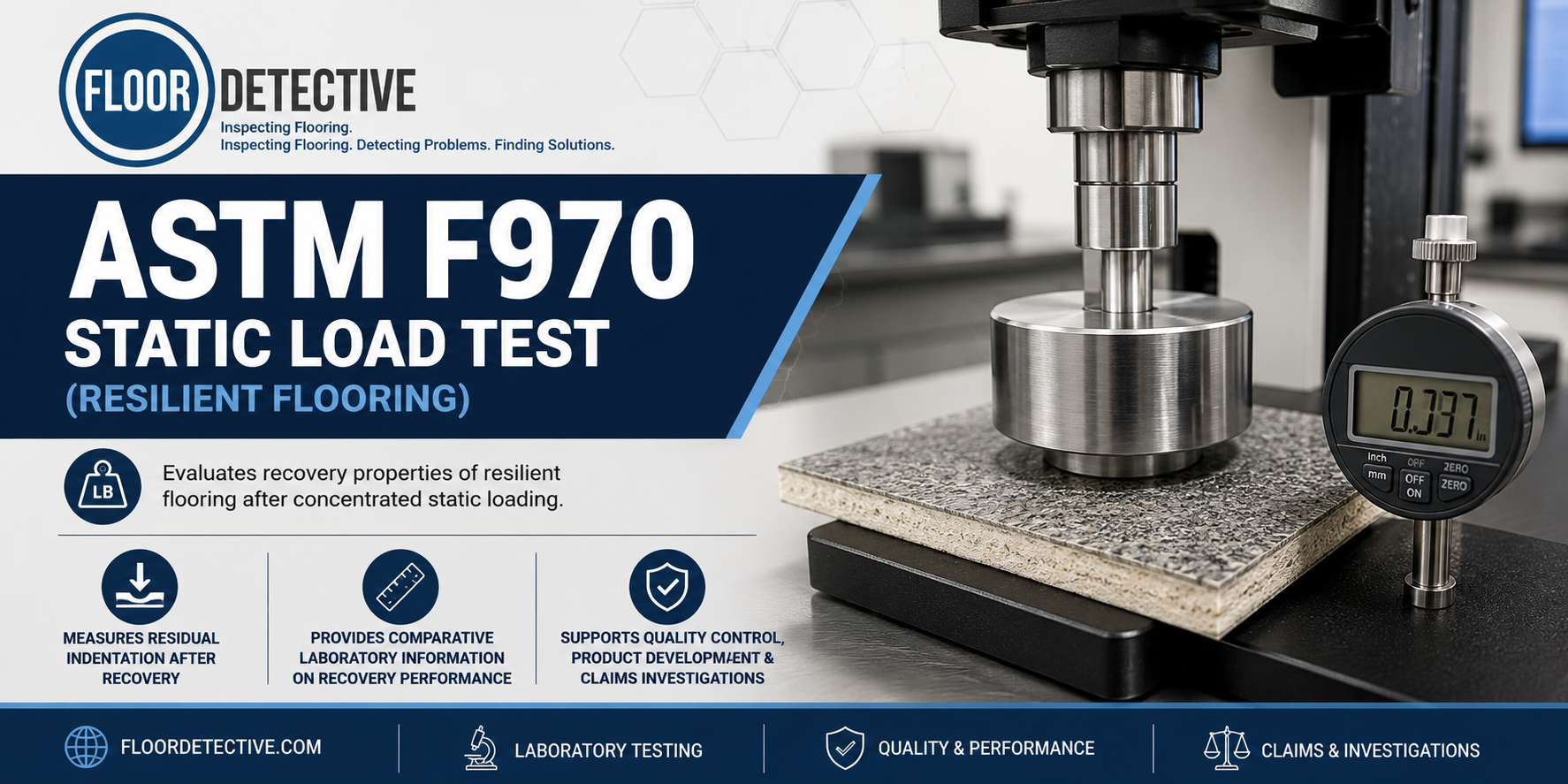
ASTM F970 Static Load Testing evaluates the recovery properties of resilient flooring after concentrated static loading. Learn how residual indentation...
Read More
June 14, 2026
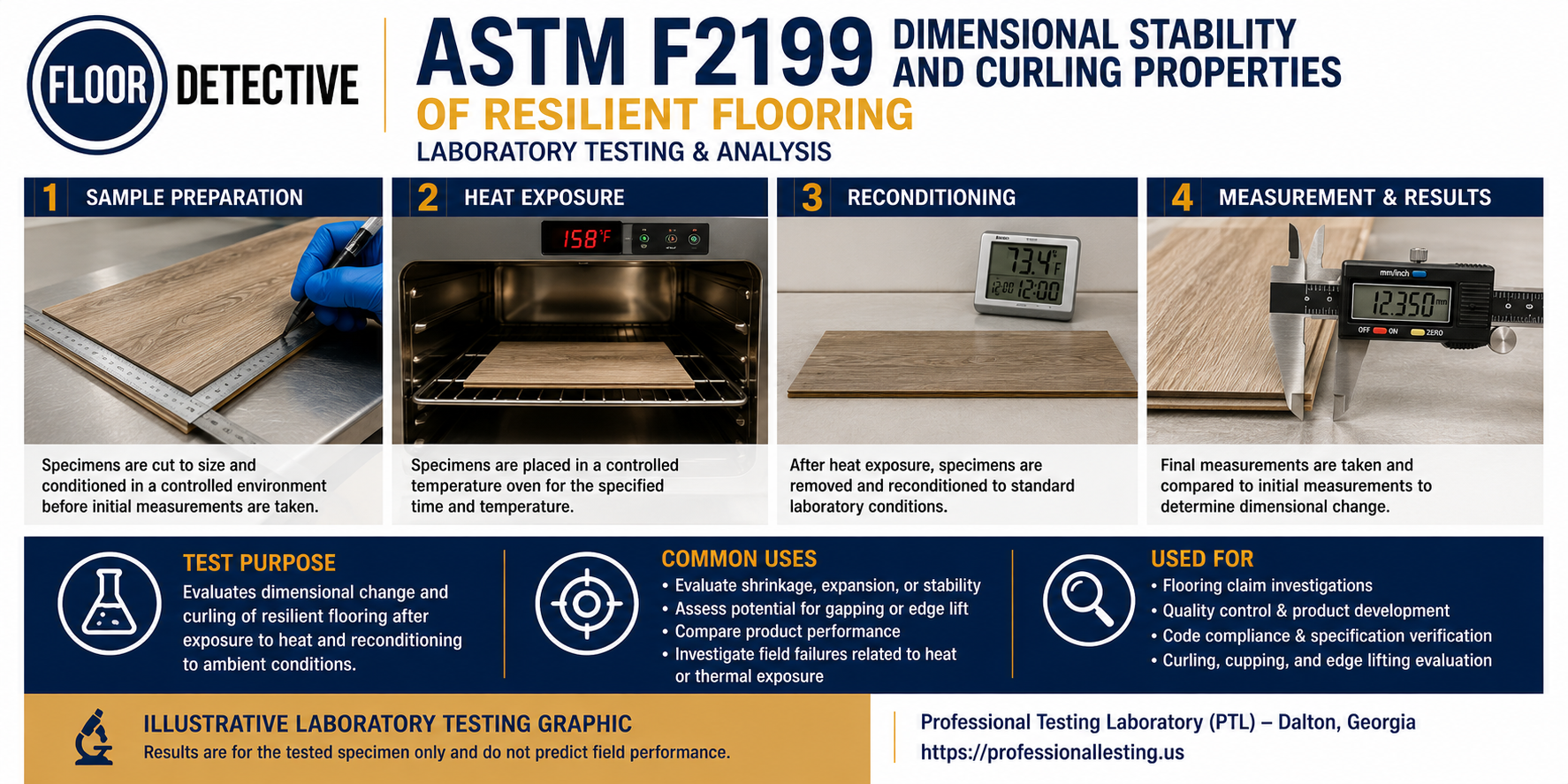
ASTM F2199 evaluates dimensional stability and curling properties of resilient flooring after controlled heat exposure. Learn how laboratories perform the...
Read More
May 31, 2026
Chair-caster damage in LVT and SPC flooring may appear as scratching, indentation, joint damage, noise, or locking-profile failure caused by...
Read More
May 25, 2026
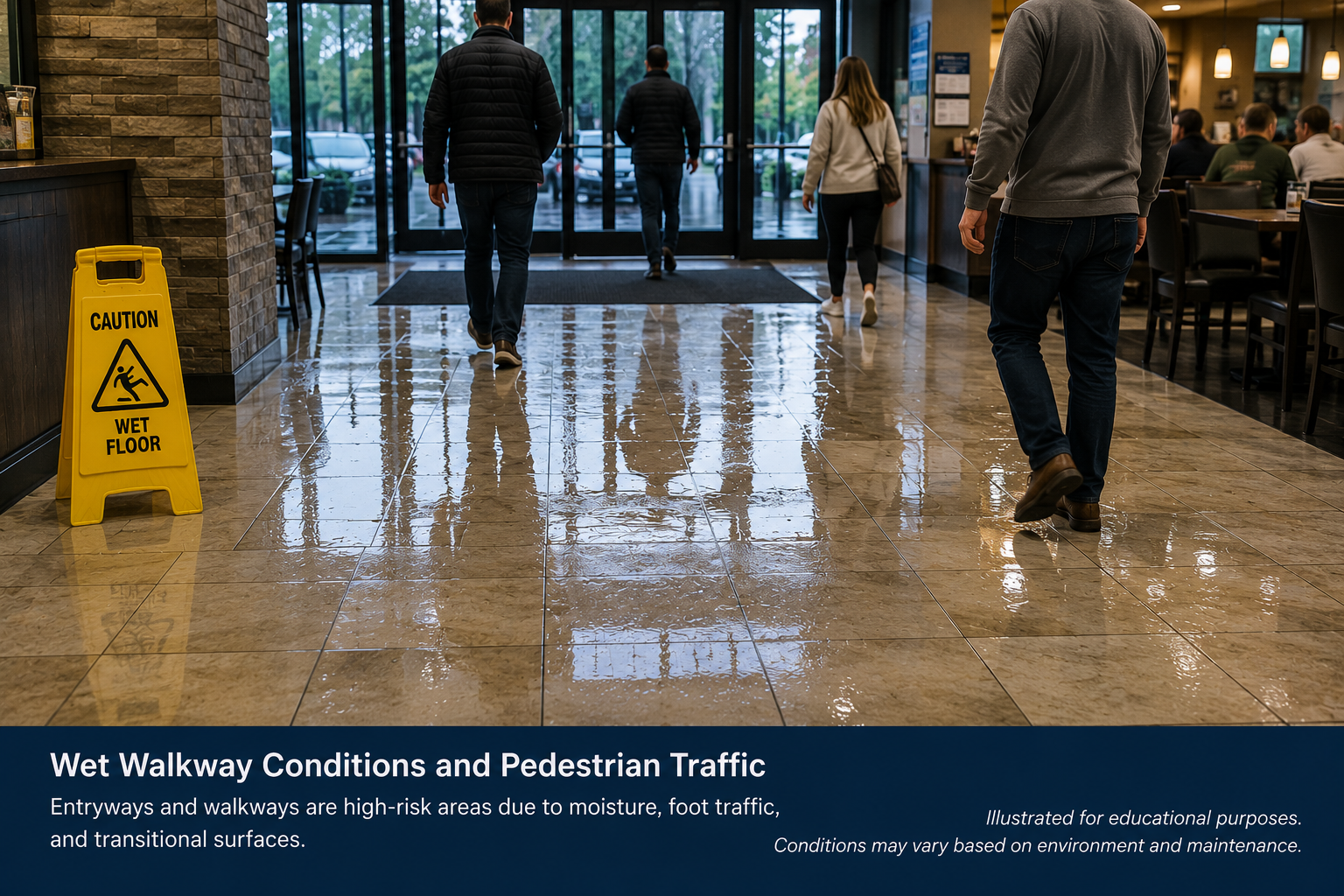
Wet tile slip resistance and surface traction are influenced by water exposure, contaminants, maintenance residue, and surface texture.
Read More
May 25, 2026
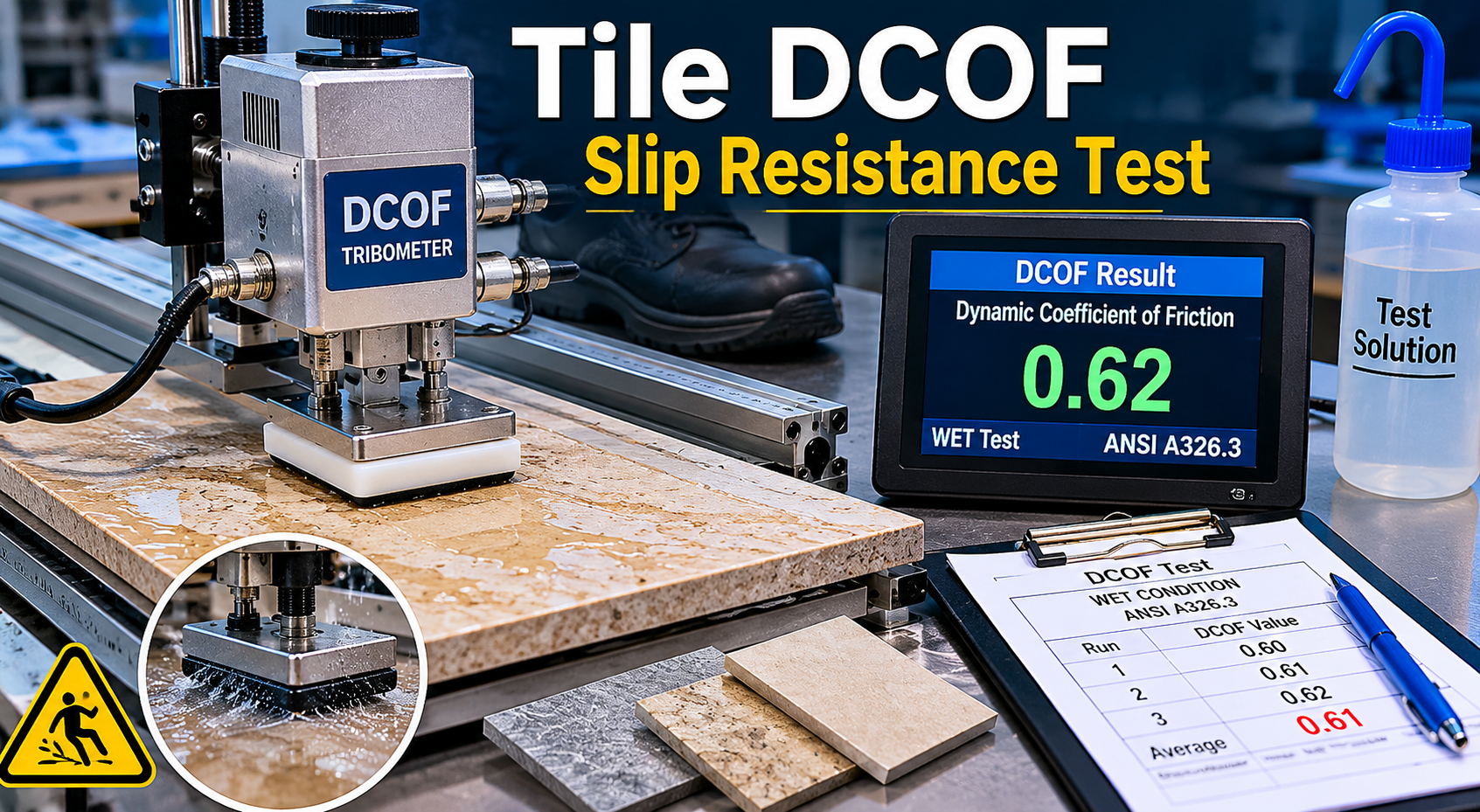
Tile DCOF testing evaluates dynamic traction characteristics of ceramic and porcelain tile surfaces under controlled conditions.
Read More
May 23, 2026
Flooring laboratory testing evaluates dimensional stability, bond integrity, moisture influence, contamination, wear, and material performance.
Read More
May 22, 2026
Tile and stone floor problems may involve cracking, lippage, bond loss, grout issues, moisture influence, or structural movement.
Read More
May 14, 2026
Laminate floor problems often develop from moisture exposure, floating-floor restraint, subfloor irregularities, or locking-system stress.
Read More
May 10, 2026
Hardwood floor problems may involve cupping, gaps, buckling, finish issues, movement, noise, or moisture-related distortion. Learn how hardwood flooring conditions...
Read More
May 4, 2026
Concrete moisture testing provides a snapshot of slab conditions but does not guarantee future performance or installation conditions.
Read More