Off Square Ends

Off-Square Ends (Laminate Flooring)

Floor Detective® Claims and Conditions Guide

Summary

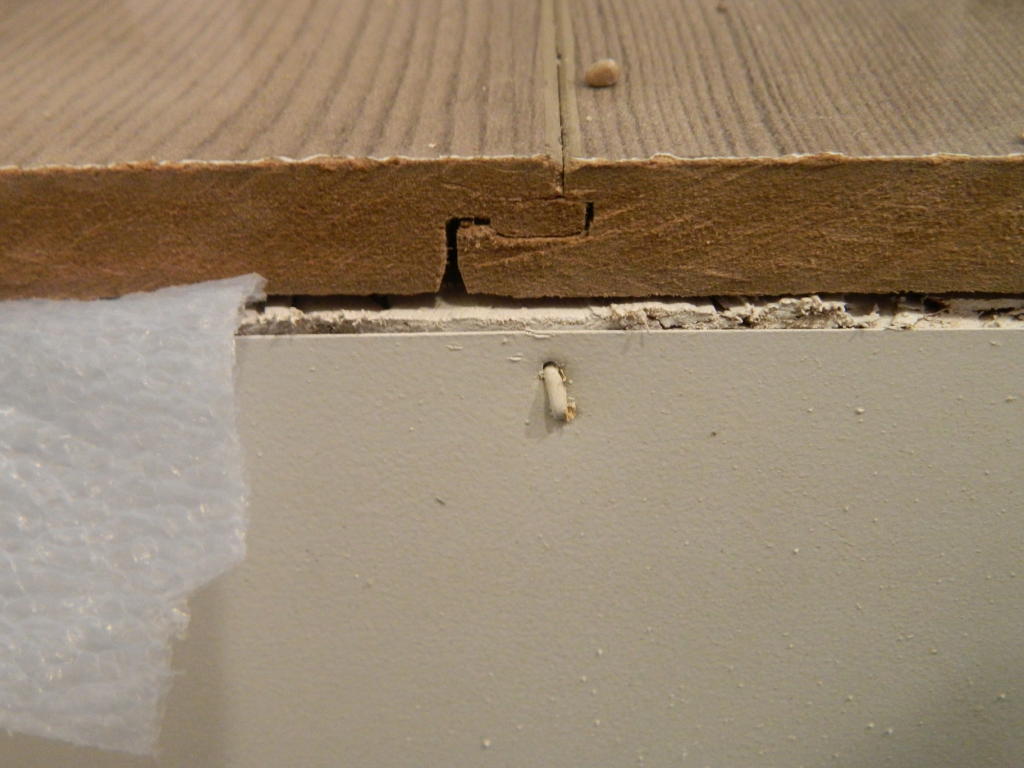
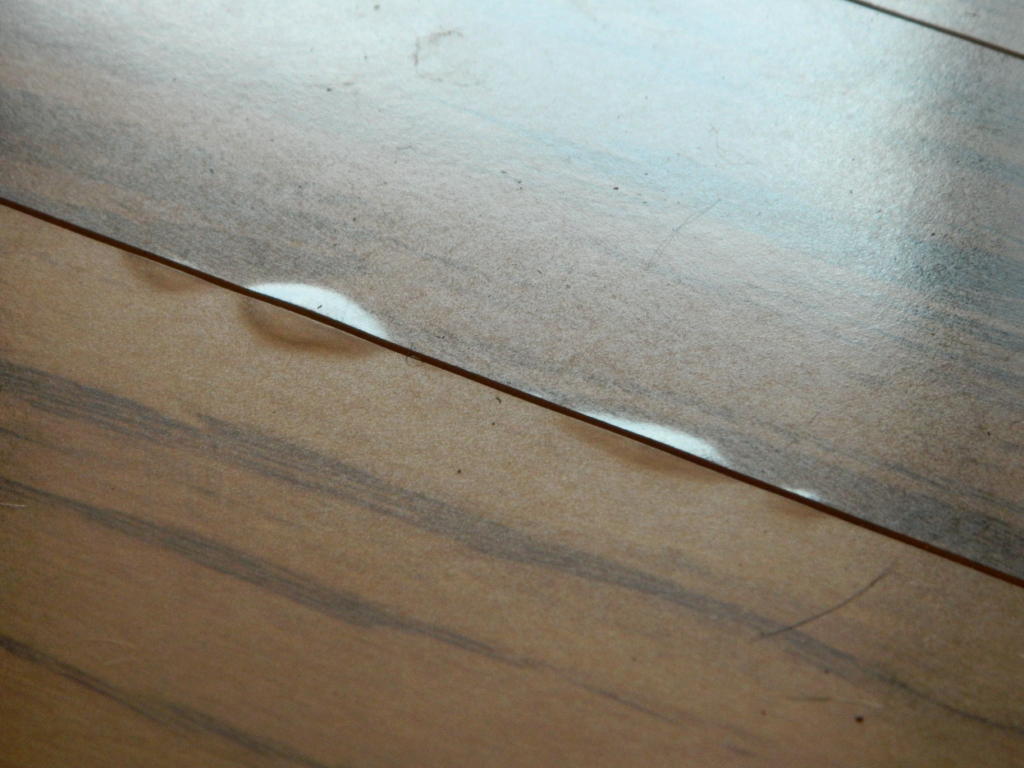
Off-square ends in laminate flooring refer to plank short ends that are not cut at a true 90-degree angle to the plank length. Because laminate flooring depends on precision-milled geometry for proper joint alignment, even small angular deviation may influence how adjoining planks fit together during installation. The condition may appear as skewed end joints, corner offsets, uneven joint lines, or gaps that cannot close evenly across the plank width. In some cases, minor deviation may fall within normal manufacturing tolerance depending on product design, joint profile, bevel configuration, and visual expectation. Off-square conditions originate during manufacturing and are not created by subfloor conditions, maintenance, or environmental exposure. Proper interpretation requires correlation of measurable deviation, repeatability, joint behavior, and comparison with representative material before conclusions are reached. See also Locking System Failure, Overwood, and Laminate Problems for broader context.
Please subscribe to see all content

Laminate Problems

Laminate floor problems often develop from moisture exposure, floating-floor restraint, subfloor irregularities, or locking-system stress.
Read More
Laminate Problems

Underlayment Compression / Support Loss (Laminate)
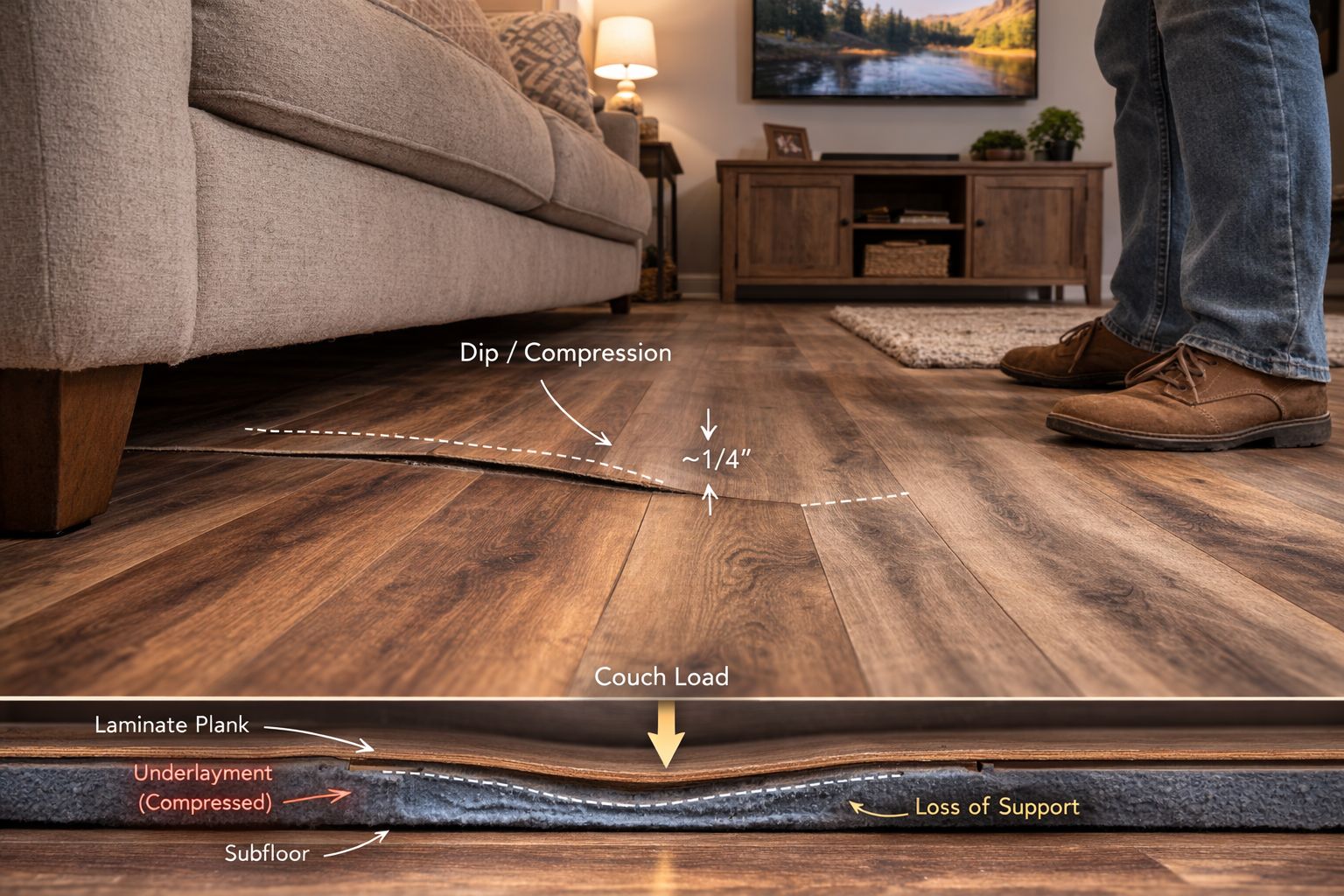
Laminate flooring underlayment compression involves support loss beneath the floating system causing movement and joint stress.
Read More
Underlayment Compression / Support Loss (Laminate)

Static Electricity Generation (Laminate)

Laminate flooring static electricity involves electrostatic charge buildup caused by low humidity and surface friction.
Read More
Static Electricity Generation (Laminate)

Pattern Repeat / Visual Repetition (Laminate Flooring)
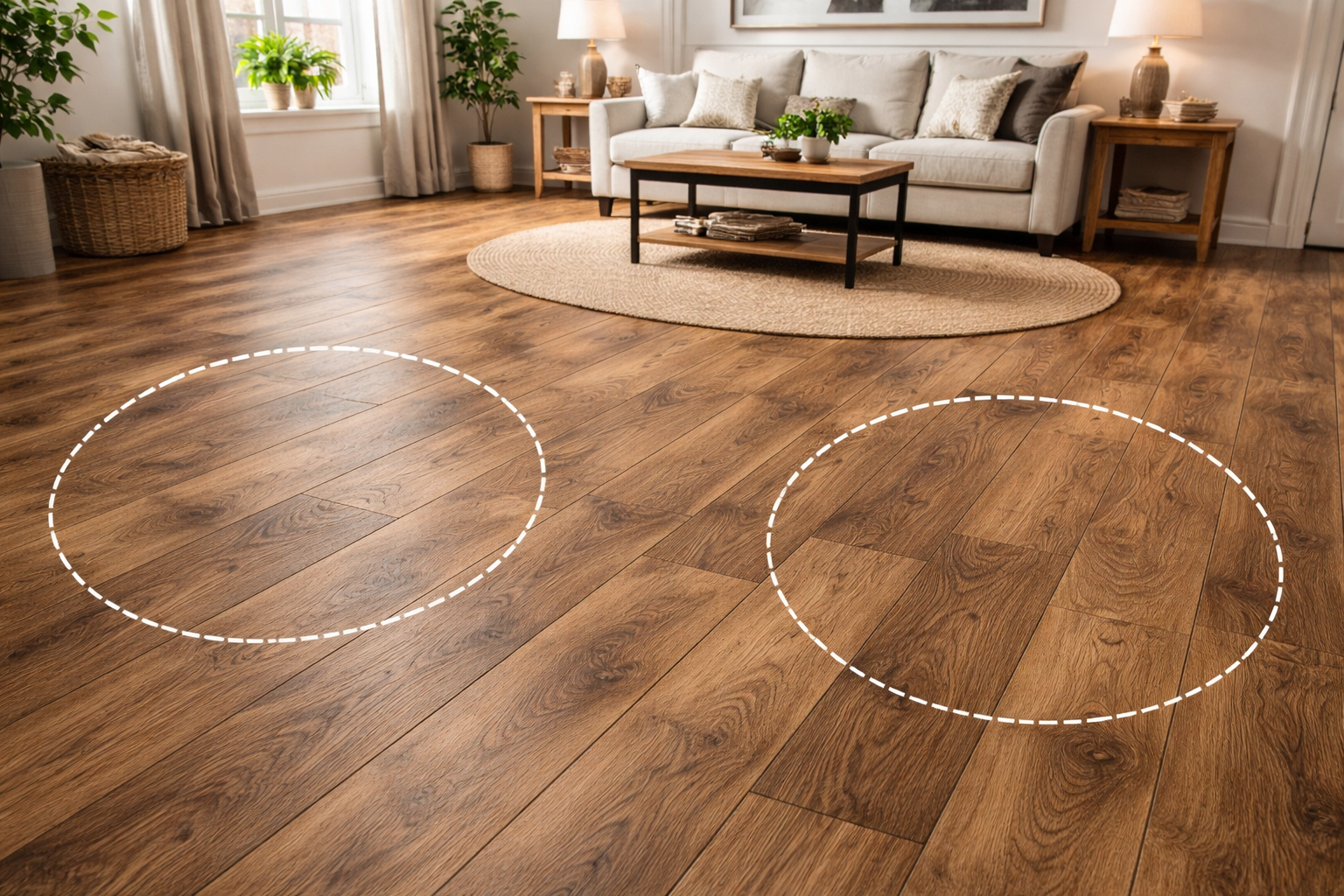
Laminate flooring pattern repeat involves recurring decorative plank visuals becoming noticeable within the installation.
Read More
Pattern Repeat / Visual Repetition (Laminate Flooring)

Color Lot Variation (Laminate)
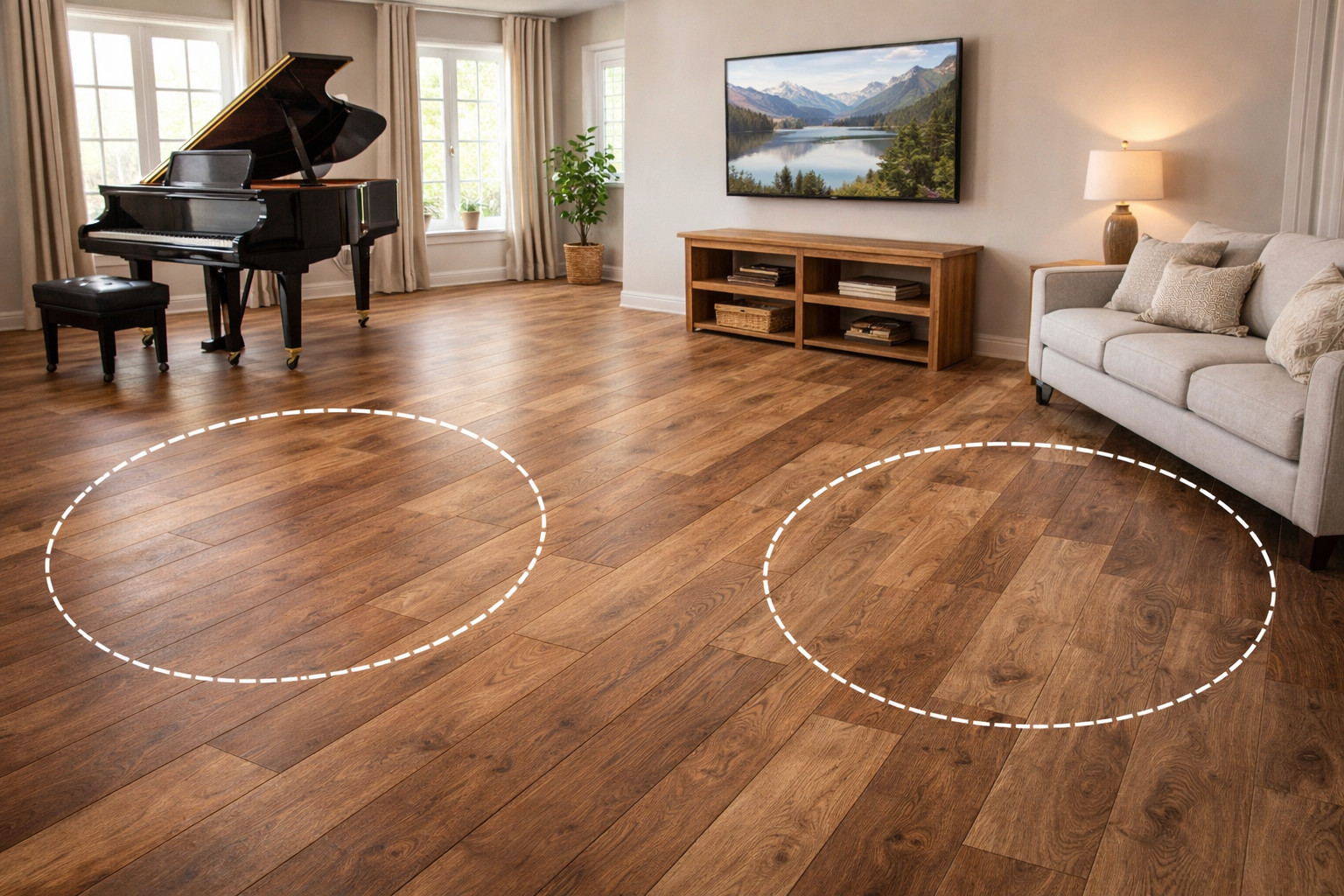
Laminate color lot variation involves visible shade or tonal differences between production runs, often influenced by lighting, blending practices, and...
Read More
Color Lot Variation (Laminate)

Locking Edge Crushing / Over-Tapping Damage (Laminate)
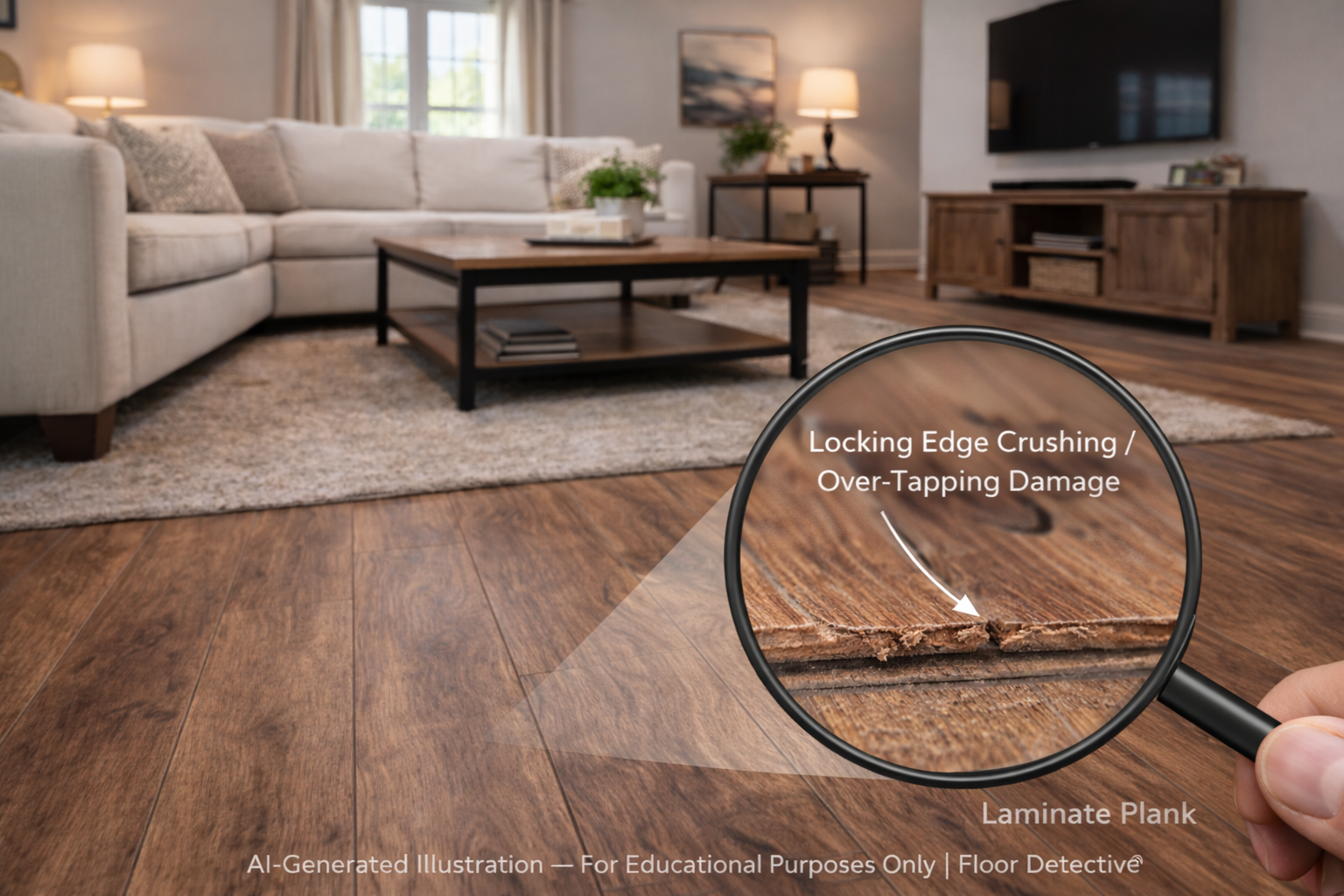
Laminate flooring locking edge crushing involves fractured or compressed locking profiles caused by excessive installation force or difficult plank engagement.
Read More
Locking Edge Crushing / Over-Tapping Damage (Laminate)

Edge Swell From Environmental Humidity (Laminate)
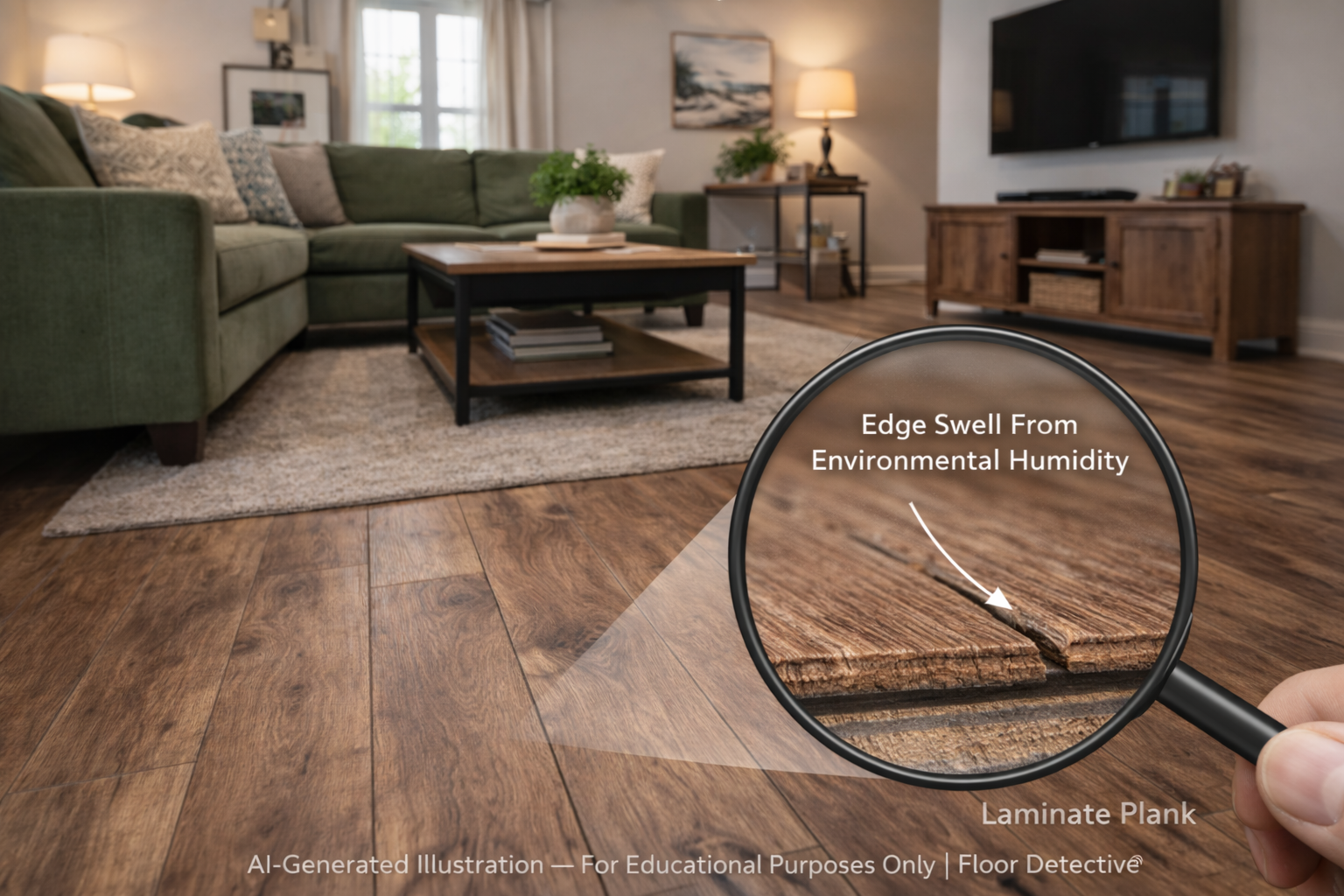
Laminate edge swell from environmental humidity involves raised or distorted plank edges caused by sustained elevated interior humidity exposure.
Read More
Edge Swell From Environmental Humidity (Laminate)

Surface Whitening from Topical Moisture Entrapment
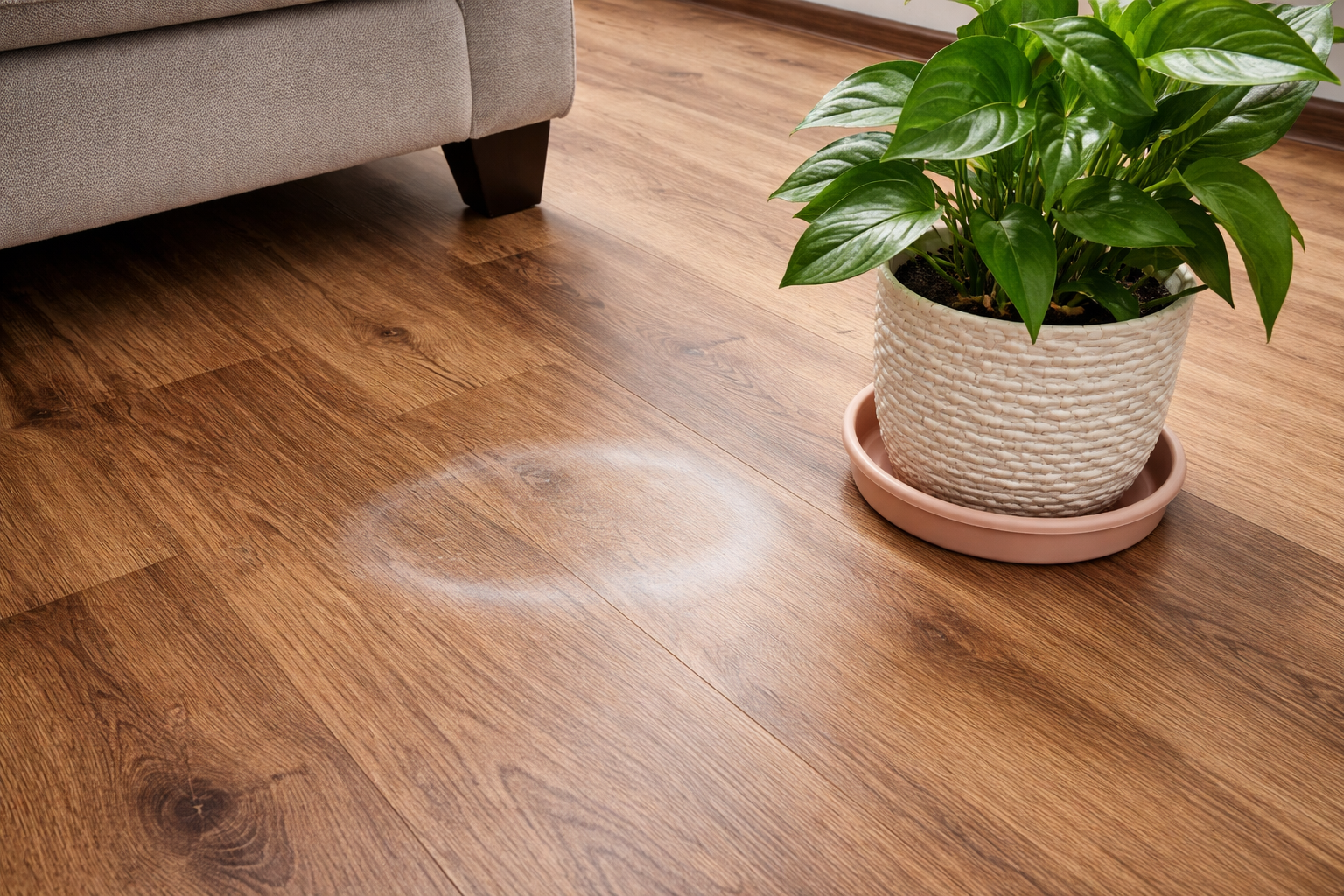
Laminate flooring surface whitening is a localized hazy or cloudy appearance caused by topical moisture entrapment and restricted evaporation.
Read More
Surface Whitening from Topical Moisture Entrapment

Hollow Sound / Acoustic Resonance (Laminate)coincidence whipping melt
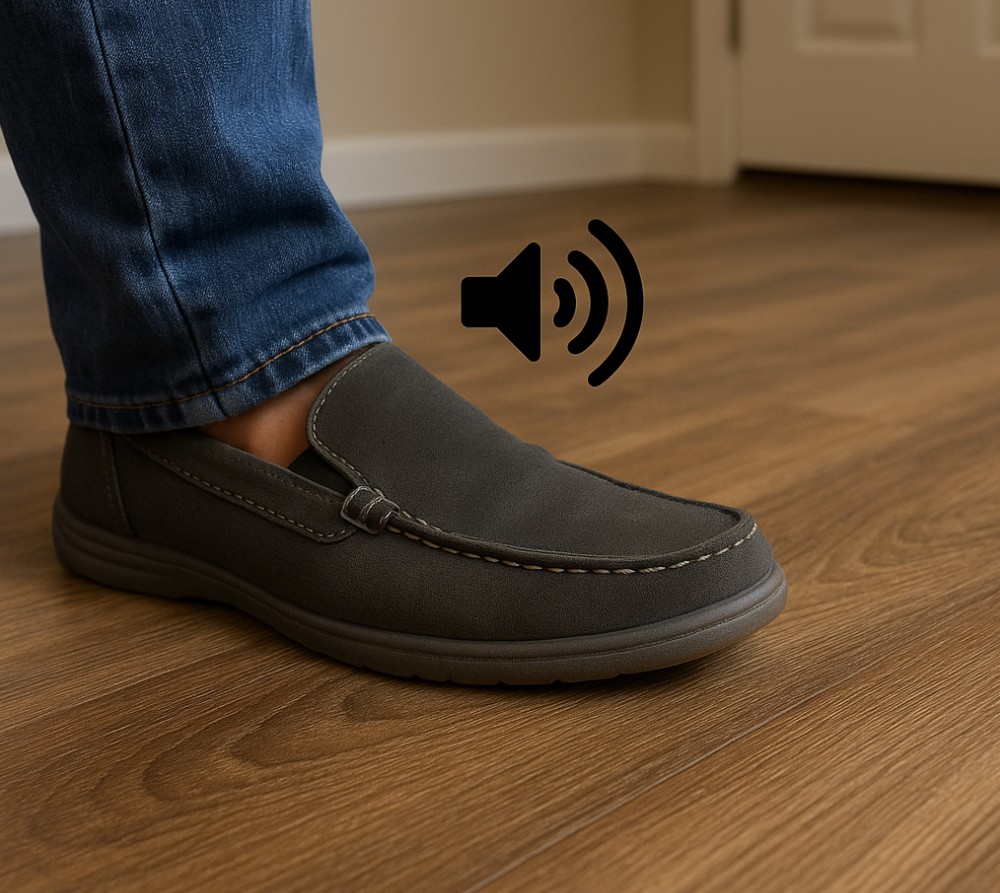
Laminate flooring hollow sound is an acoustic resonance condition commonly associated with floating-floor construction and support interaction.
Read More
Hollow Sound / Acoustic Resonance (Laminate)coincidence whipping melt

Vertical Movement / Deflection (Laminate
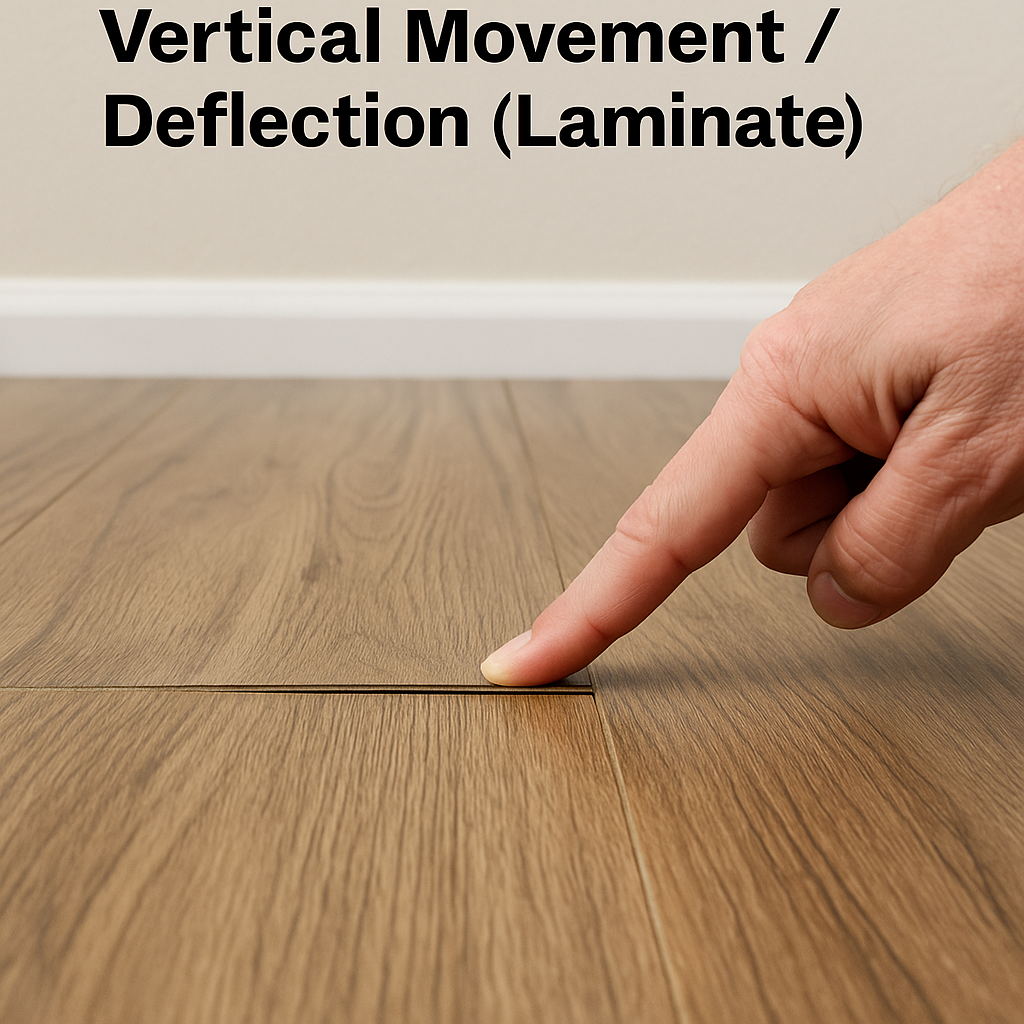
Laminate flooring vertical movement involves plank deflection caused by inconsistent support beneath the floating system.
Read More
Vertical Movement / Deflection (Laminate