
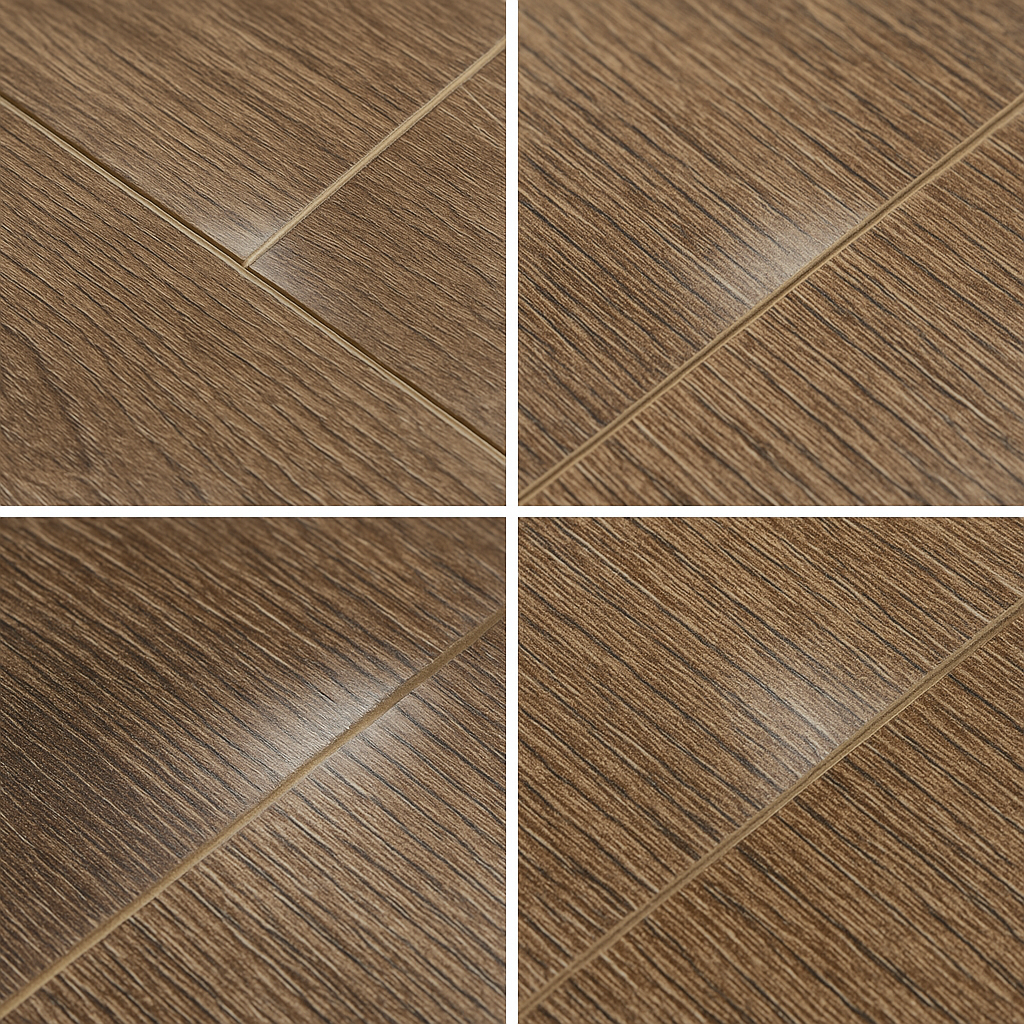
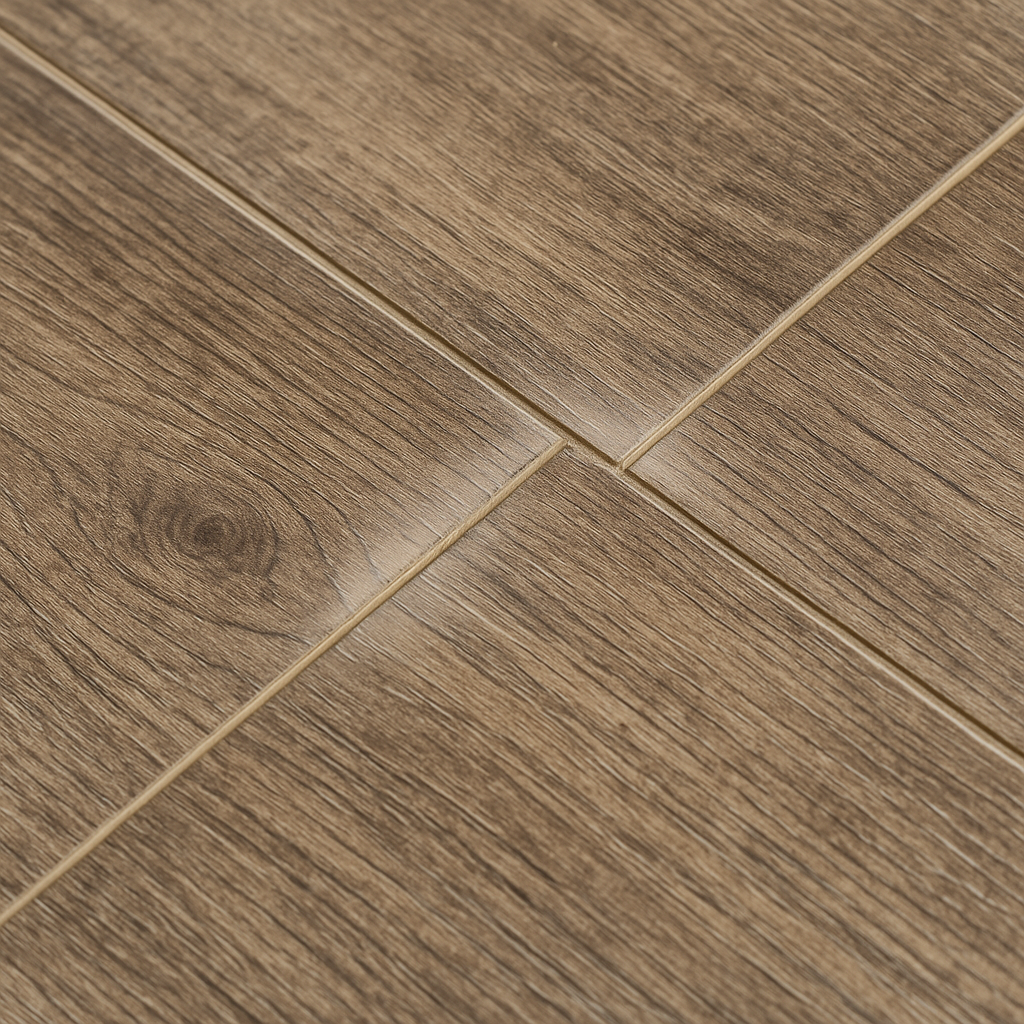
End Joint Appearance Variation (Laminate)
Floor Detective® Claims and Conditions Guide
Summary
End joint appearance variation in laminate flooring refers to localized lightening, whitening, or reduced pattern contrast visible at the short ends of planks. The condition is typically confined to joint areas and does not extend into the main field surface. In most cases, the effect is optical or surface-related rather than true pigment loss. Contributing factors may include joint compression, light reflectance differences, micro-abrasion, residue accumulation, or localized surface stress. The condition is cosmetic and does not indicate
ASTM F970 Static Load Test (Resilient Flooring)
June 22, 2026
ASTM F970 Static Load Testing evaluates the recovery properties of resilient flooring after concentrated static loading. Learn how residual indentation...
Read More

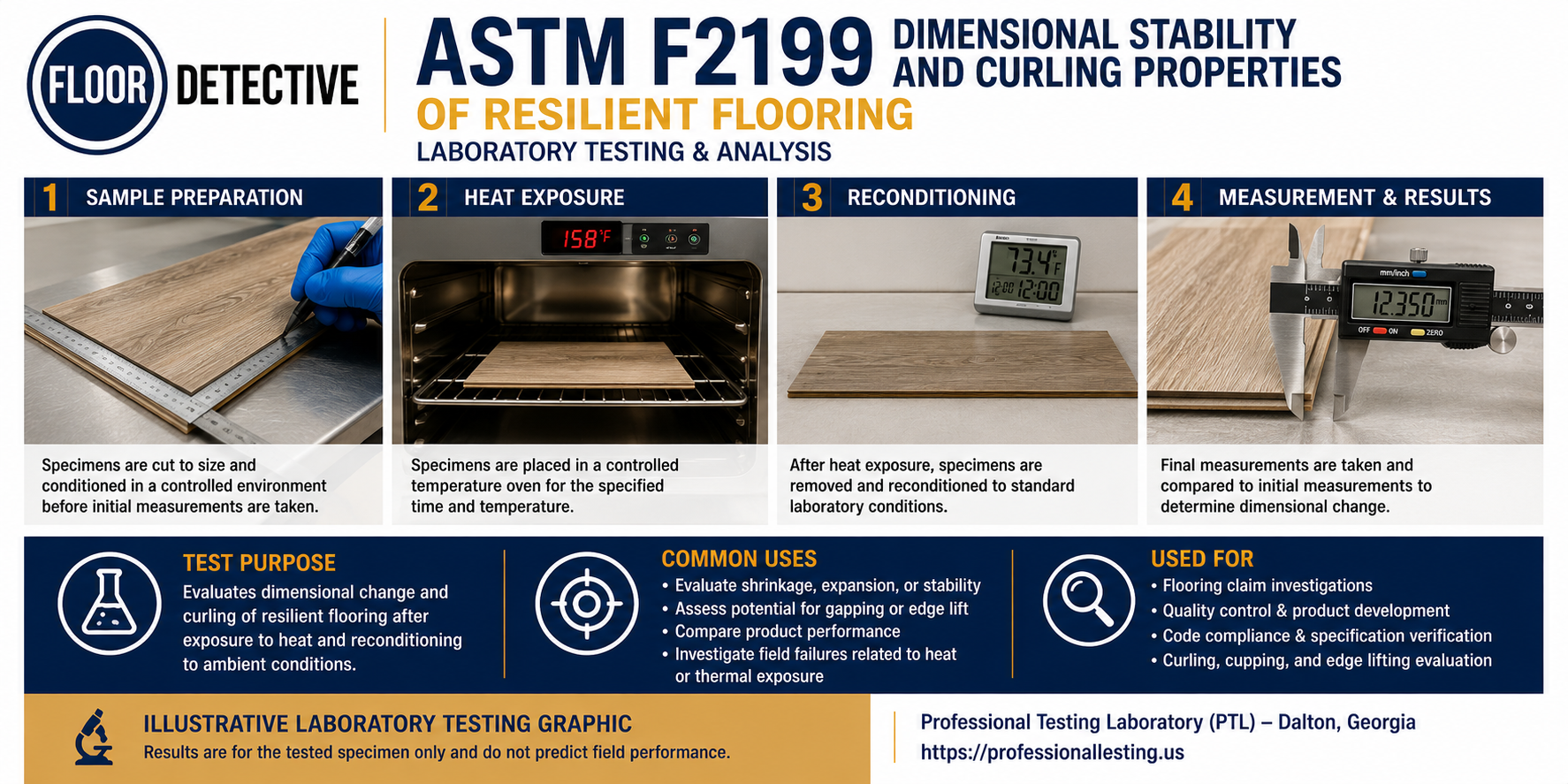
ASTM F2199 – Dimensional Stability and Curling Properties of Resilient Flooring
June 14, 2026
ASTM F2199 evaluates dimensional stability and curling properties of resilient flooring after controlled heat exposure. Learn how laboratories perform the...
Read More
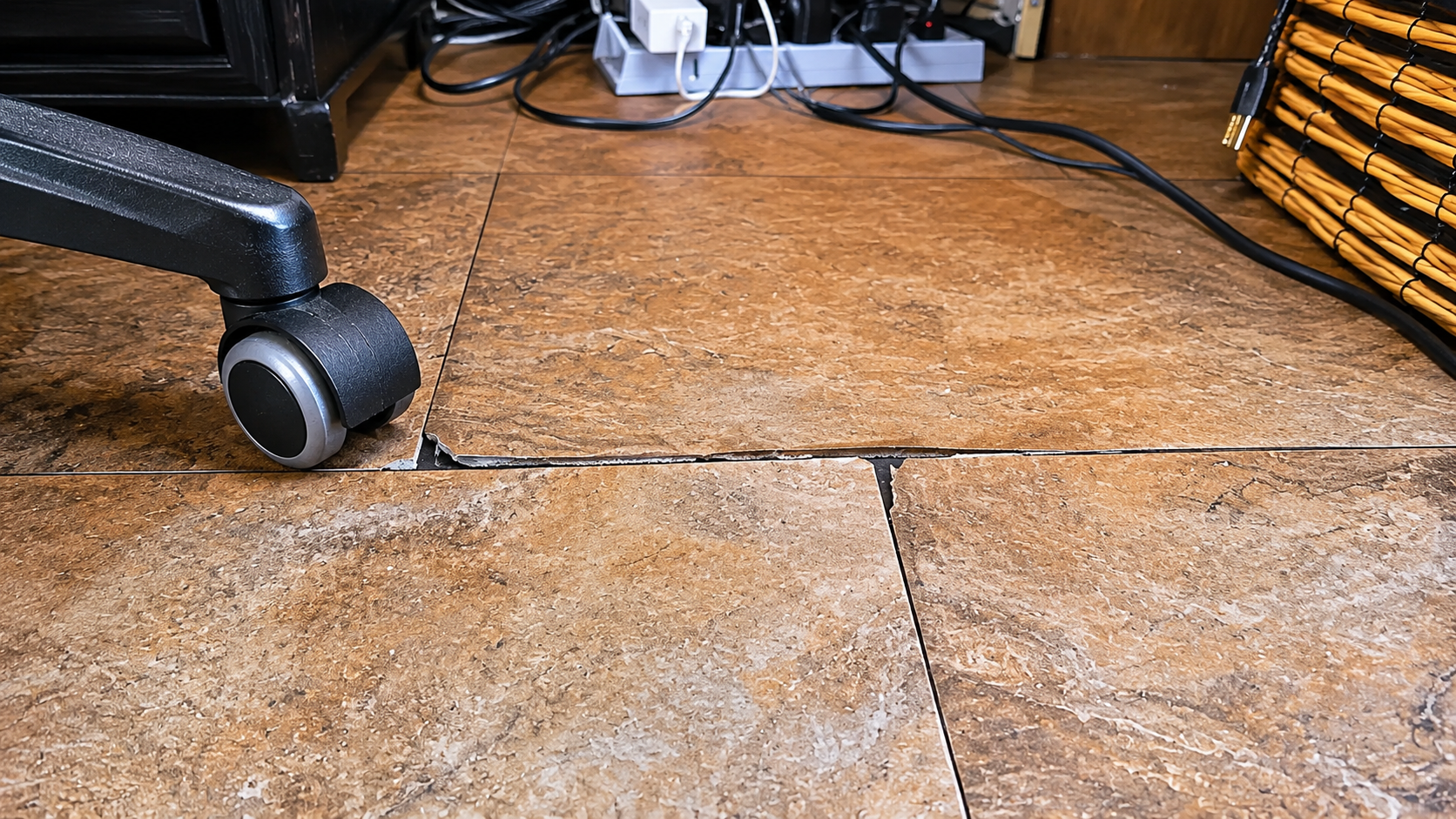
Chair-Caster Damage (LVT/SPC Flooring)
May 31, 2026
Chair-caster damage in LVT and SPC flooring may appear as scratching, indentation, joint damage, noise, or locking-profile failure caused by...
Read More
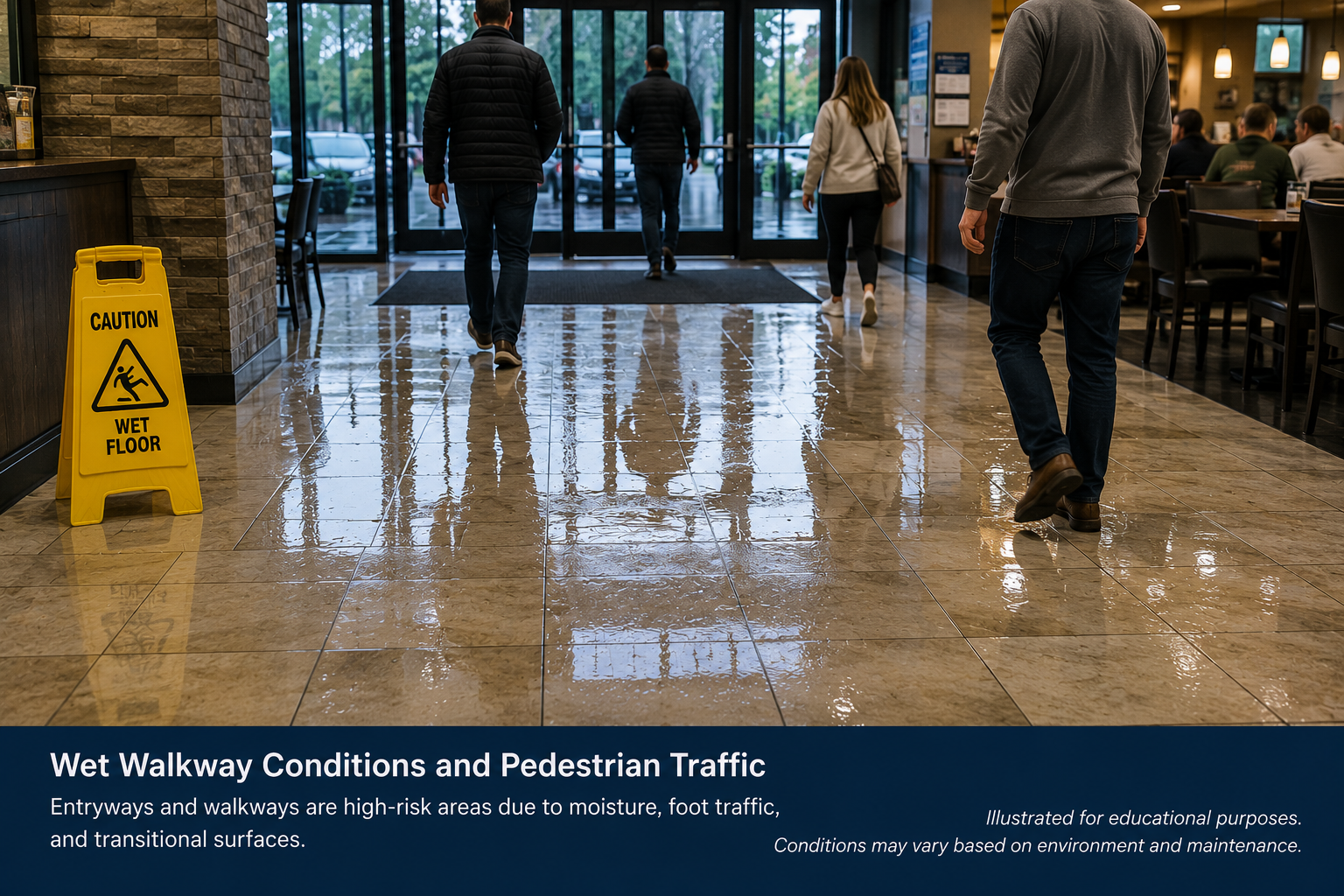
Wet Tile Slip Resistance and Surface Traction
May 25, 2026
Wet tile slip resistance and surface traction are influenced by water exposure, contaminants, maintenance residue, and surface texture.
Read More
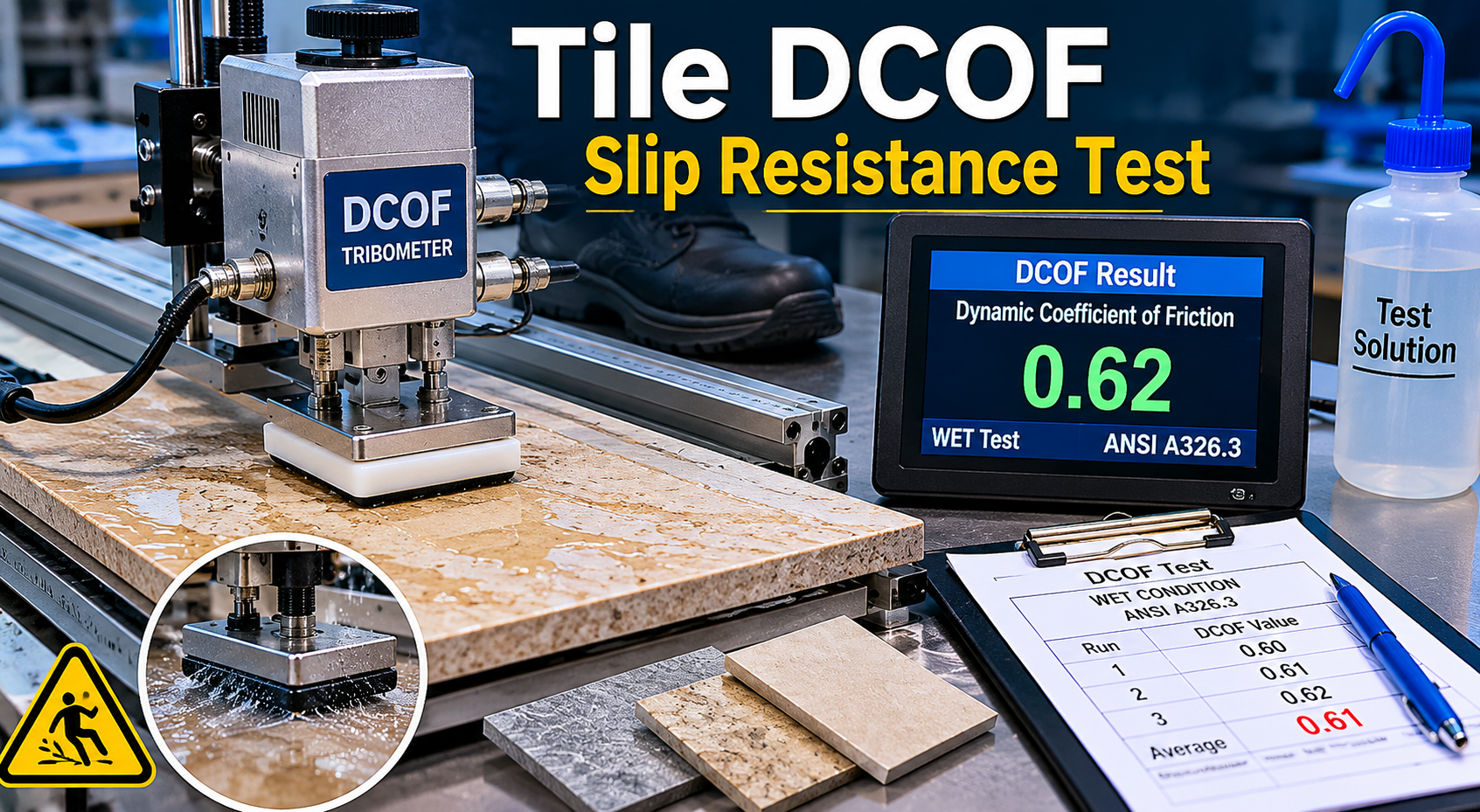
Tile DCOF Slip Resistance Test (ANSI A326.3)
May 25, 2026
Tile DCOF testing evaluates dynamic traction characteristics of ceramic and porcelain tile surfaces under controlled conditions.
Read More
Flooring Laboratory Testing and Analysis
May 23, 2026
Flooring laboratory testing evaluates dimensional stability, bond integrity, moisture influence, contamination, wear, and material performance.
Read More

Tile and Stone Floor Problems
May 22, 2026
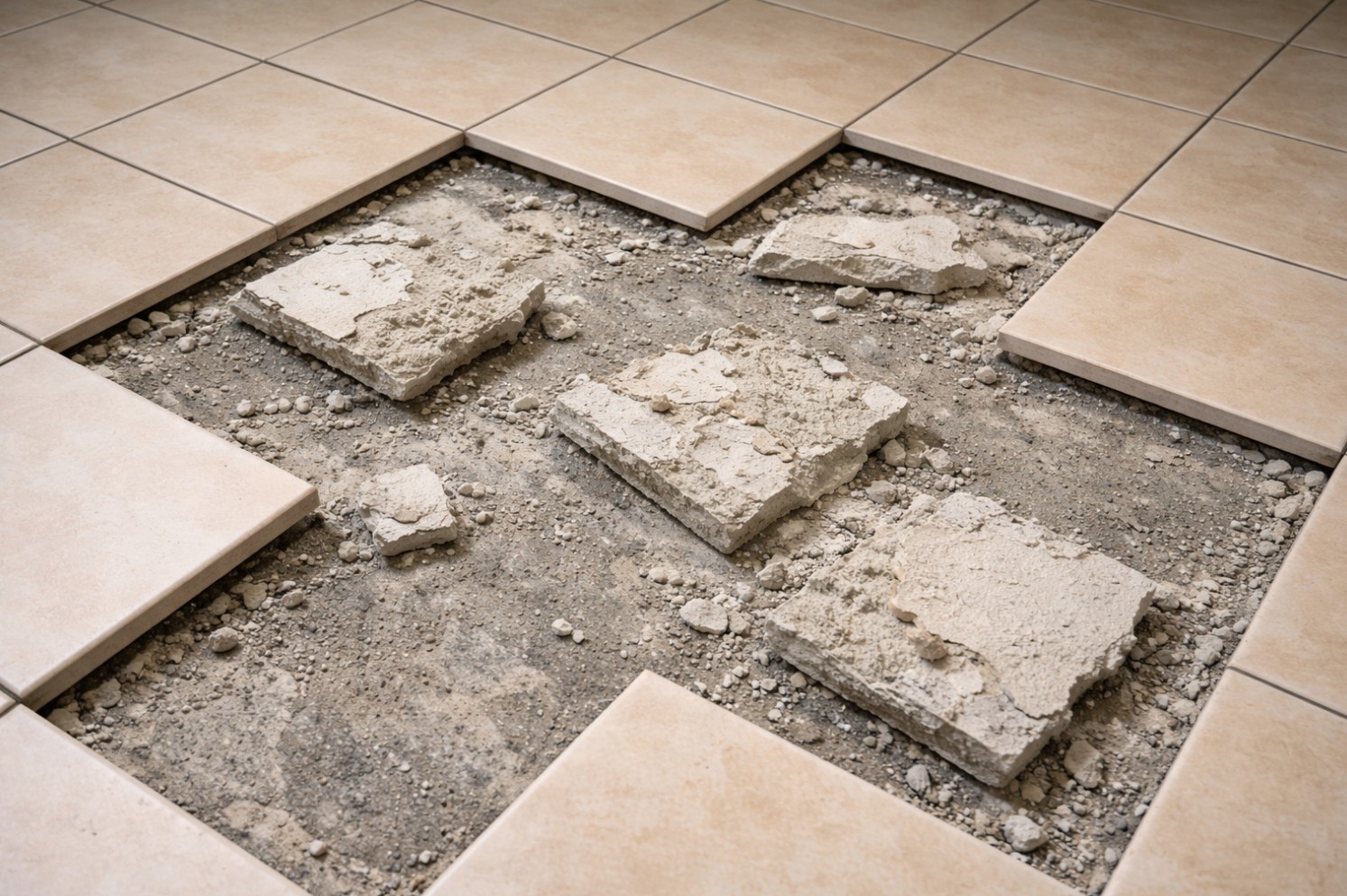
Tile and stone floor problems may involve cracking, lippage, bond loss, grout issues, moisture influence, or structural movement.
Read More
Laminate Problems
May 14, 2026
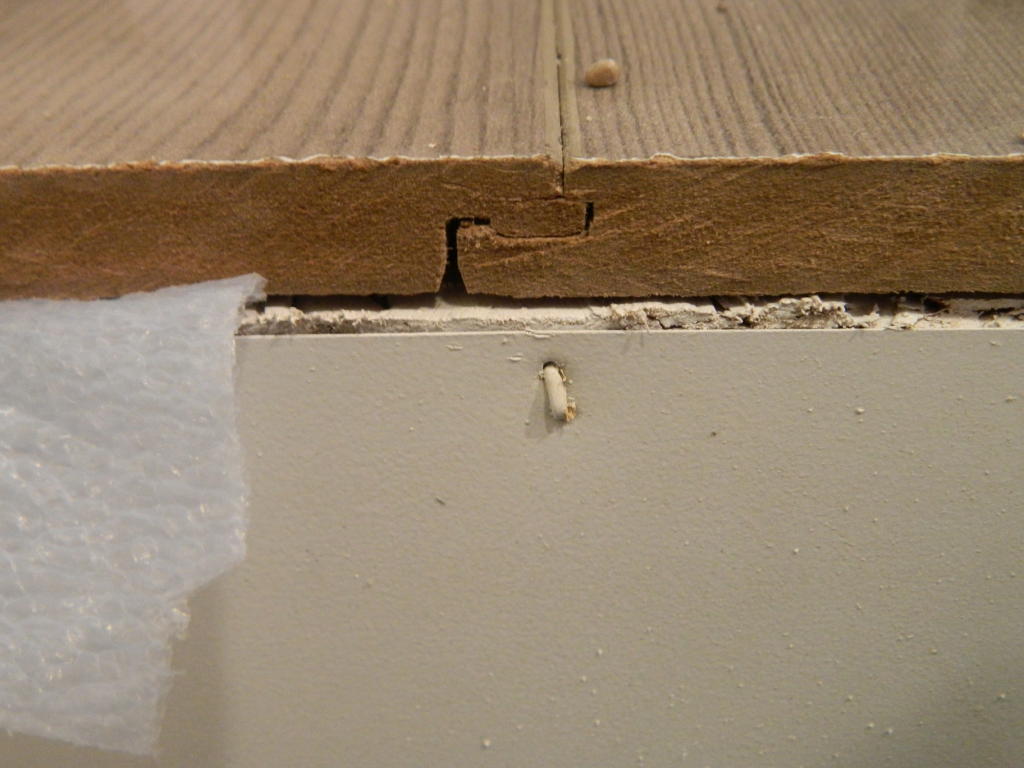
Laminate floor problems often develop from moisture exposure, floating-floor restraint, subfloor irregularities, or locking-system stress.
Read More
Hardwood Floor Problems
May 10, 2026
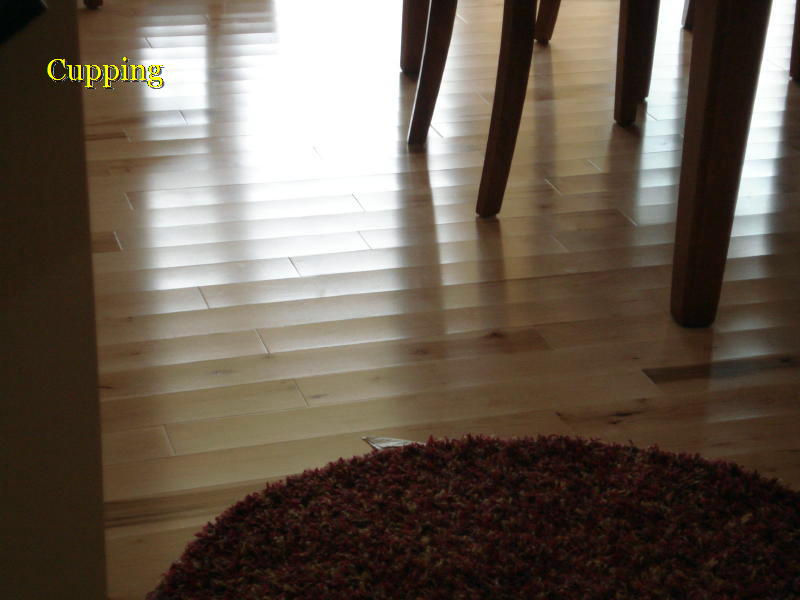
Hardwood floor problems may involve cupping, gaps, buckling, finish issues, movement, noise, or moisture-related distortion. Learn how hardwood flooring conditions...
Read More
Limitations of Moisture Testing (Concrete / Substrates)
May 4, 2026
Concrete moisture testing provides a snapshot of slab conditions but does not guarantee future performance or installation conditions.
Read More
