Warpage
Warpage
Measuring Tile
Warpage
Measurement
Measurement
Warpage
Warpage (Tile)
Floor Detective® Claims and Conditions Guide
Summary
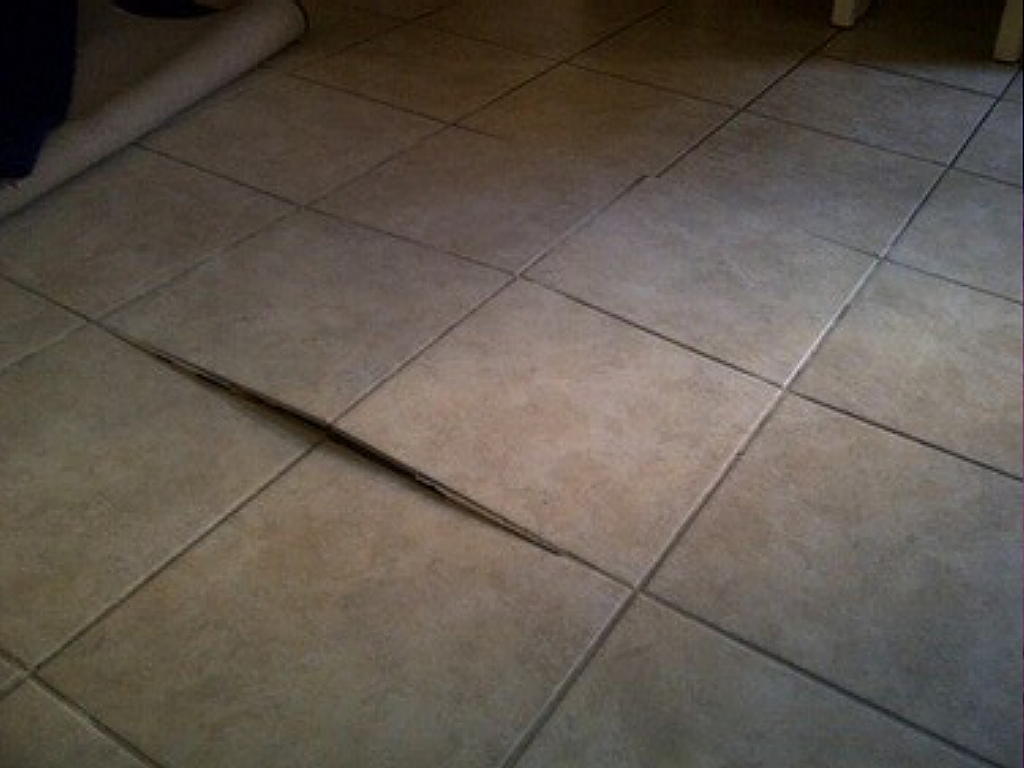
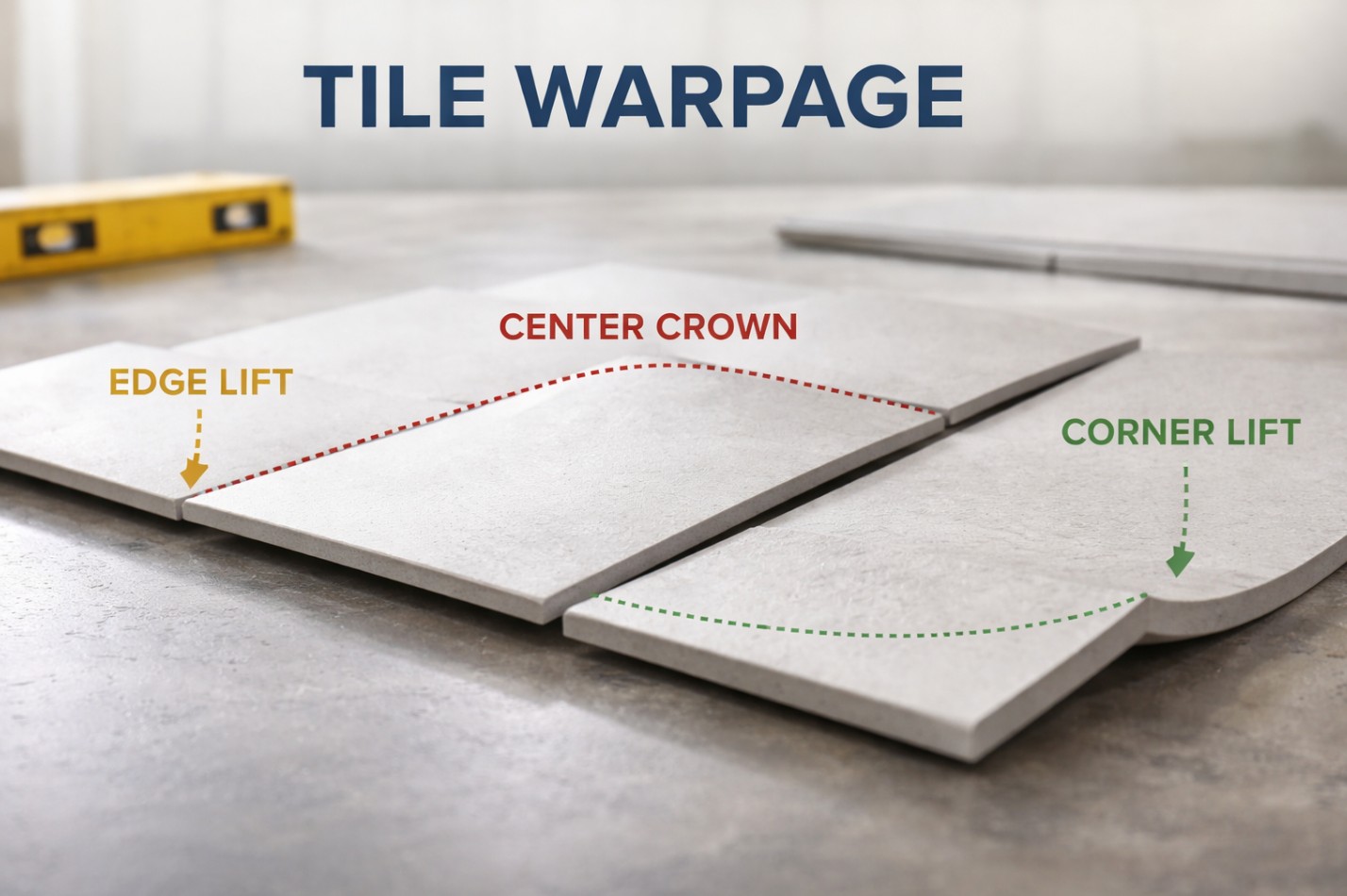
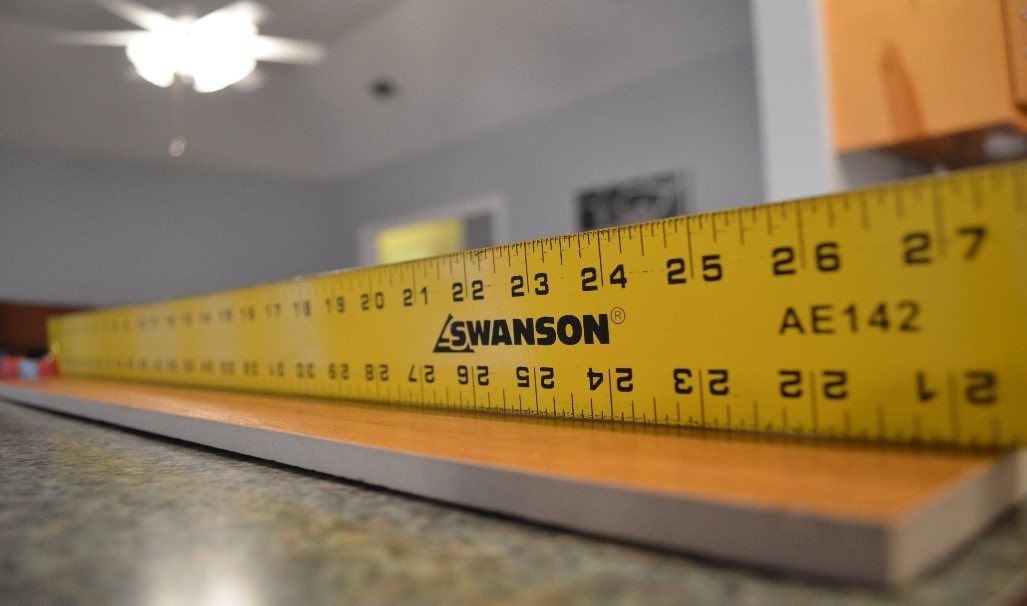
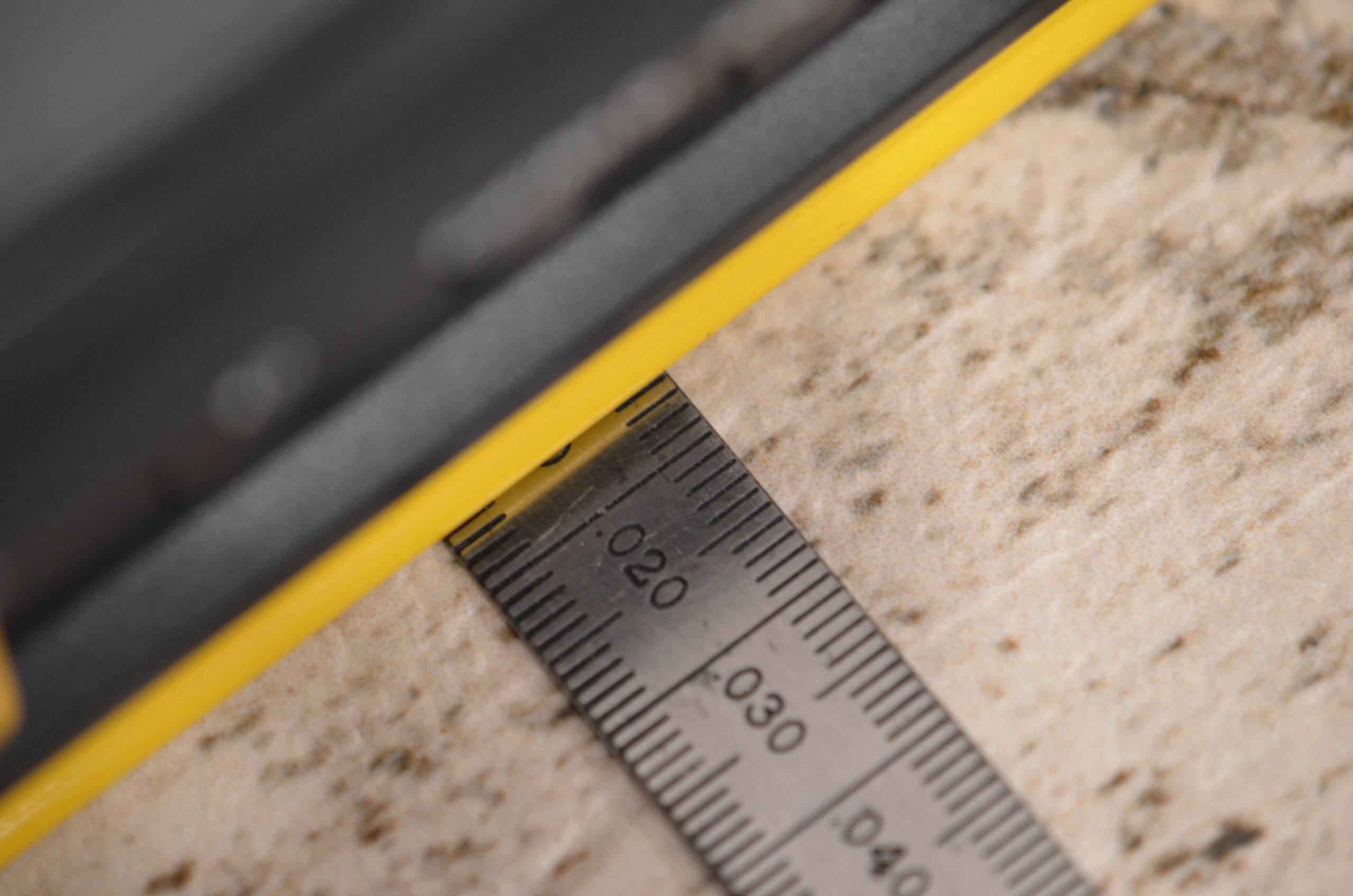
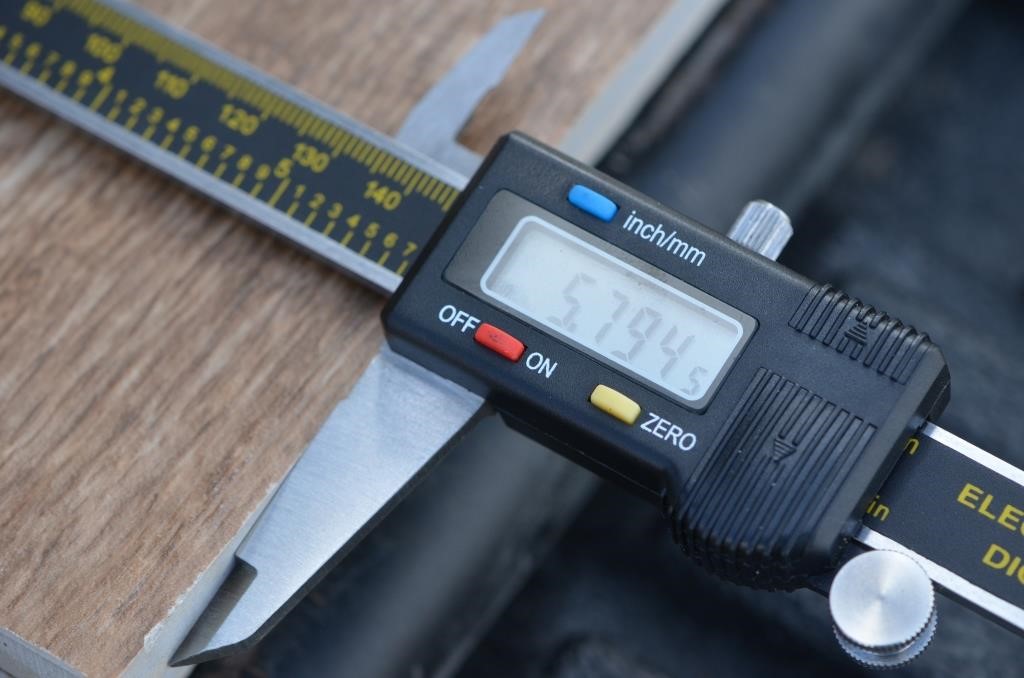
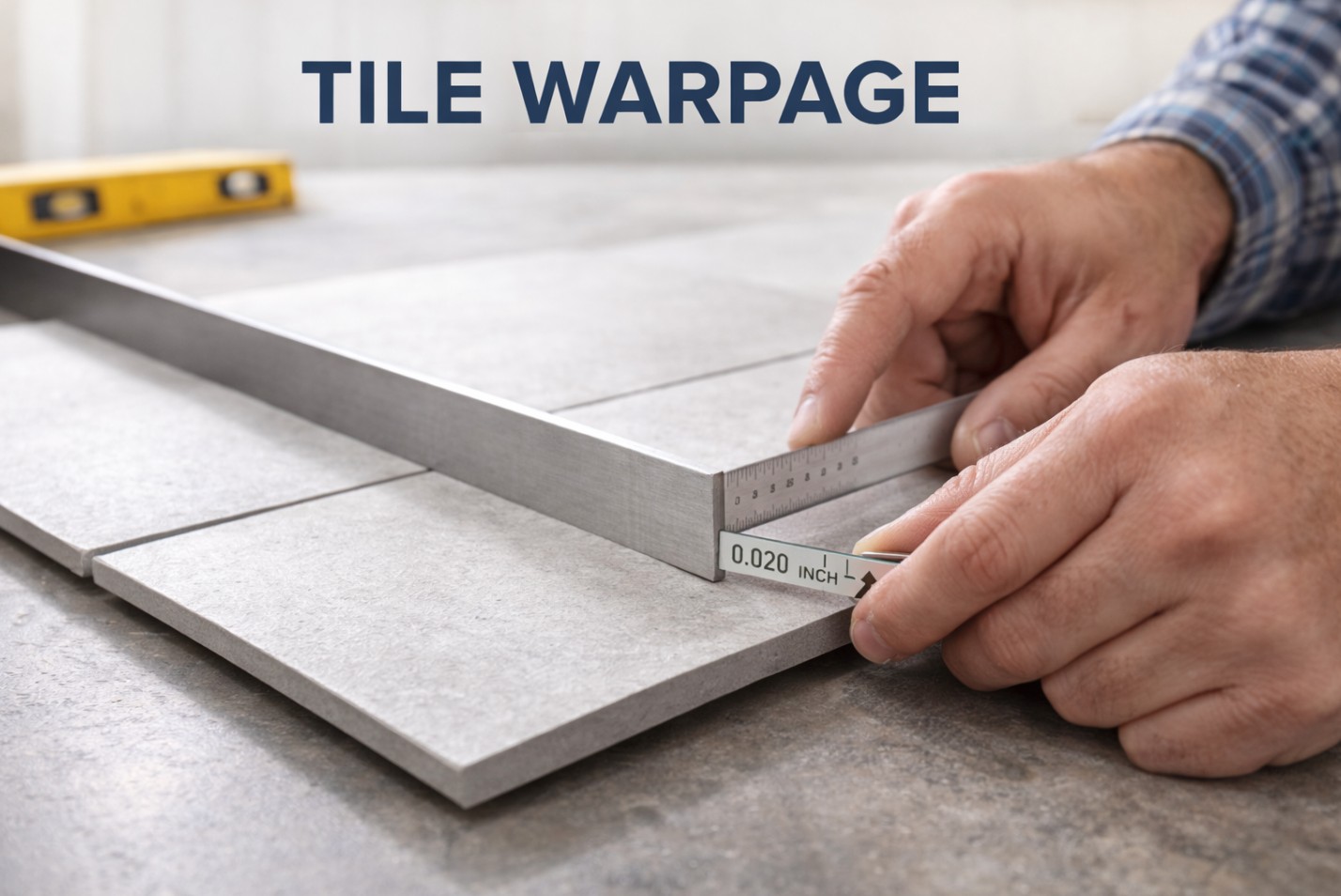
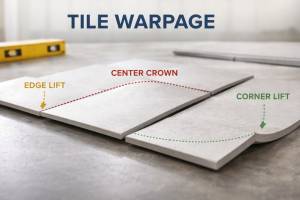
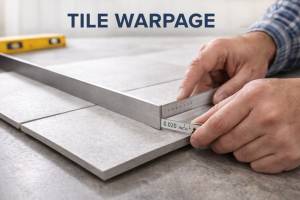
Tile warpage describes deviation of a ceramic or porcelain tile from a true flat plane. Warpage develops during manufacturing as tile bodies shrink and densify during kiln firing and cooling. Variations in raw materials, forming pressure, glaze application, and firing conditions may produce measurable curvature within individual tiles. Warpage may appear as edge lift, center crown, bowing, cupping, or diagonal twist. Industry standards recognize that fired tile products exhibit measurable warpage and establish allowable limits for these characteristics. Evaluation focuses on measuring tile warpage using recognized methods and determining how tile curvature interacts with grout joint width, layout pattern, substrate flatness, lighting conditions, and installation tolerances. See also Lippage, Tenting (Tile), and Tile and Stone Floor Problems.
Please subscribe to see all content
May 25, 2026
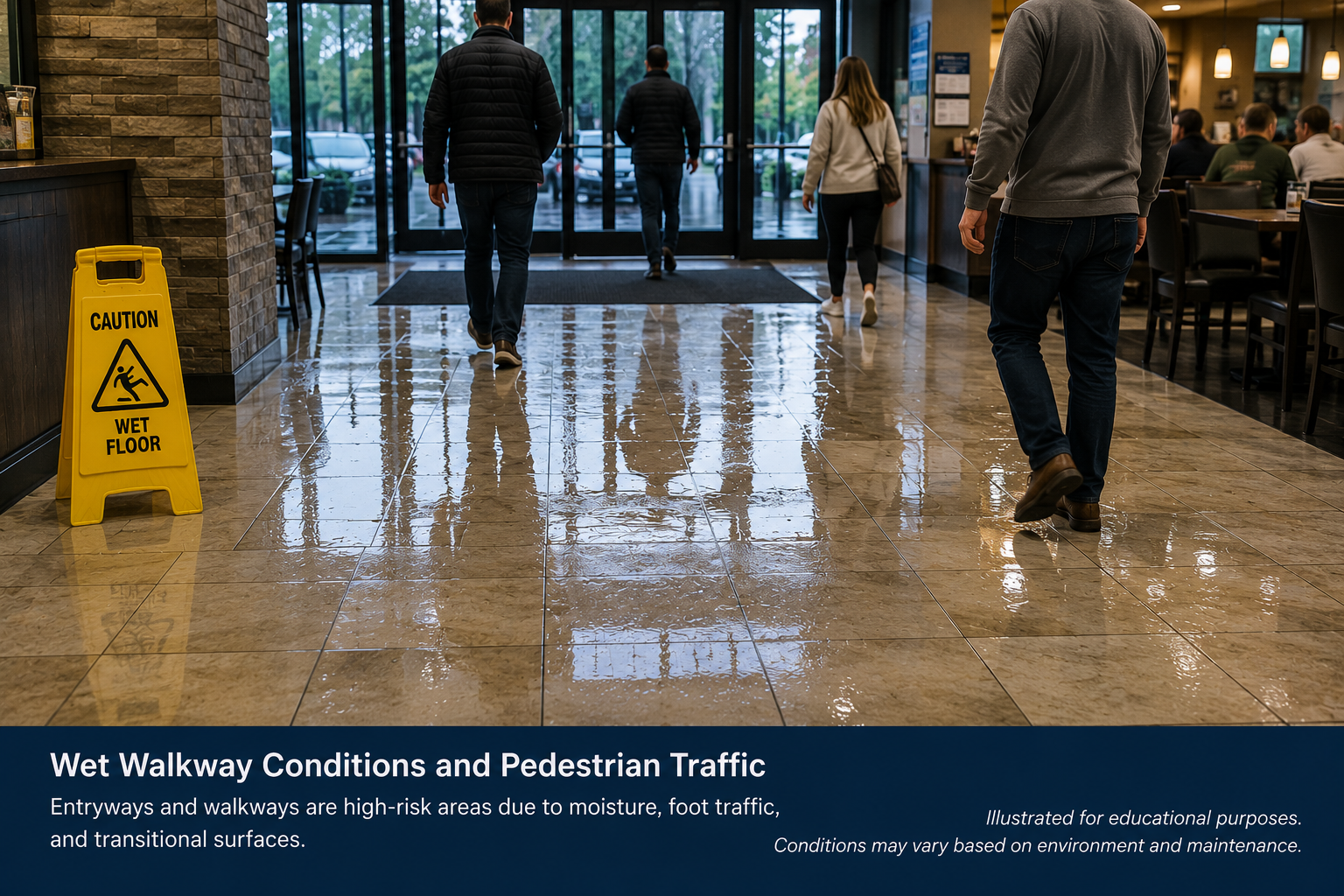
Wet tile slip resistance and surface traction are influenced by water exposure, contaminants, maintenance residue, and surface texture.
Read More
May 22, 2026
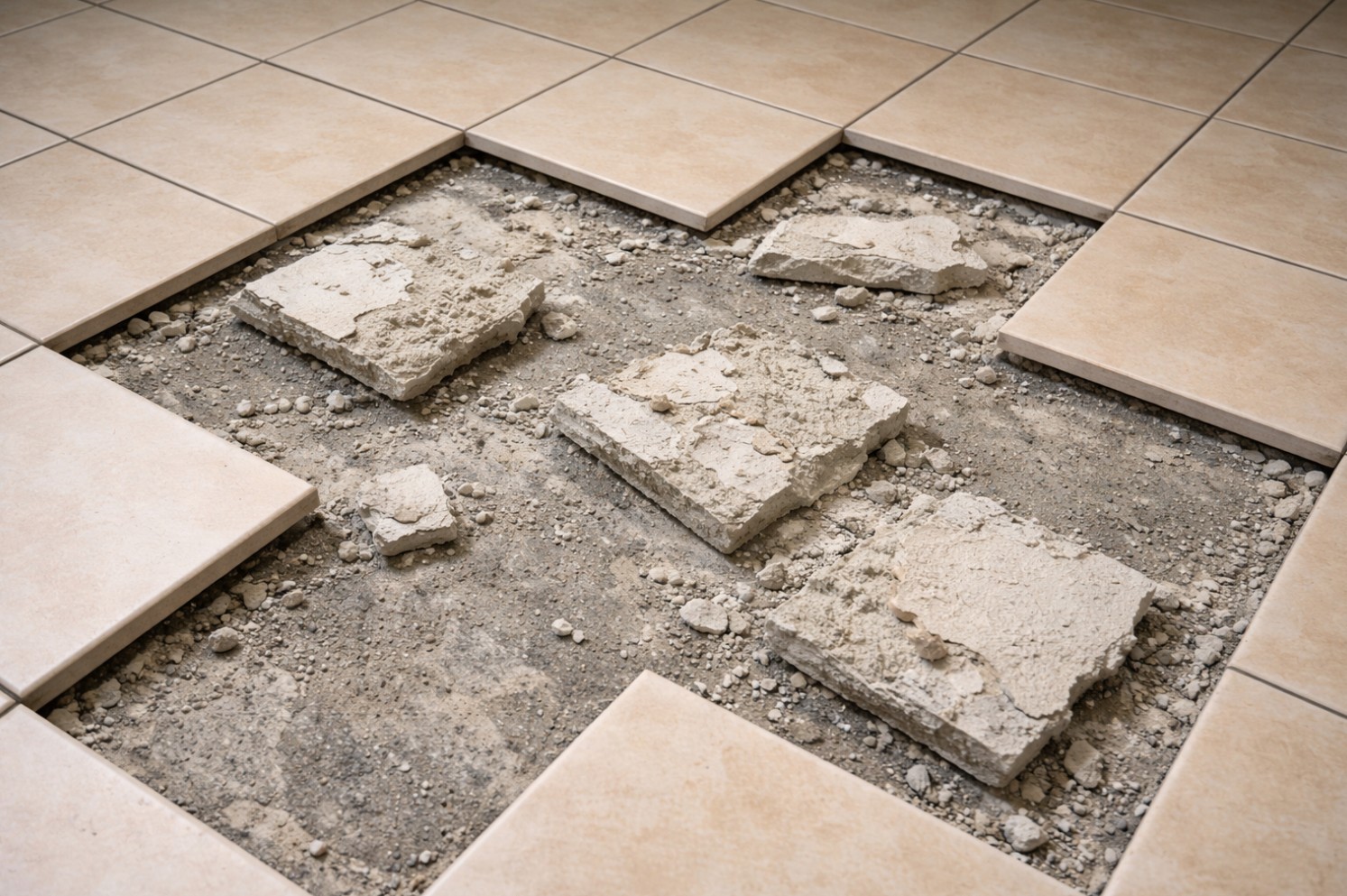
Tile and stone floor problems may involve cracking, lippage, bond loss, grout issues, moisture influence, or structural movement.
Read More
March 6, 2026
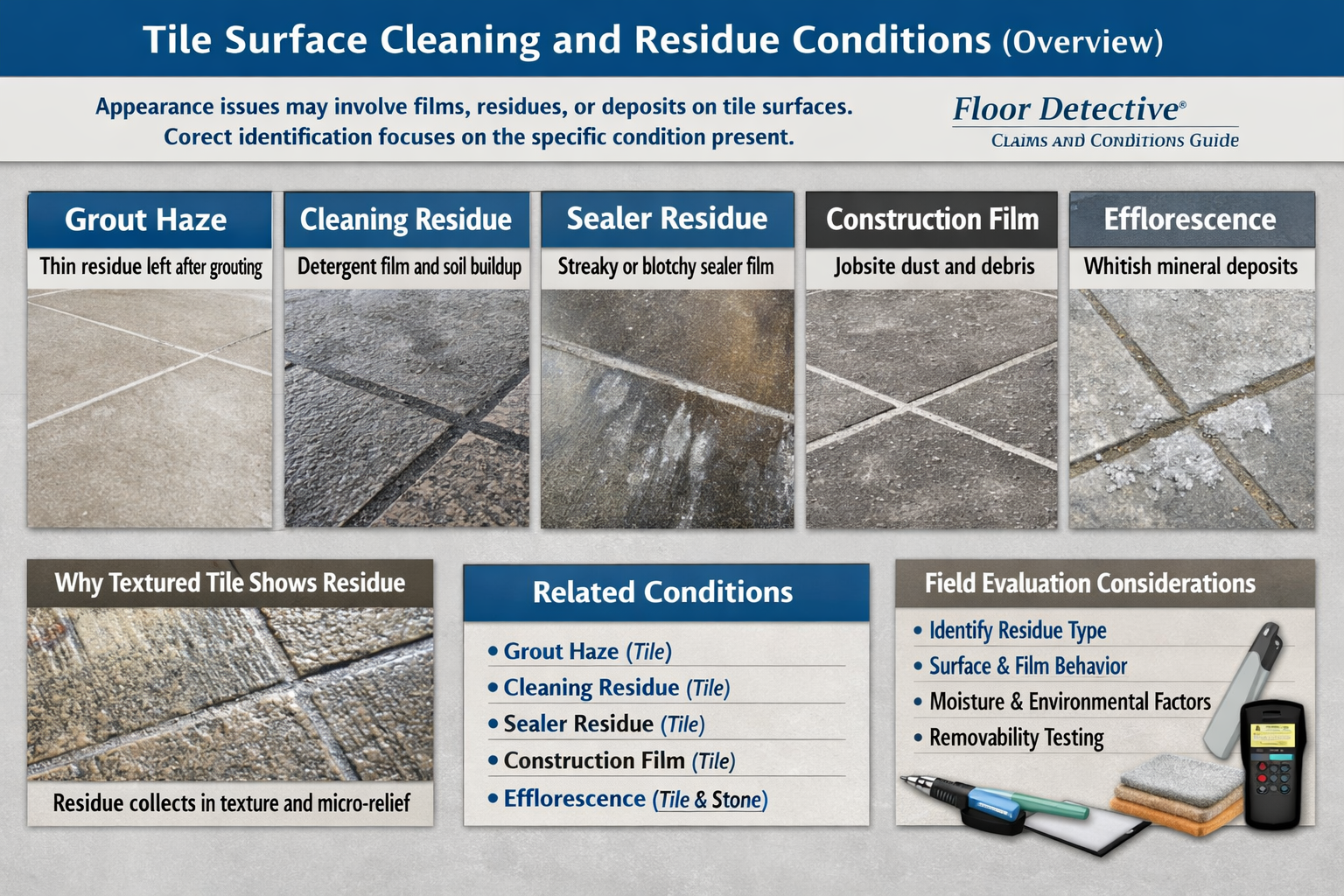
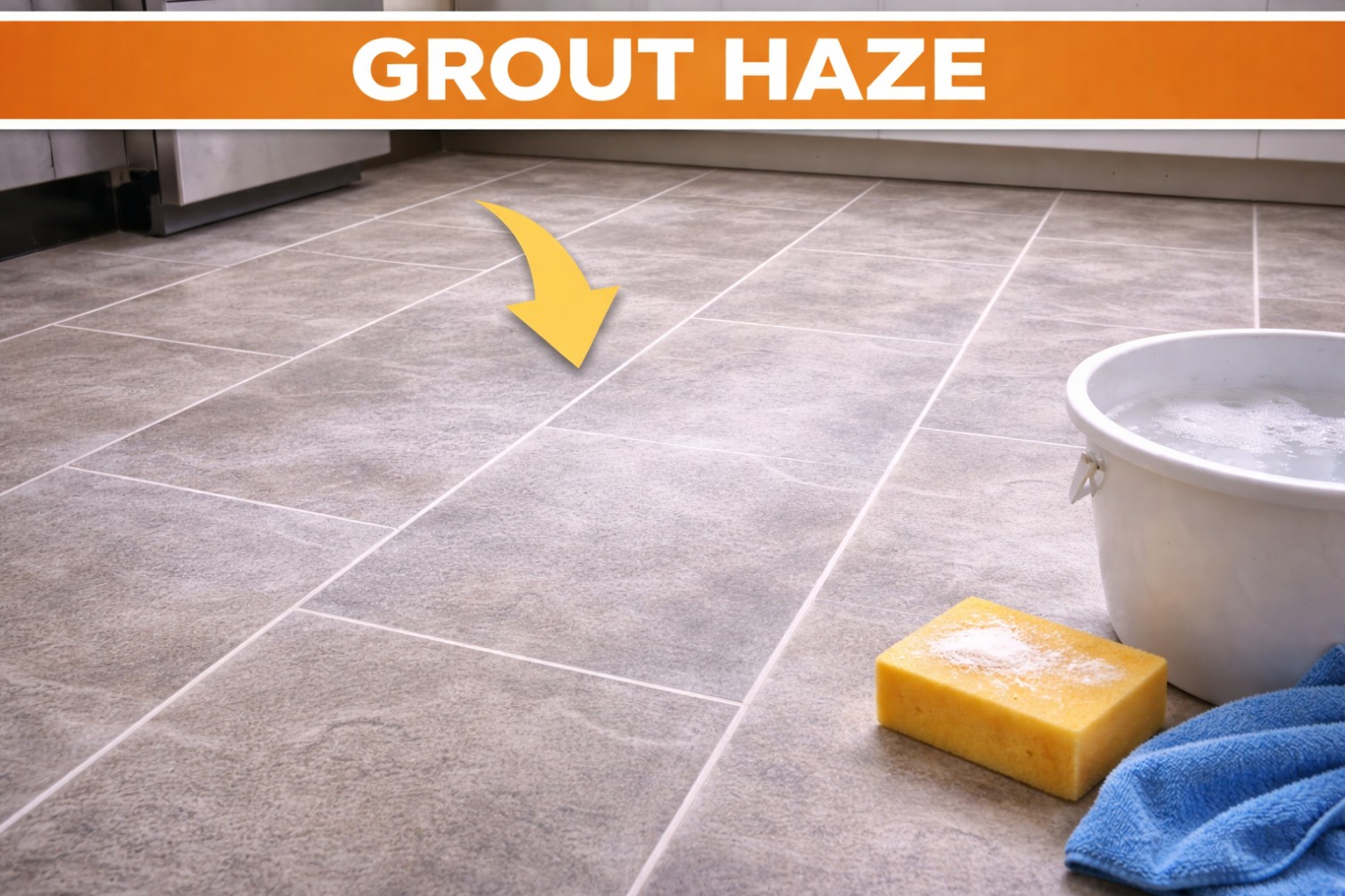
Tile surface residue conditions may involve grout haze, cleaning residue, sealer film, mineral deposits, or maintenance-related buildup.
Read More
February 5, 2026
Surface chipping in ceramic tile involves localized glaze or surface loss caused by impact, contact stress, handling, or service conditions.
Read More
October 4, 2024
Grout haze on porcelain tile involves residual surface film caused by grout residue, tile texture, or installation conditions.
Read More
March 12, 2024
Cracked tile corners involve fractures caused by localized stress concentration, incomplete support, or movement within the tile assembly.
Read More
November 9, 2023
Outdoor natural stone deterioration may involve spalling, flaking, erosion, salt crystallization, and weather-related surface damage.
Read More
September 23, 2023
Pin holes in grout joints involve small surface voids caused by grout consolidation, curing, or installation conditions.
Read More
May 31, 2023
Lime pops in Saltillo tile are localized surface disruptions caused by moisture-related expansion of lime-bearing particles within porous clay tile.
Read More
May 12, 2023
Travertine tile is a porous natural stone affected by moisture exposure, etching, wear, filler loss, and environmental conditions.
Read More