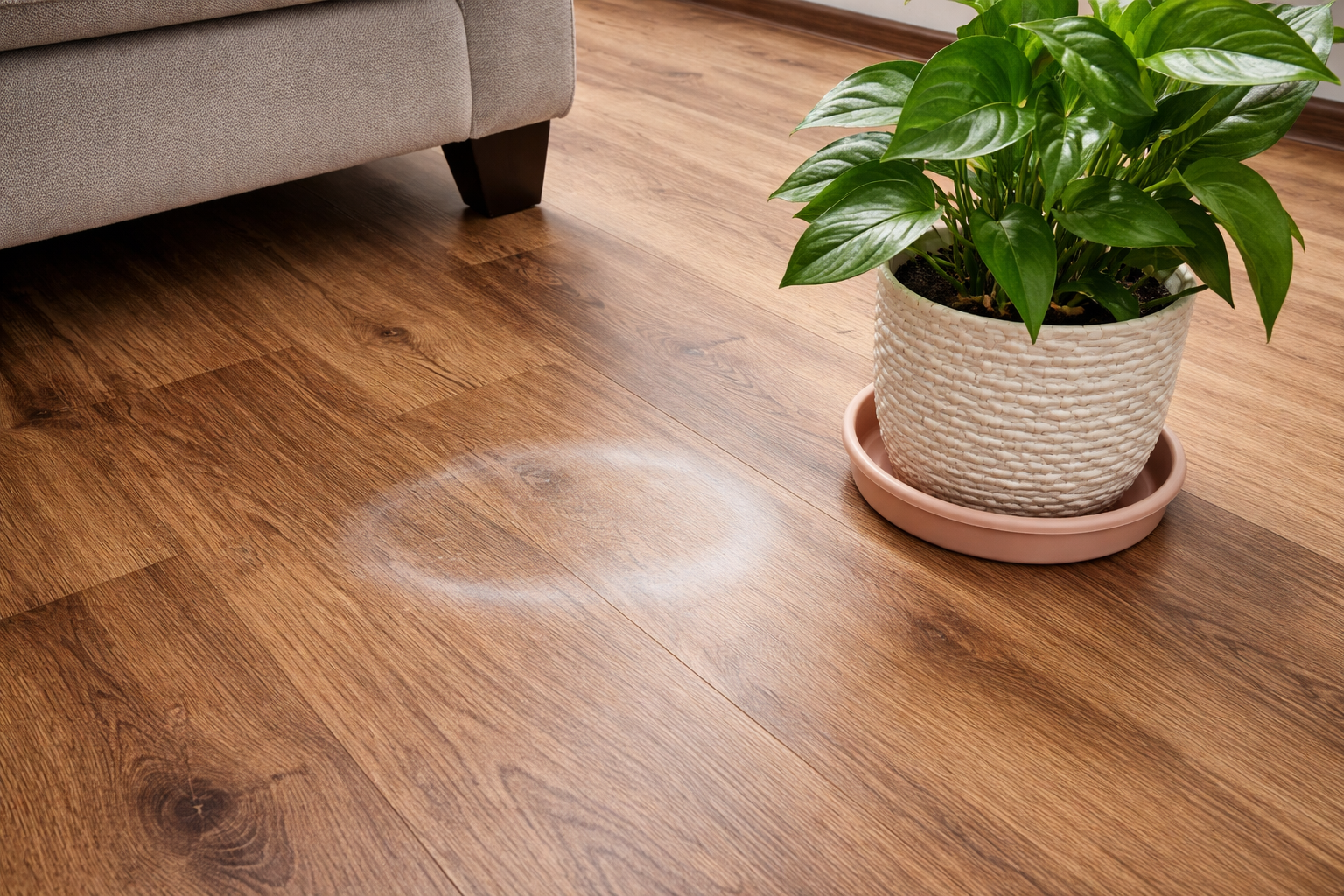
Surface Whitening from Topical Moisture Entrapment
Surface Whitening from Topical Moisture Entrapment (Laminate Flooring)
Floor Detective® Claims and Conditions Guide
Summary
Surface whitening from topical moisture entrapment is an appearance-related laminate flooring condition in which cloudy, hazy, milky, or lightened areas develop after moisture becomes trapped beneath non-breathable objects such as plant containers, trays, mats, pet bowls, or rubber-backed materials. Restricted airflow slows evaporation and allows moisture to remain in prolonged contact with the laminate surface, altering the visual clarity of the overlay layer and creating whitening that often matches the footprint of the object above it. Early-stage exposure commonly affects the surface overlay rather than the structural laminate core or locking system. Longer exposure near joints, bevels, or exposed edges may increase the likelihood of moisture migration into underlying components over time. The condition does not independently establish laminate manufacturing nonconformance. Proper interpretation requires correlation of exposure pattern, moisture source, joint condition, environmental conditions, and overall flooring-system behavior before conclusions are reached. See also Scratching, Scuffing, and Abrasion, Melamine Wear Layer Loss, and Laminate Problems for broader context.
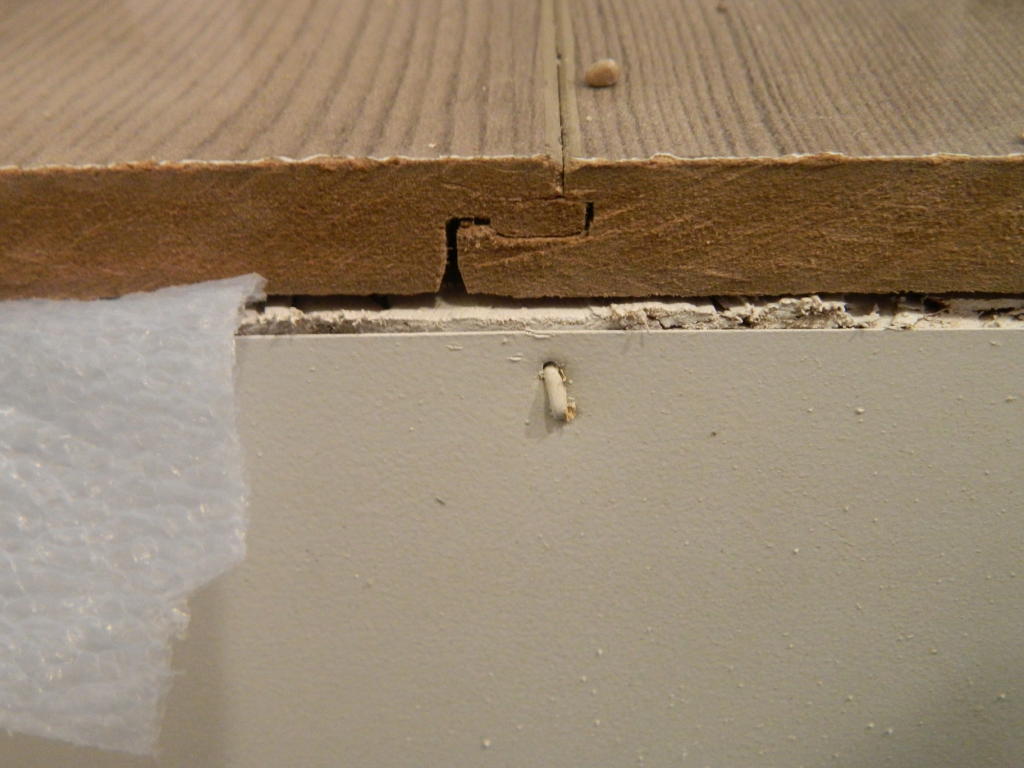
Laminate Problems
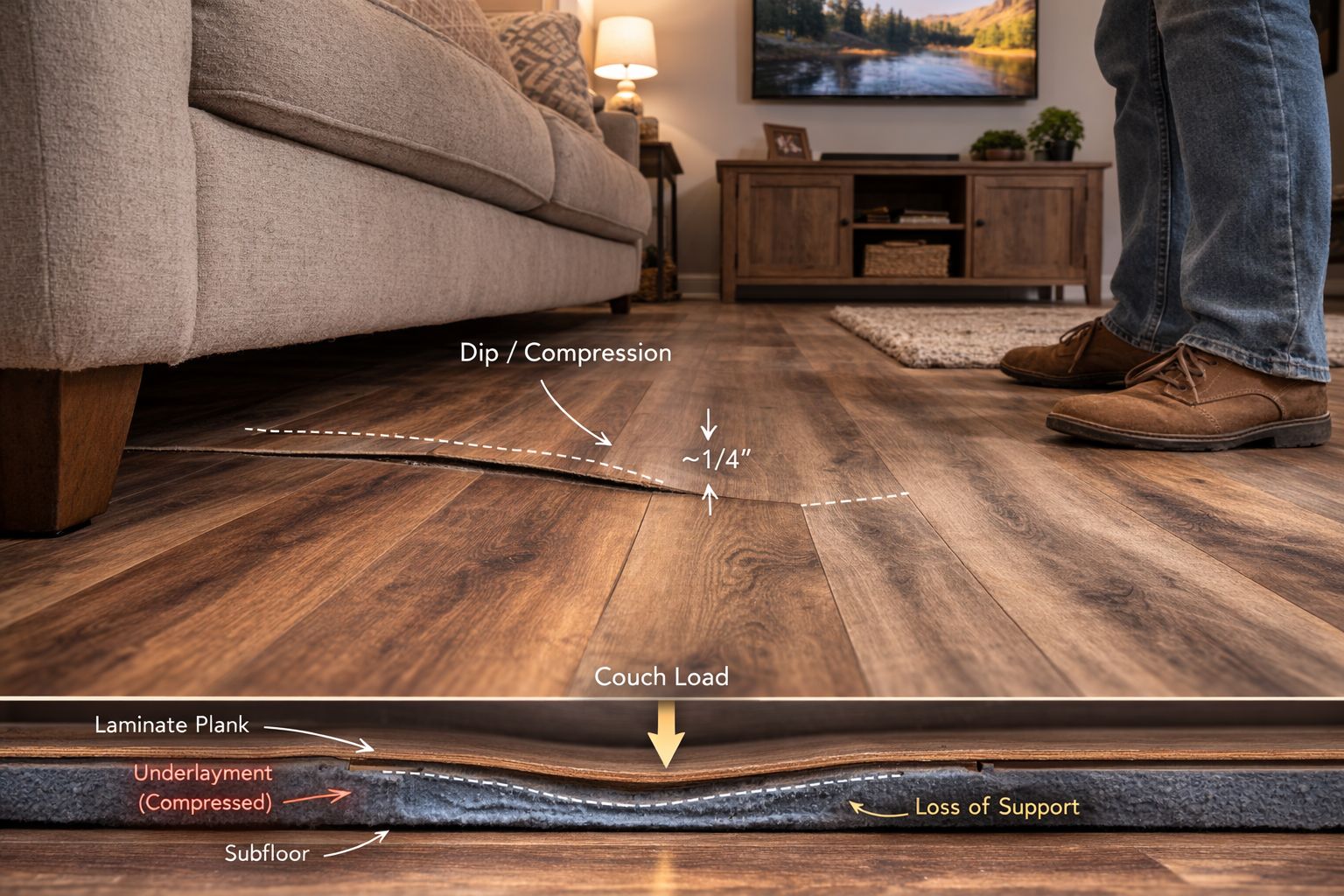
Underlayment Compression / Support Loss (Laminate)
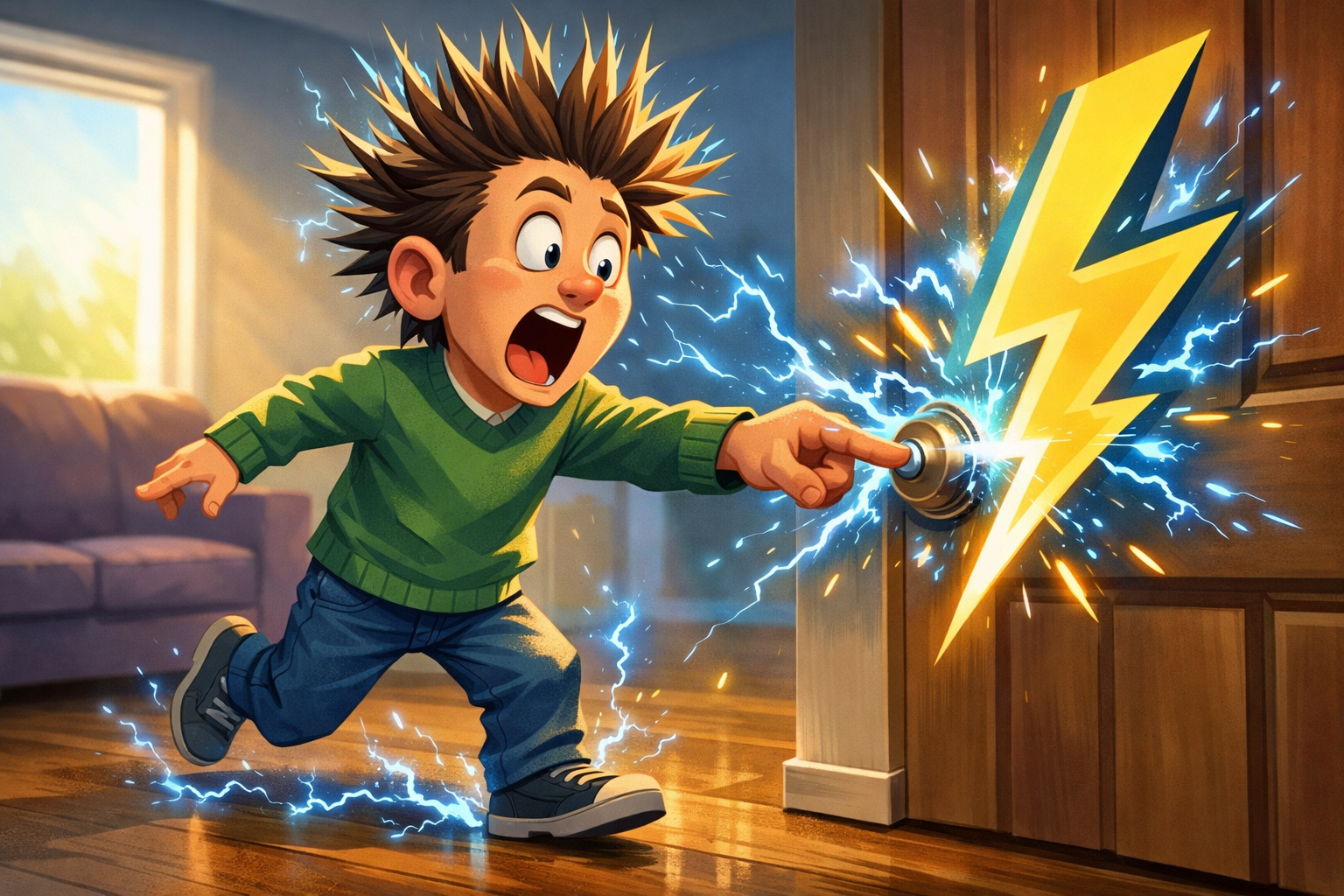
Static Electricity Generation (Laminate)
Pattern Repeat / Visual Repetition (Laminate Flooring)
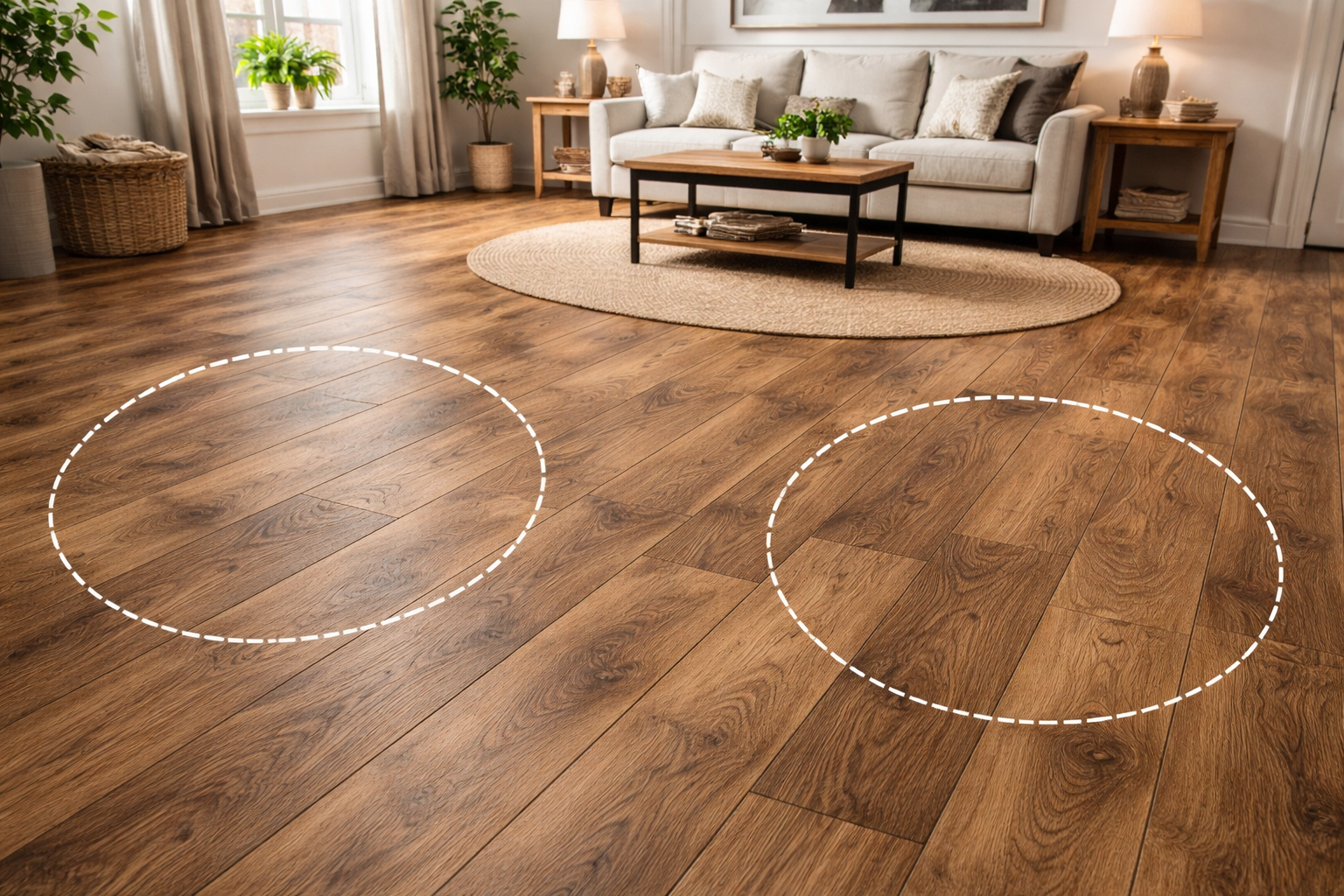
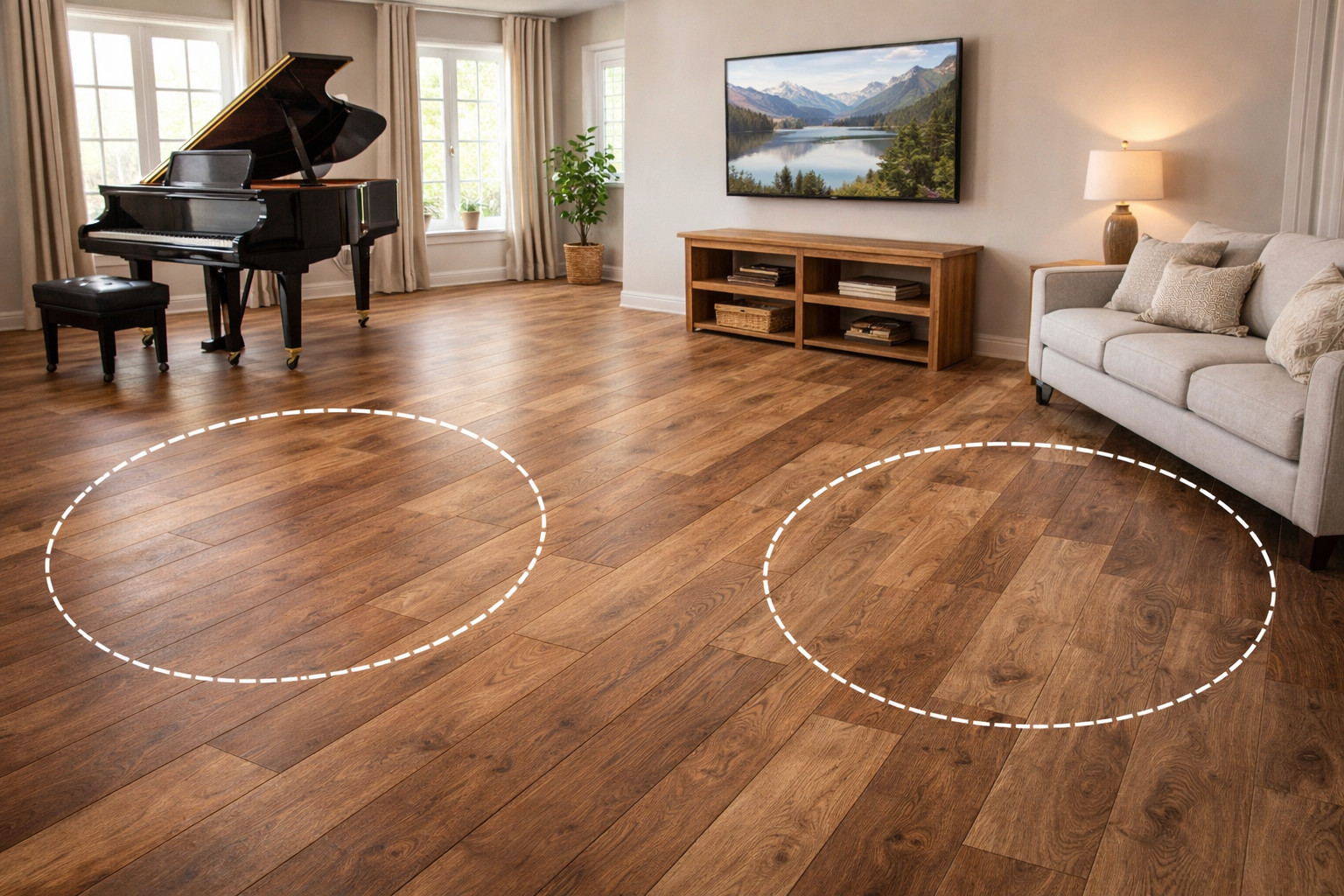
Color Lot Variation (Laminate)
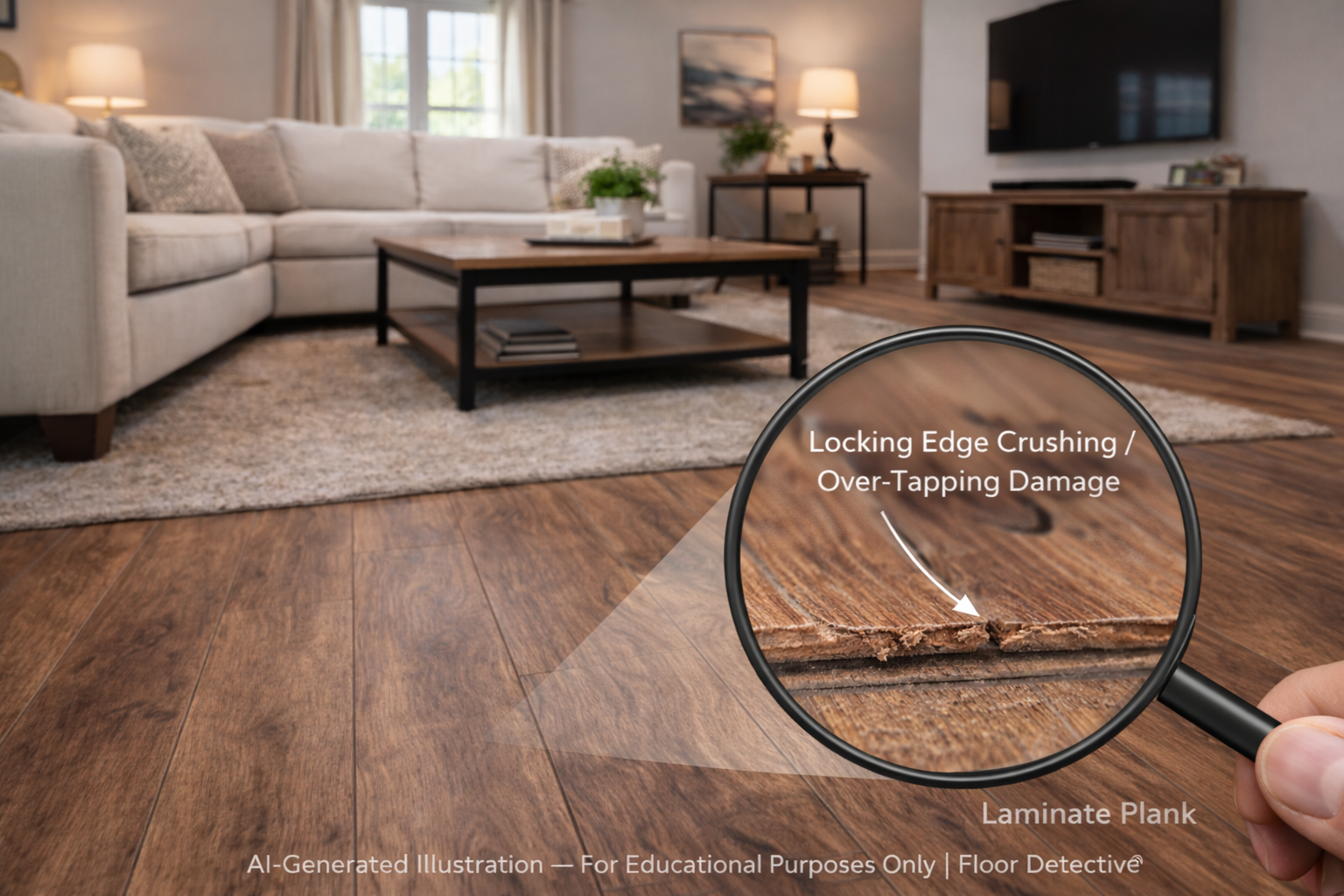
Locking Edge Crushing / Over-Tapping Damage (Laminate)
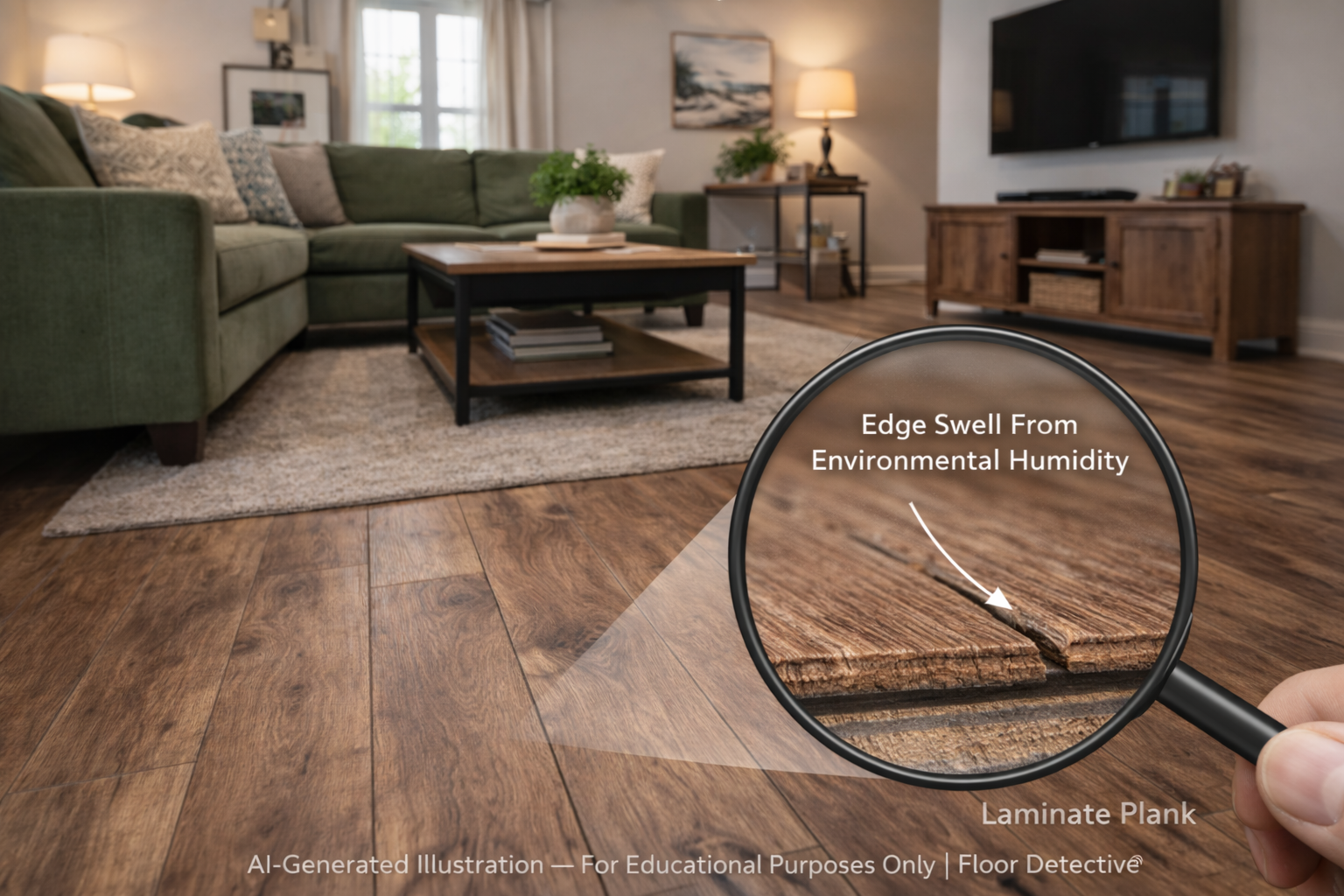
Edge Swell From Environmental Humidity (Laminate)
Surface Whitening from Topical Moisture Entrapment
Hollow Sound / Acoustic Resonance (Laminate)coincidence whipping melt
Vertical Movement / Deflection (Laminate