
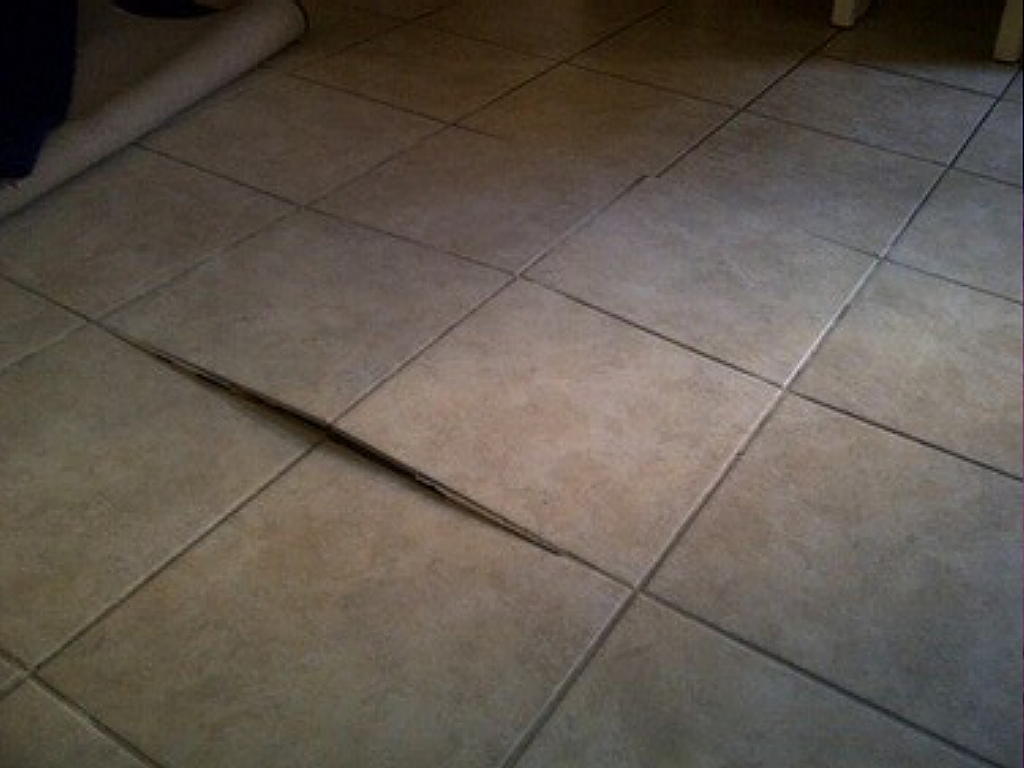
Stone – Snow Melter Damage
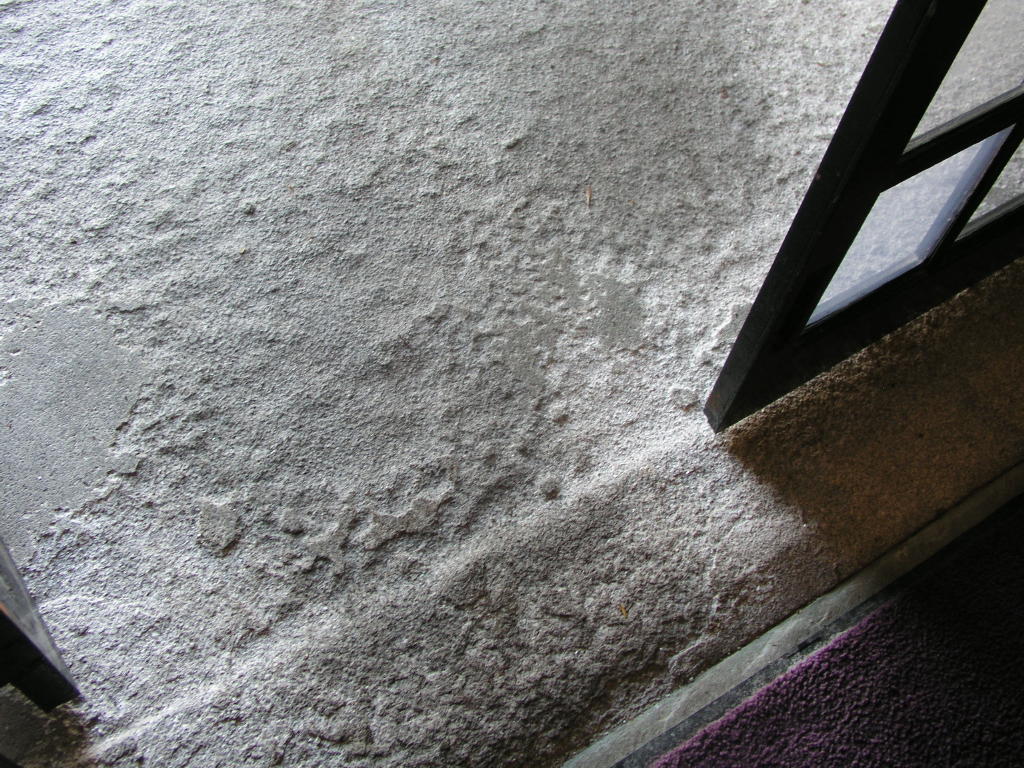
Snow and Ice Melter Damage (Stone, Tile & Terrazzo)
Floor Detective® Claims and Conditions Guide
Summary
Snow and ice melters commonly contain salts capable of penetrating porous stone, tile, terrazzo, and masonry materials through tracked-in moisture or direct exterior exposure. As salt-laden moisture enters the pore structure of these materials and later evaporates, dissolved salts may recrystallize within the material and generate internal crystallization pressure. Over time, this process may contribute to pitting, flaking, spalling, granular erosion, or surface deterioration depending on the material type, porosity, exposure conditions, and maintenance practices. Damage patterns commonly correspond with exterior entrances, walking paths, drainage flow, or repeated moisture exposure areas rather than isolated manufacturing defects. Evaluation focuses on correlating deterioration patterns with salt exposure pathways, moisture migration, environmental conditions, and material susceptibility. See also Efflorescence Removal and Prevention, Moisture Issues, and Tile and Stone Floor Problems.

Wet Tile Slip Resistance and Surface Traction

Tile and Stone Floor Problems
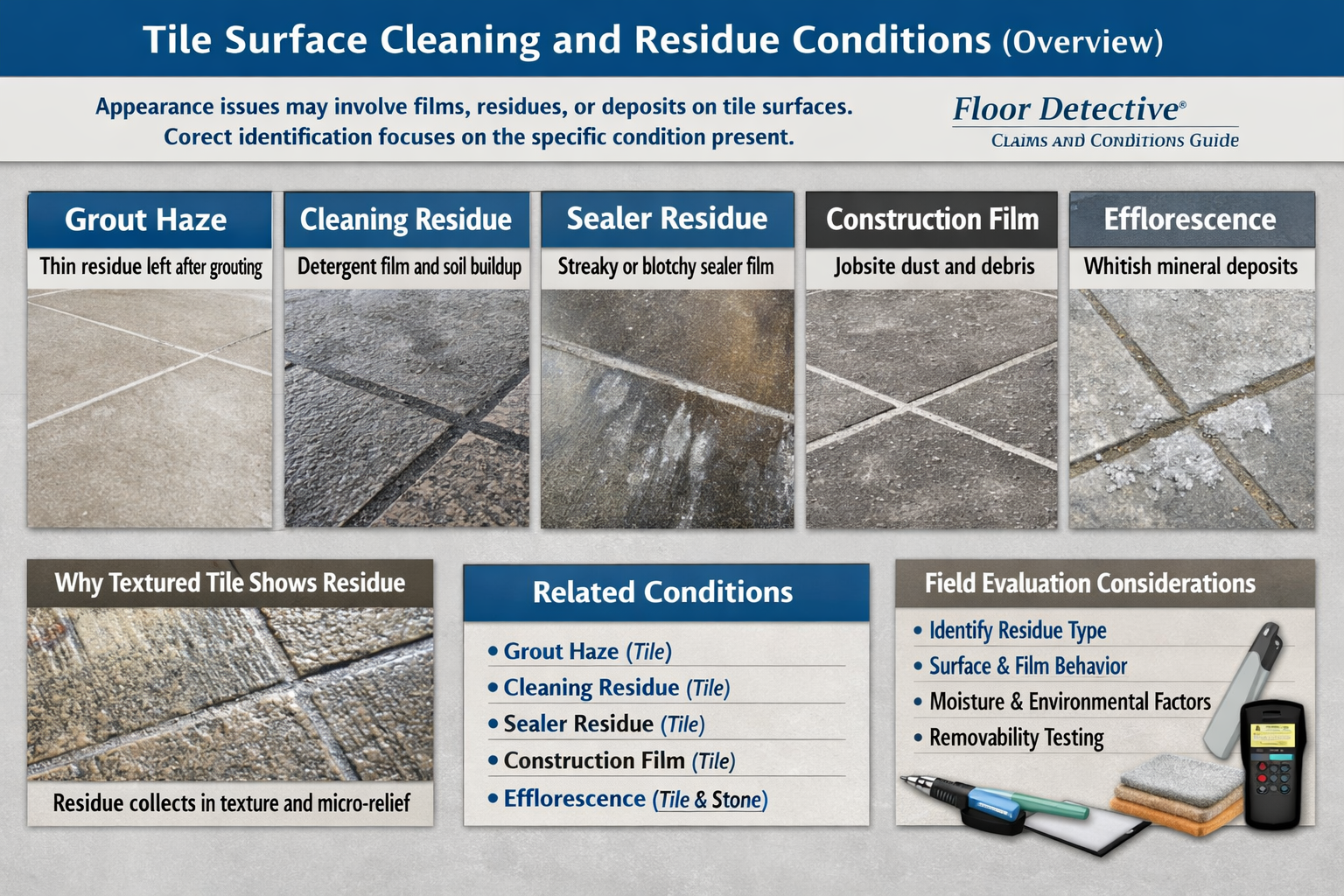
Tile Surface Cleaning and Residue Conditions (Overview)
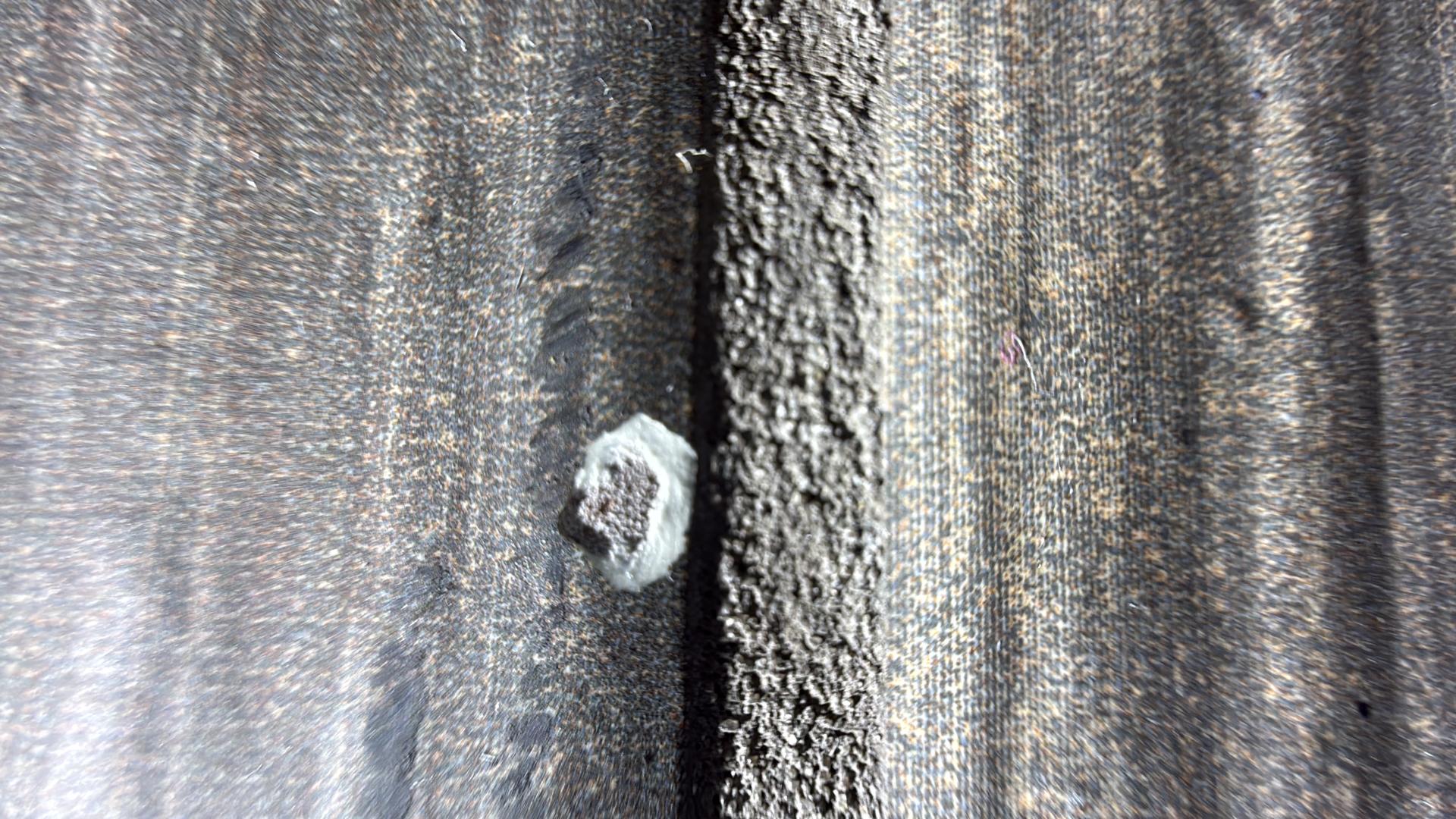
Surface Chipping (Ceramic Tile)
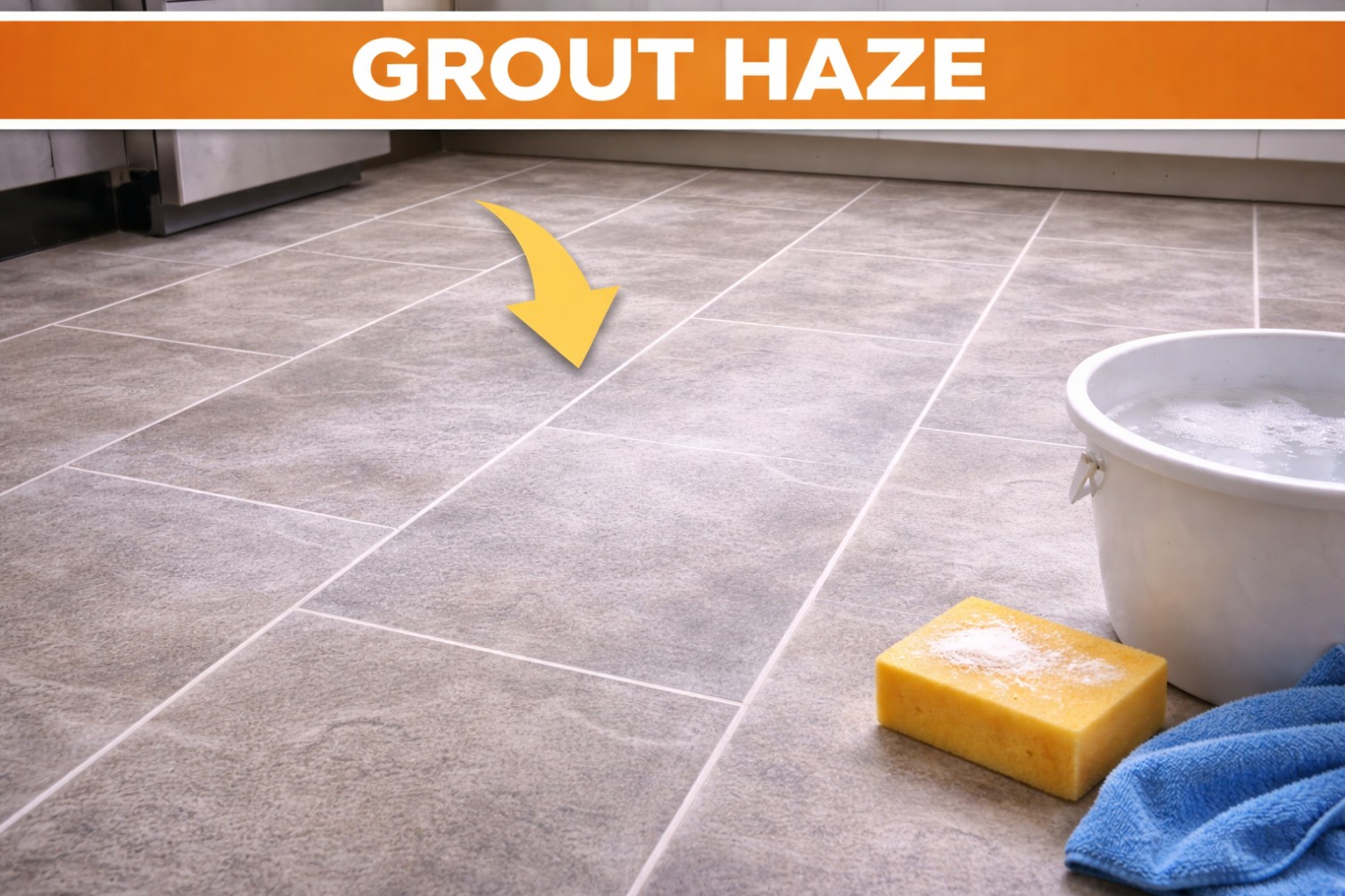
Grout Haze (Tile)
Cracked Corners

Outdoor Natural Stone Deterioration (Exterior Stone)

Grout – Pin Holes

Saltillo Tile Lime Pops

Travertine Tile Properties
