
Fiber Properties

Fiber Properties (Carpet)
Floor Detective® Claims and Conditions Guide
Summary
Fiber properties describe the inherent physical and chemical characteristics of carpet fibers that influence resilience, abrasion resistance, moisture response, dye behavior, texture retention, and long-term appearance performance. These characteristics originate at the polymer level and remain inherent to the material throughout service life. Fiber type affects how carpet responds to traffic, heat, chemicals, ultraviolet exposure, and maintenance conditions and may influence the development or visibility of conditions such as matting or fiber degradation. Fiber properties establish performance capabilities and limitations but do not independently determine construction quality, installation performance, or defect status. See also Carpet Problems for broader context.
What You Need to Know
• Fiber properties directly influence durability, resilience, texture retention, and long-term appearance behavior
• Polymer chemistry affects response to traffic, moisture, heat, ultraviolet exposure, and cleaning agents
• Fiber resilience differs from carpet density, pile height, and overall construction design
• Denier influences wear resistance and texture retention independent of polymer type
• Bulked Continuous Filament (BCF) and staple yarn systems may influence fuzzing and pilling behavior
• No carpet fiber is immune to crushing, fading, or degradation under sufficient exposure conditions
• Performance ratings are comparative tools and do not guarantee specific in-service outcomes
• Fiber characteristics establish material behavior but do not independently define defect status
Polymer and Performance Fundamentals
• Carpet fibers consist of polymer chains that determine flexibility, strength, and durability
• Tensile strength influences resistance to breaking under load
• Elasticity affects the ability to recover following compression or traffic
• Thermal properties influence susceptibility to heat-related change or damage
• Dye affinity varies by polymer chemistry and dye system
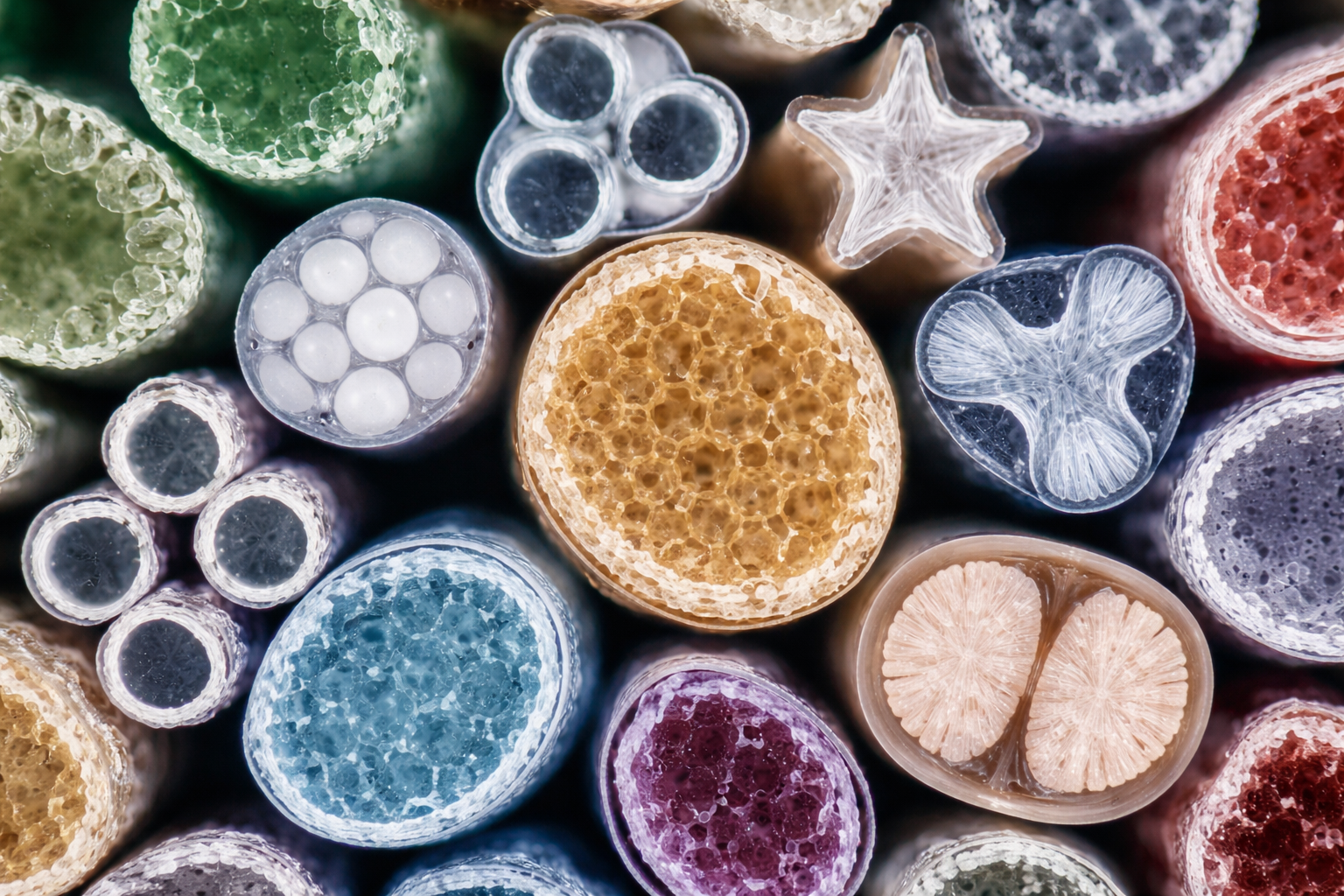
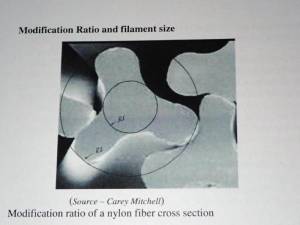
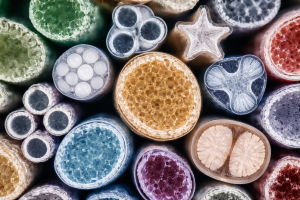
• Fiber cross-sectional shape may influence luster, texture, and soil visibility
Nylon Fiber Properties
• Nylon is a synthetic polyamide fiber known for high strength and abrasion resistance
• Many nylon systems exhibit strong elastic recovery and texture retention characteristics
• Nylon is commonly dyed using acid dye systems
• Elevated alkalinity may influence dye stability in some nylon constructions
• Nylon 6 and nylon 6,6 exhibit slight differences in thermal and performance characteristics
Triexta (PTT) Fiber Properties
• Triexta is a polyester-based polymer commonly associated with stain resistance characteristics
• Flexible polymer structure contributes to softness and comfort underfoot
• Resilience characteristics vary depending on carpet construction and density
• Lower melting temperature may increase sensitivity to friction glazing or heat exposure
• Overall performance remains strongly influenced by construction design
Polyester Fiber Properties
• Polyester is a hydrophobic synthetic fiber resistant to many water-based stains
• Polyester constructions often provide a soft hand in residential applications
• Lower resilience may increase susceptibility to crushing or texture loss in some constructions
• Dye system and manufacturing method influence fade resistance
• Lower melting temperature increases sensitivity to heat-related surface change
Olefin (Polypropylene) Fiber Properties
• Olefin is commonly solution-dyed, contributing to strong color consistency
• The fiber demonstrates strong moisture and chemical resistance characteristics
• Lower resilience may increase susceptibility to pile distortion under traffic
• Very low melting temperature increases sensitivity to friction or heat damage
• Olefin is frequently used in commercial and indoor/outdoor applications
Wool Fiber Properties
• Wool is a natural protein-based fiber with inherent crimp and elasticity
• Wool naturally resists ignition and static generation
• The fiber may be sensitive to alkalinity, excessive heat, or aggressive chemical exposure
• Hygroscopic behavior may influence moisture absorption and dimensional response
Blended Fiber Constructions
• Blended yarn systems combine multiple fiber types to balance performance characteristics
• Performance reflects both fiber composition and overall construction design
• Differential wear or color change may occur between fiber types over time
• Blends modify but do not eliminate inherent fiber limitations
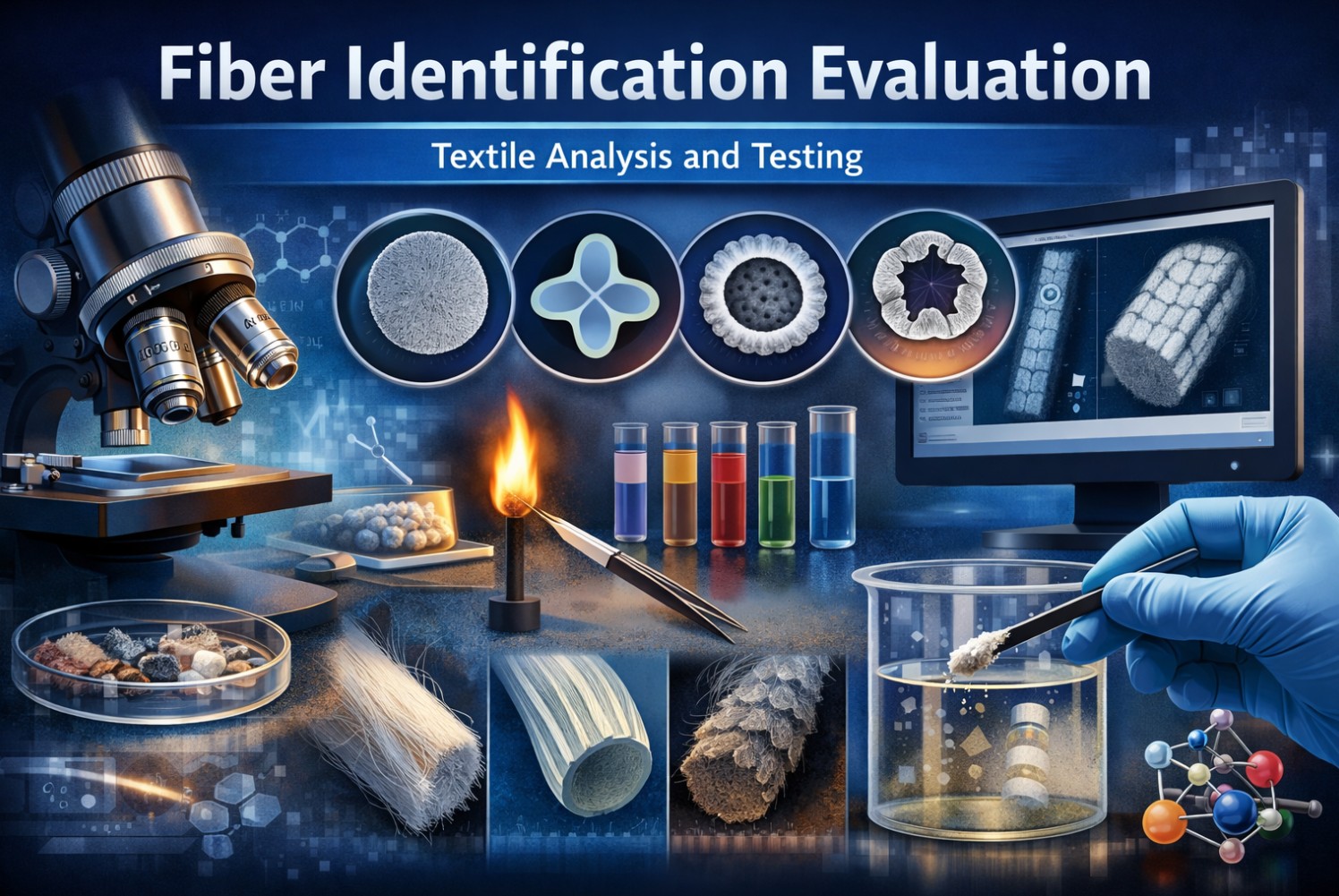
Fiber Identification
• Accurate fiber identification is important when evaluating performance-related conditions
• Manufacturer documentation may assist in confirming fiber composition
• Field screening methods provide preliminary indication only
• Laboratory confirmation may be required for definitive identification
Field Screening Methods
• Visual and tactile characteristics may provide preliminary fiber identification clues
• Moisture response may help distinguish hydrophobic from absorbent fibers
• Controlled heat response may suggest relative melting characteristics
• Field methods are indicative and not independently conclusive
Laboratory Identification
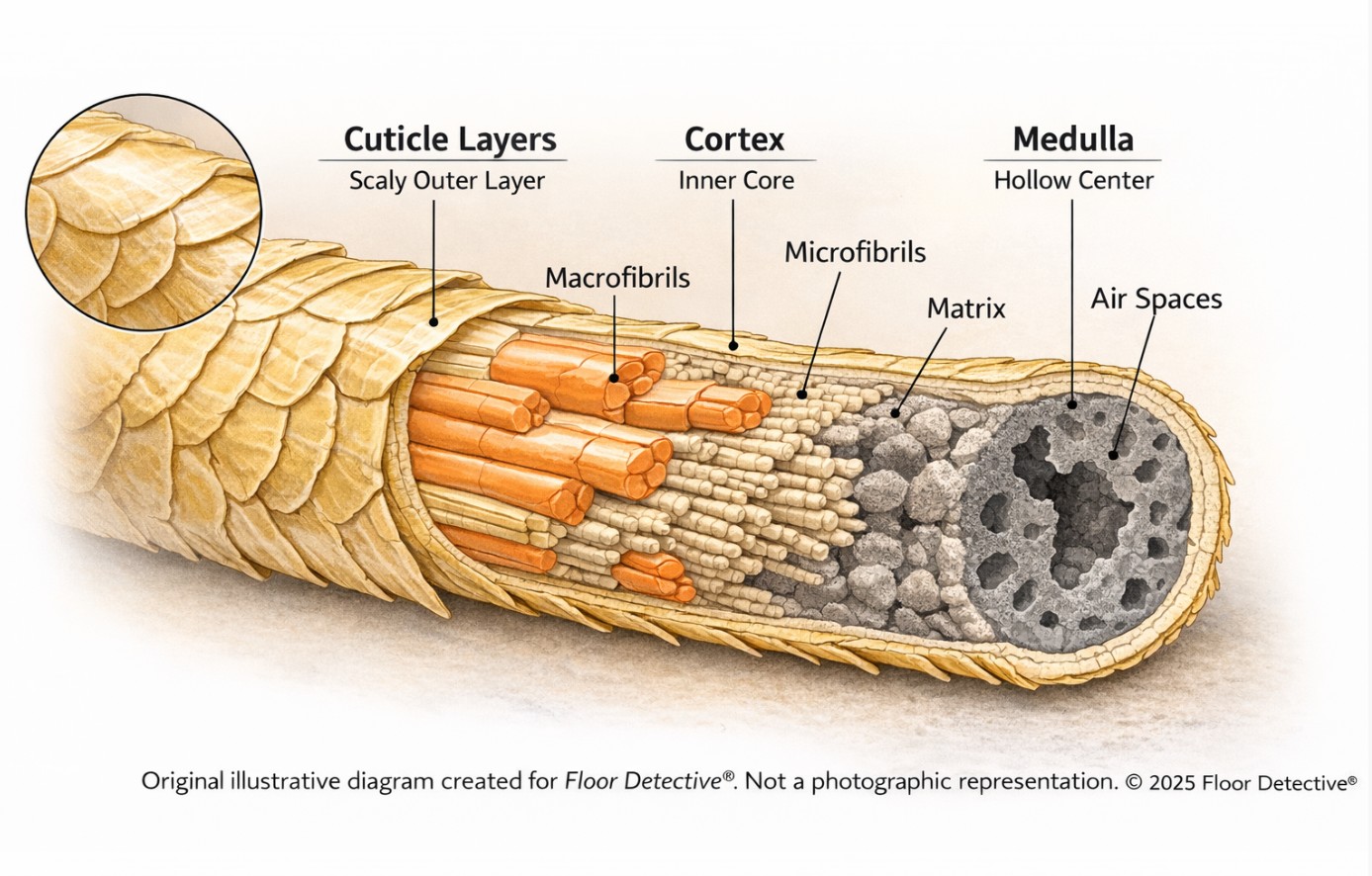
• Microscopic examination may evaluate fiber cross-section and surface characteristics
• FTIR analysis may confirm polymer composition
• Laboratory identification provides objective material confirmation
• Results must be interpreted alongside construction and service conditions
• Additional analytical testing may be available through Professional Testing Laboratory
Construction and Performance Interaction
• Fiber properties interact with yarn twist, density, pile height, and construction style
• Higher density and tighter twist often improve texture retention characteristics
• Construction design may amplify or moderate inherent fiber behavior
• Performance reflects the combined influence of material properties and carpet construction
Interpretation and Claim Perspective
• Fiber properties represent inherent material characteristics rather than defects
• Performance limitations may reflect normal material behavior under specific use conditions
• Appearance change alone does not independently establish manufacturing nonconformance
• Evaluation requires consideration of fiber type, construction, environment, maintenance, and use conditions
Key Terms
• Polymer — Molecular chain forming synthetic fibers
• Resilience — Ability to recover following compression
• Density — Amount of yarn packed within a given area
• Denier — Measurement of fiber thickness
• Bulked Continuous Filament (BCF) — Continuous synthetic filament yarn system
• Hydrophobic — Resistant to water absorption
• Solution-dyed — Color added before fiber extrusion
• FTIR — Laboratory method used for polymer identification
• Hygroscopic — Capable of absorbing moisture
Related Pages
• Matting
• Fiber Degradation
• Carpet Problems
Contributors
Independent peer review (non-authoring) — this page only
David Zack, Carey Mitchell, Fred Gamble, Jeff Bishop, Jim Hernandez, Alan Buttenhoff, Claudia Lezell, Bruce Gentry, Jim Burnett, Lew Migliore, Lee Phillips, Mike Harde, Will Stoner
© 2015–2026 Floor Detective®
Last revised: 04/28/2026
Carpet Problems
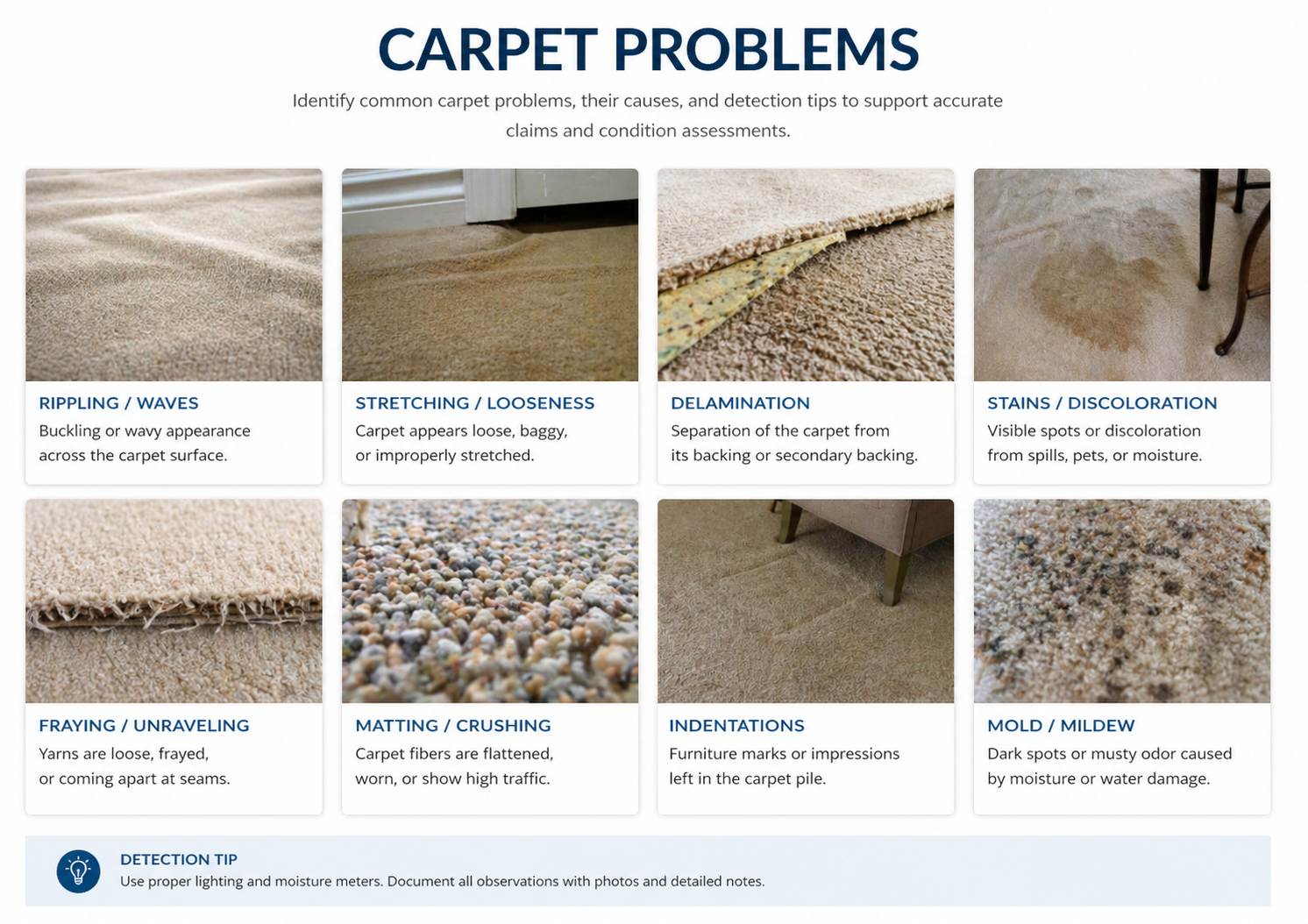
Carpet Fiber Identification (Field and Laboratory Methods)
Wool and Wool Carpet Properties
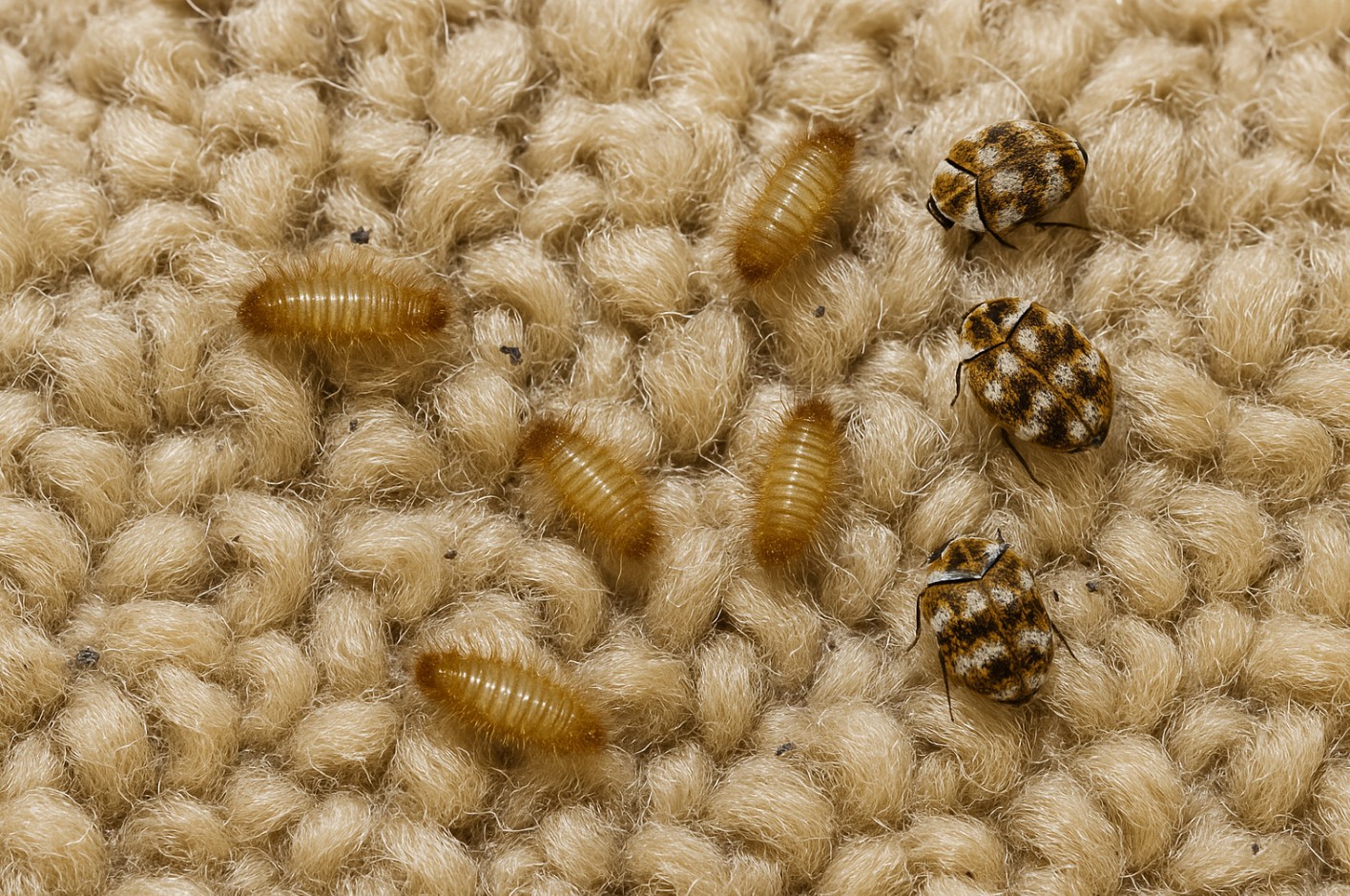
Carpet Beetle Damage
Fiber Properties
Missing Row
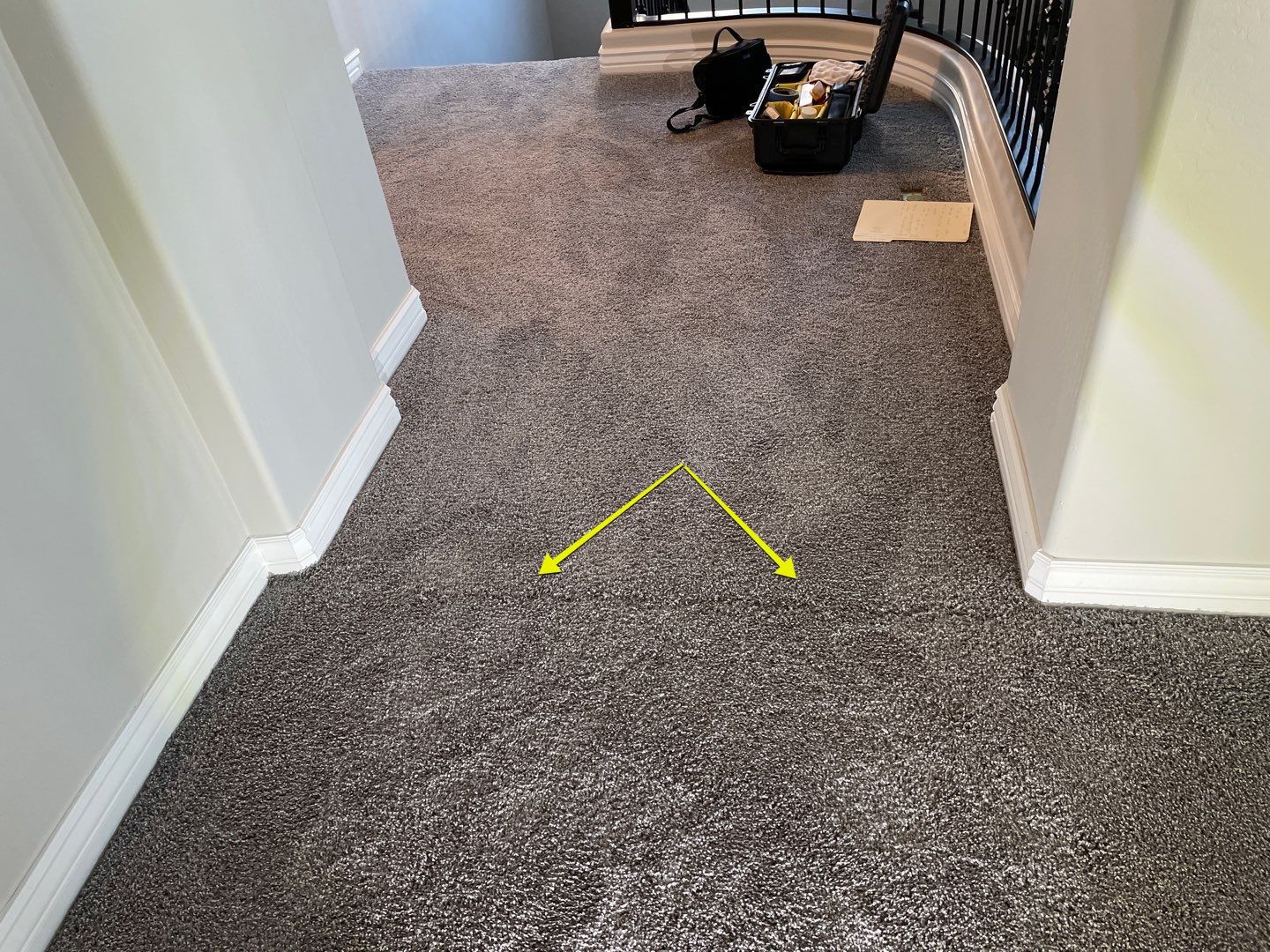
Wrinkles in Backing
Unraveling / Runs (Carpet)
Core Crush / Roll-Core Pile Reversal (Carpet)