
Concrete Substrate Problems
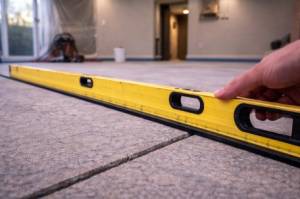
Concrete Substrate Problems
Floor Detective® Claims and Conditions Guide
Summary
Concrete substrate problems may significantly influence flooring-system performance, adhesion, dimensional stability, moisture behavior, coating performance, and long-term serviceability. These conditions may involve moisture vapor emission, alkalinity, slab movement, cracking, surface contamination, curing conditions, surface preparation, or bond-inhibiting materials that affect flooring compatibility. Because most flooring systems are installed directly over concrete, performance often depends on the interaction between slab conditions, adhesives, coatings, underlayments, mitigation systems, and manufacturer installation requirements. Evaluation typically focuses on how concrete conditions affect flooring performance rather than on structural concrete engineering analysis alone.
What You Need to Know
• Concrete substrate conditions may affect flooring adhesion, bond integrity, coatings, and dimensional stability
• Moisture-related slab conditions are among the most common contributors to flooring-system distress
• Surface preparation, contamination, alkalinity, and vapor emission may significantly influence flooring compatibility
• Concrete conditions may exist even when no visible slab damage is present
• Flooring manufacturers commonly establish moisture, pH, and substrate-preparation requirements before installation
• Most flooring inspections evaluate concrete as a flooring substrate rather than as a structural engineering system
Moisture and Vapor Conditions
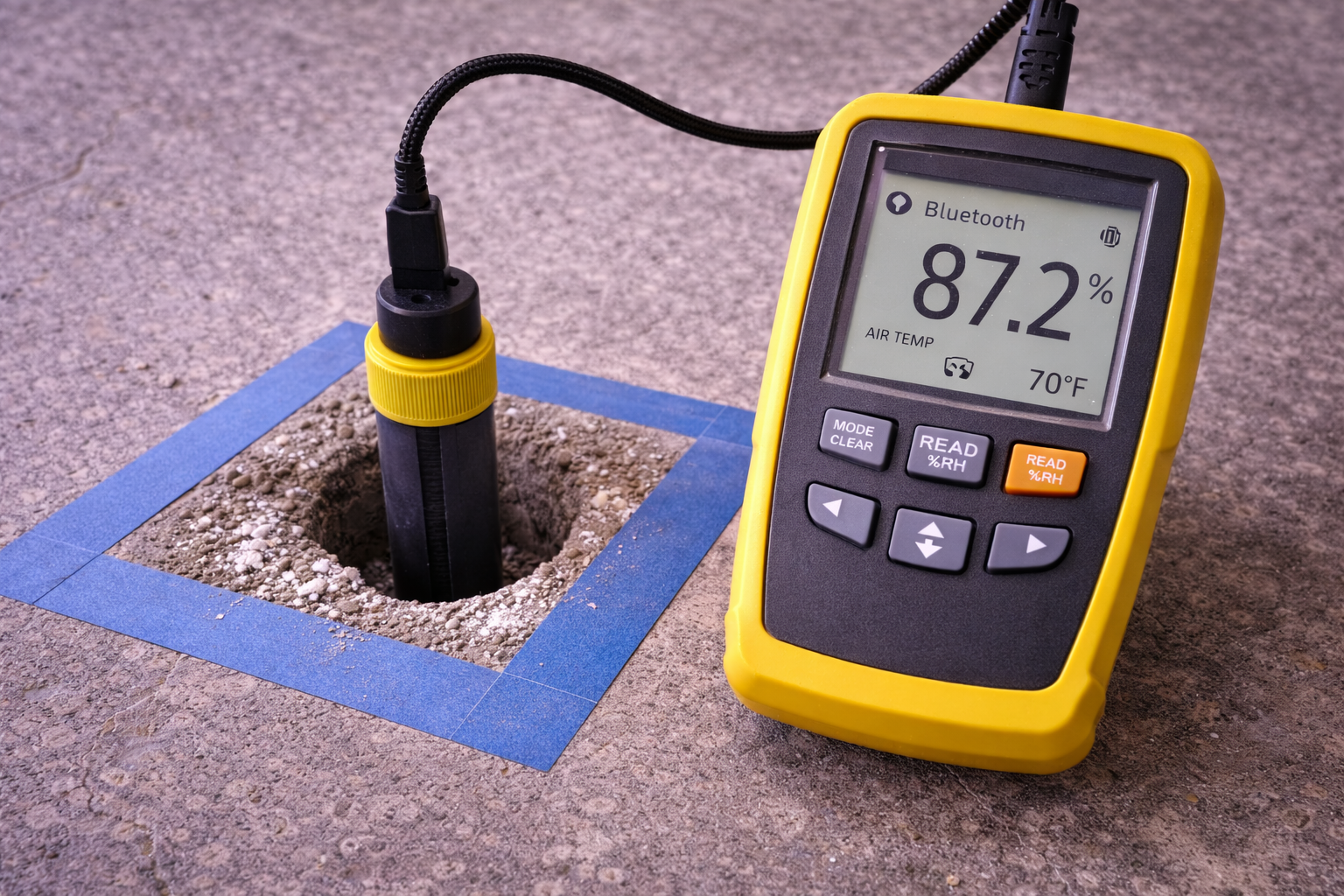
• Calcium Chloride (MVER) Moisture Vapor Emission Testing
• In-Situ Relative Humidity (RH) Testing
• Moisture Testing Prior to Installation
• Moisture Vapor Emission and Slab Moisture Movement
• Hydrostatic Pressure and Capillary Moisture Movement
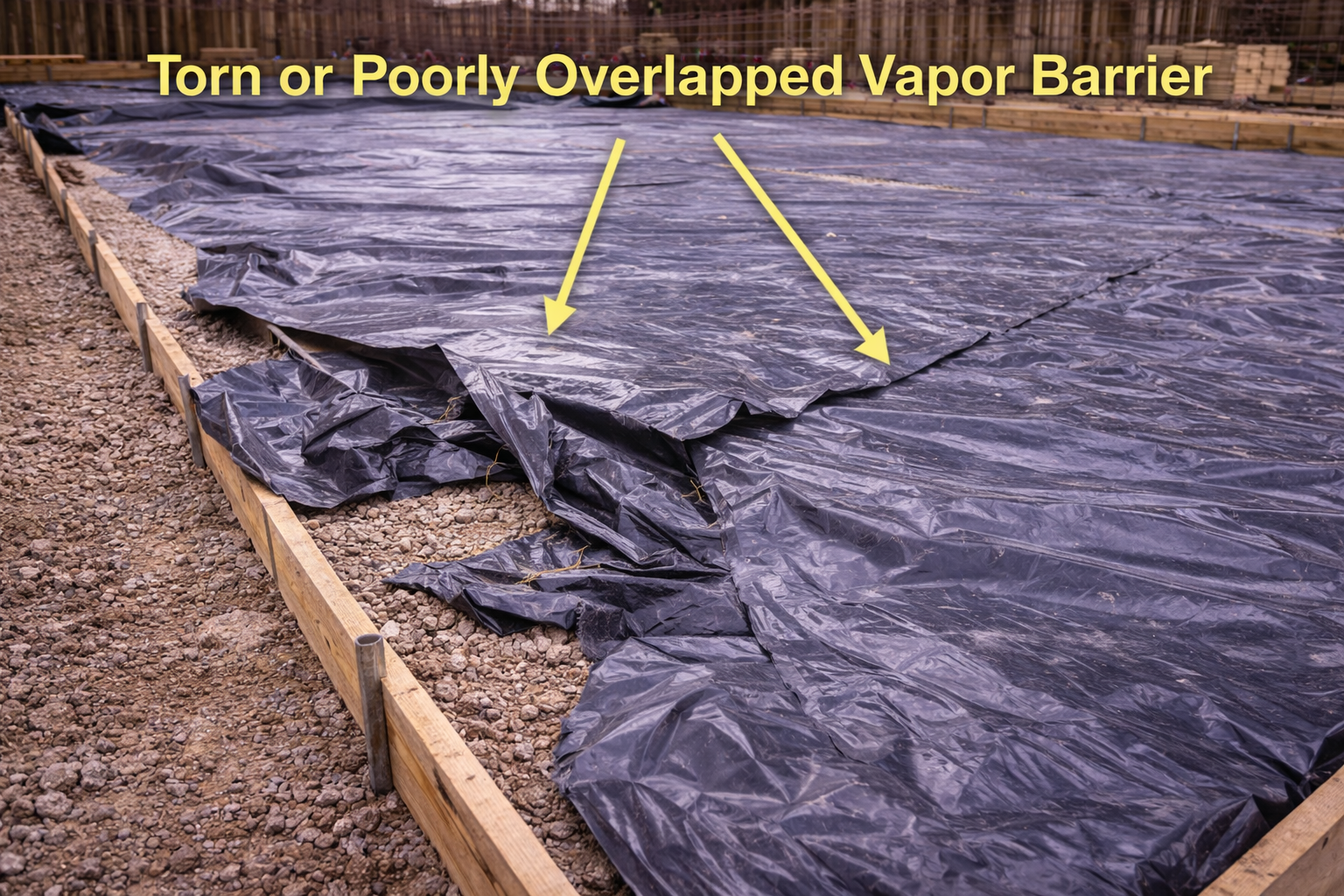
• Vapor Retarders Beneath Concrete Slabs
Alkalinity and Chemical Conditions
• Alkali Attack and High pH Conditions
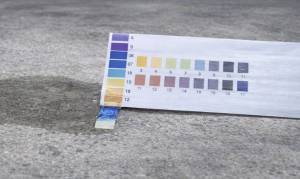
• Concrete pH and Alkalinity Conditions
• Efflorescence
Surface Preparation and Bonding Conditions
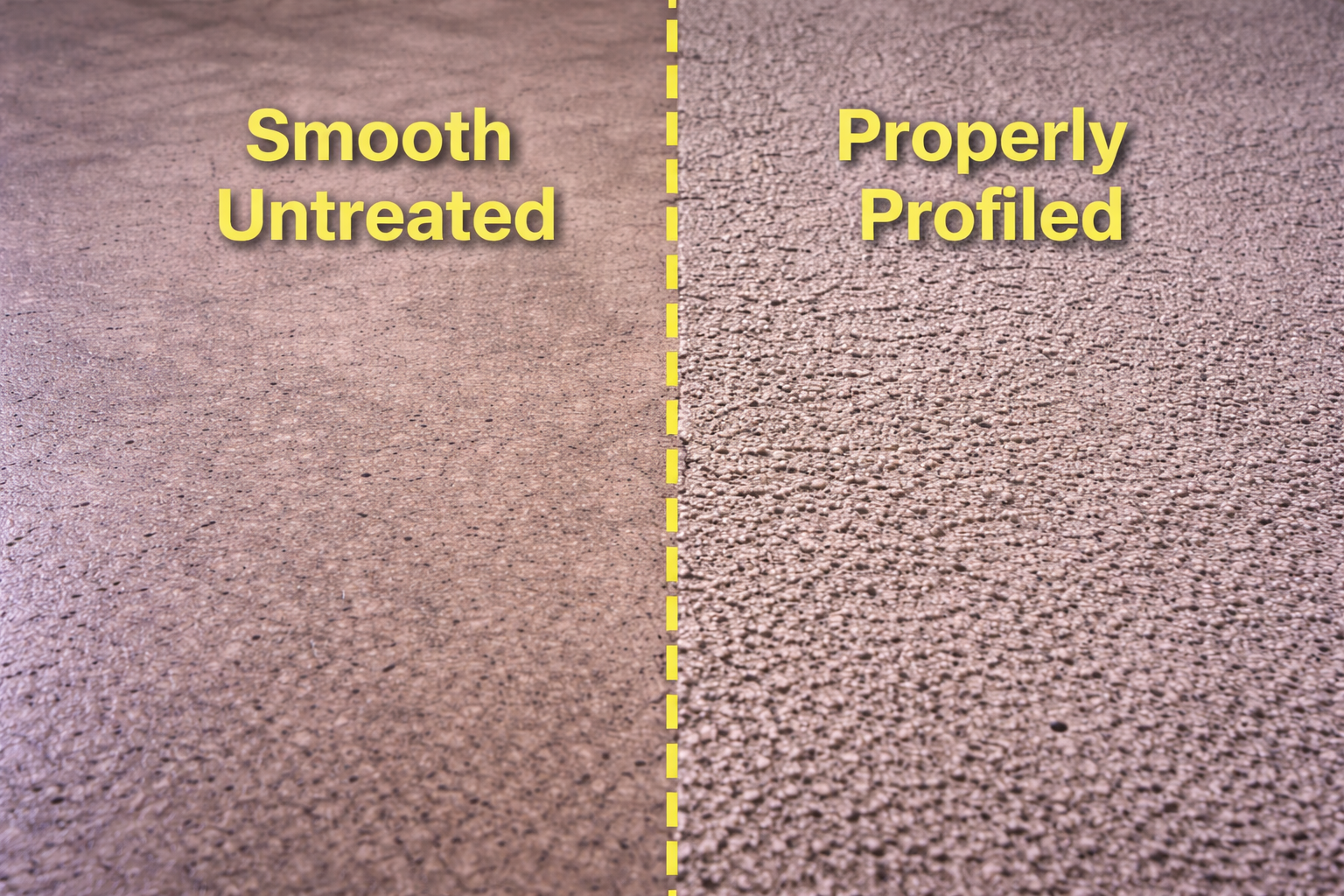
• Concrete Surface Profile (CSP) and Surface Preparation
• Concrete Surface Contamination
• Surface Contamination and Bond Inhibition
• Laitance, Dusting, and Weak Surface Layer
• Crack Isolation and Moisture Mitigation Systems
Movement, Cracking, and Flooring Performance
• Cold Joints and Construction Joints
• Concrete Joints and Movement Separation
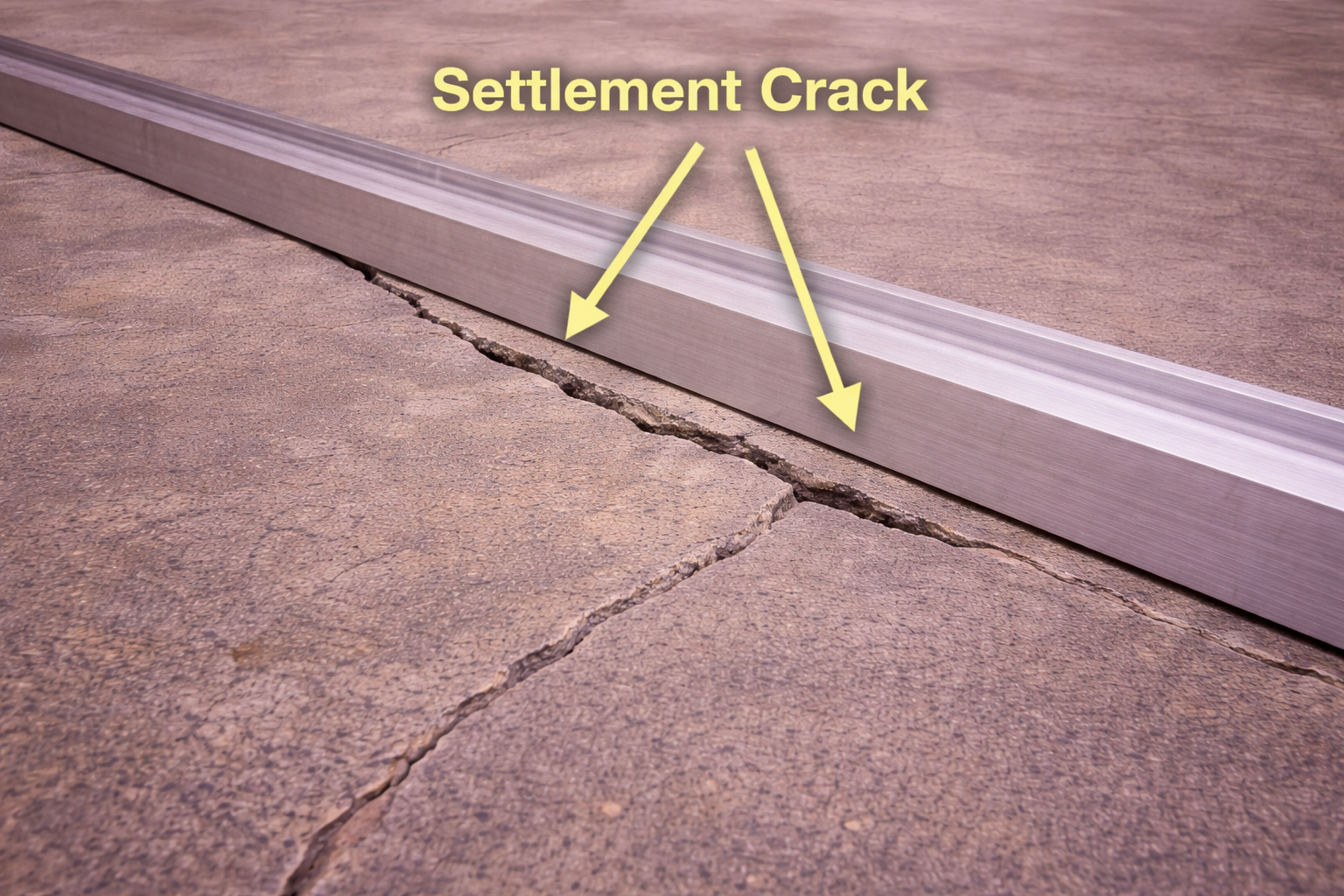
• Cracks – Types and Causes
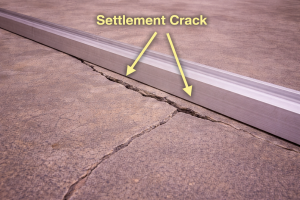
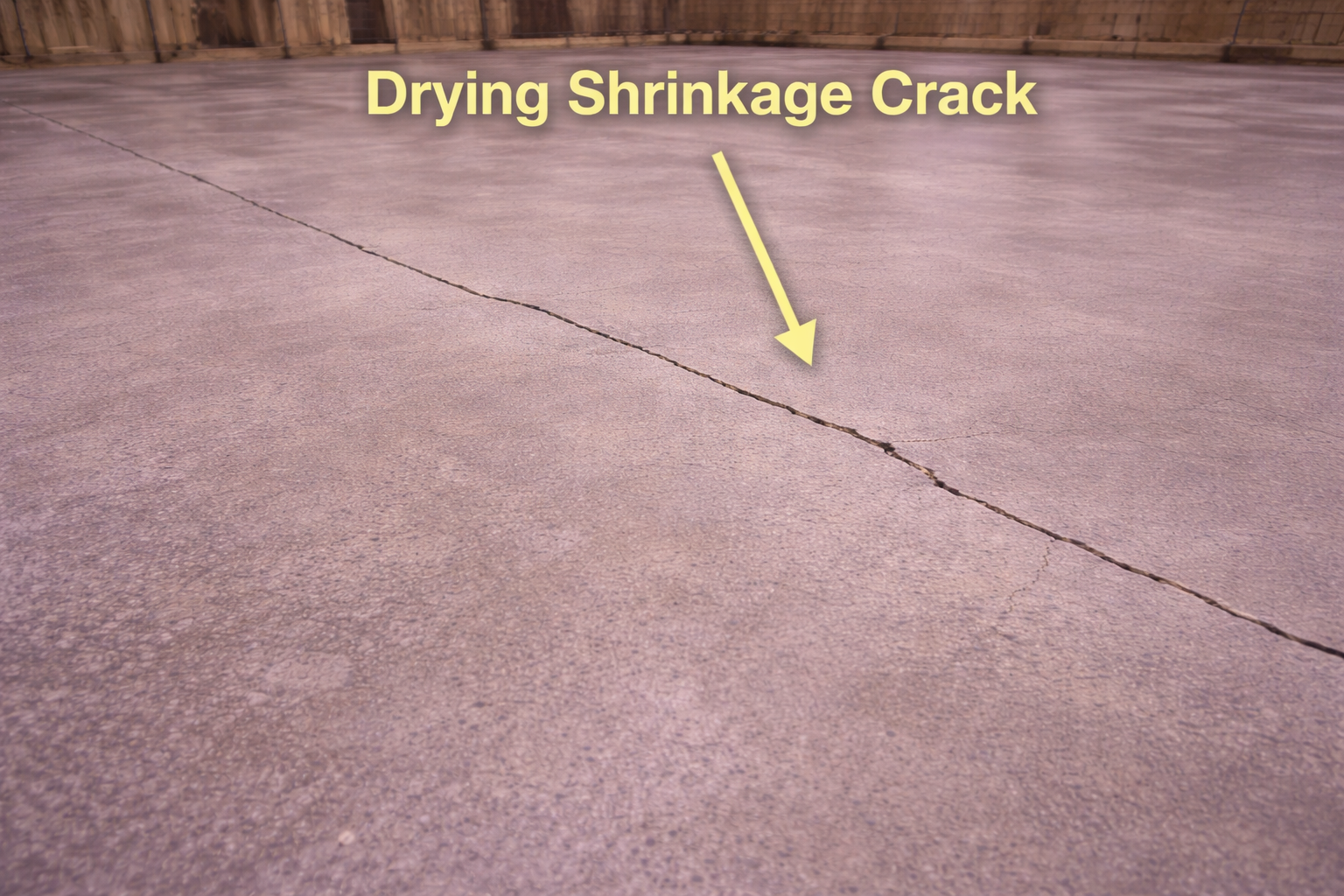
• Concrete Shrinkage and Settlement
• Concrete Slab Curling and Edge Lift
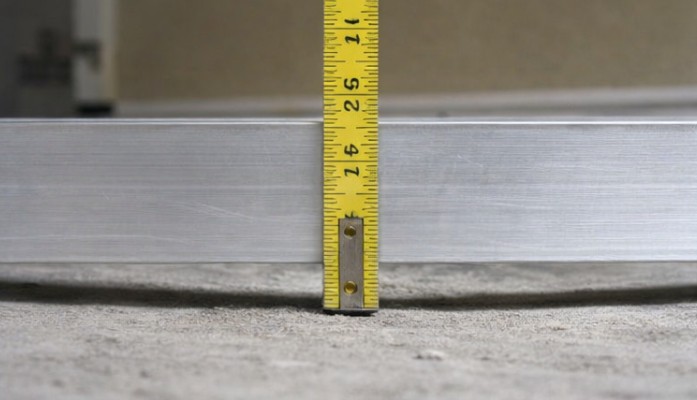
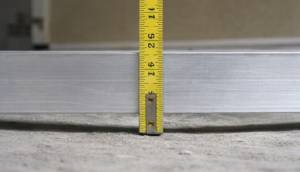
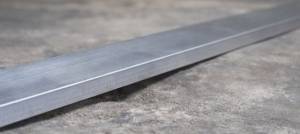
• Concrete Flatness and Levelness Compatibility
Surface Deterioration Conditions
• Spalling, Scaling, and Surface Deterioration
Testing and Evaluation Context
• Concrete substrate evaluation within the flooring industry commonly focuses on flooring-system compatibility rather than structural concrete engineering analysis
• Moisture, alkalinity, surface preparation, and movement conditions are frequently evaluated together when assessing flooring performance concerns
• Flooring manufacturers establish installation requirements intended to improve compatibility between flooring systems and concrete substrates
• Non-destructive observations and testing are commonly used because concrete slabs are often concealed beneath finished flooring systems
• Additional analytical evaluation may be available through Professional Testing Laboratory
Related Pages
• Moisture Testing Prior to Installation
• Concrete Surface Profile (CSP) and Surface Preparation
• Concrete Joints and Movement Separation
Contributors
Independent peer review (non-authoring) — this page only
Floor Detective® Peer Review Team
© 2015–2026 Floor Detective®
Last revised: 05/04/2026
Limitations of Moisture Testing (Concrete / Substrates)

Concrete Substrate Problems
Concrete Shrinkage and Settlement (Concrete / Substrates)
Vapor Retarders Beneath Concrete Slabs (Concrete / Substrates)
Cold Joints and Construction Joints (Concrete / Substrates)
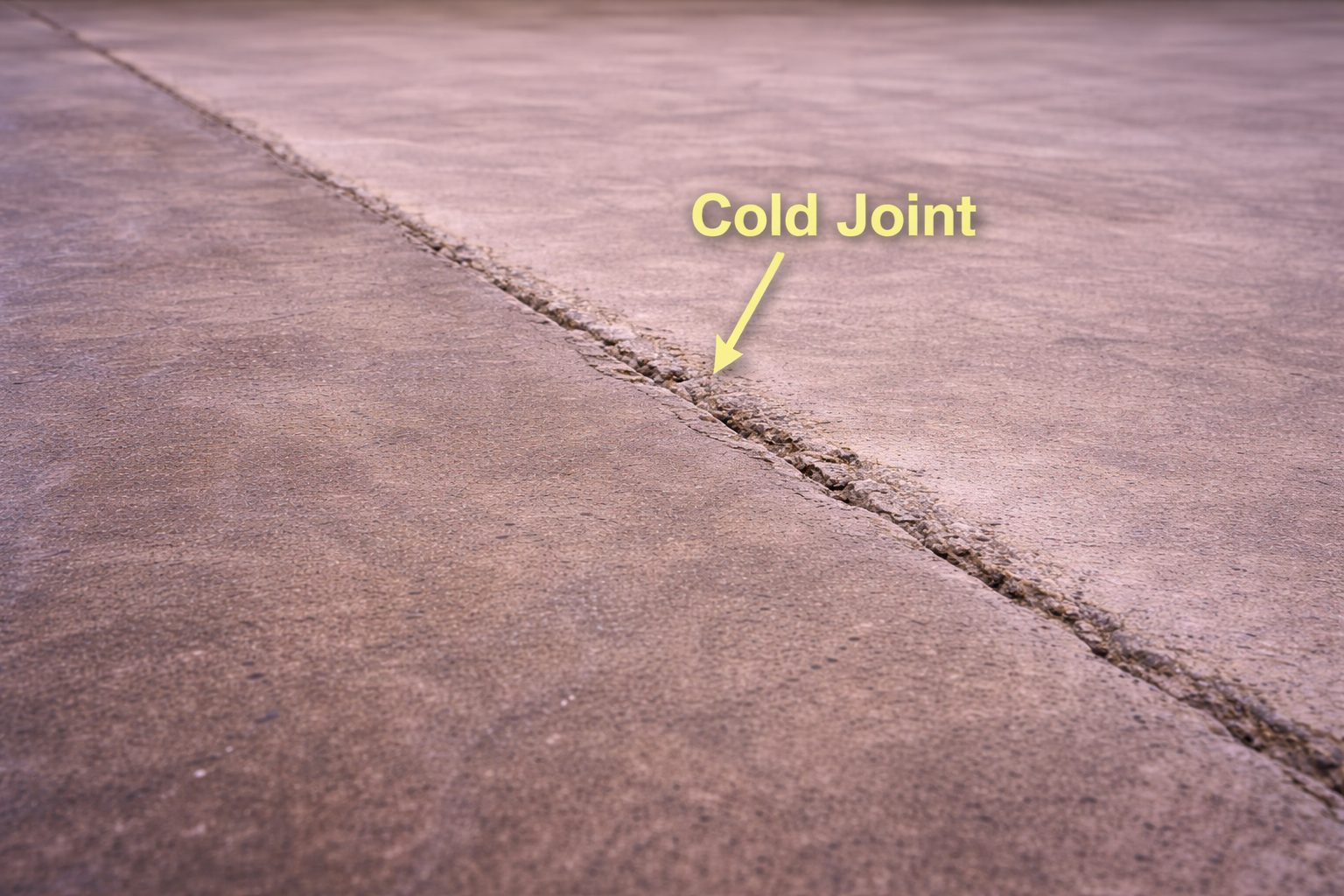
Crack Isolation and Moisture Mitigation Systems (Concrete / Substrates)
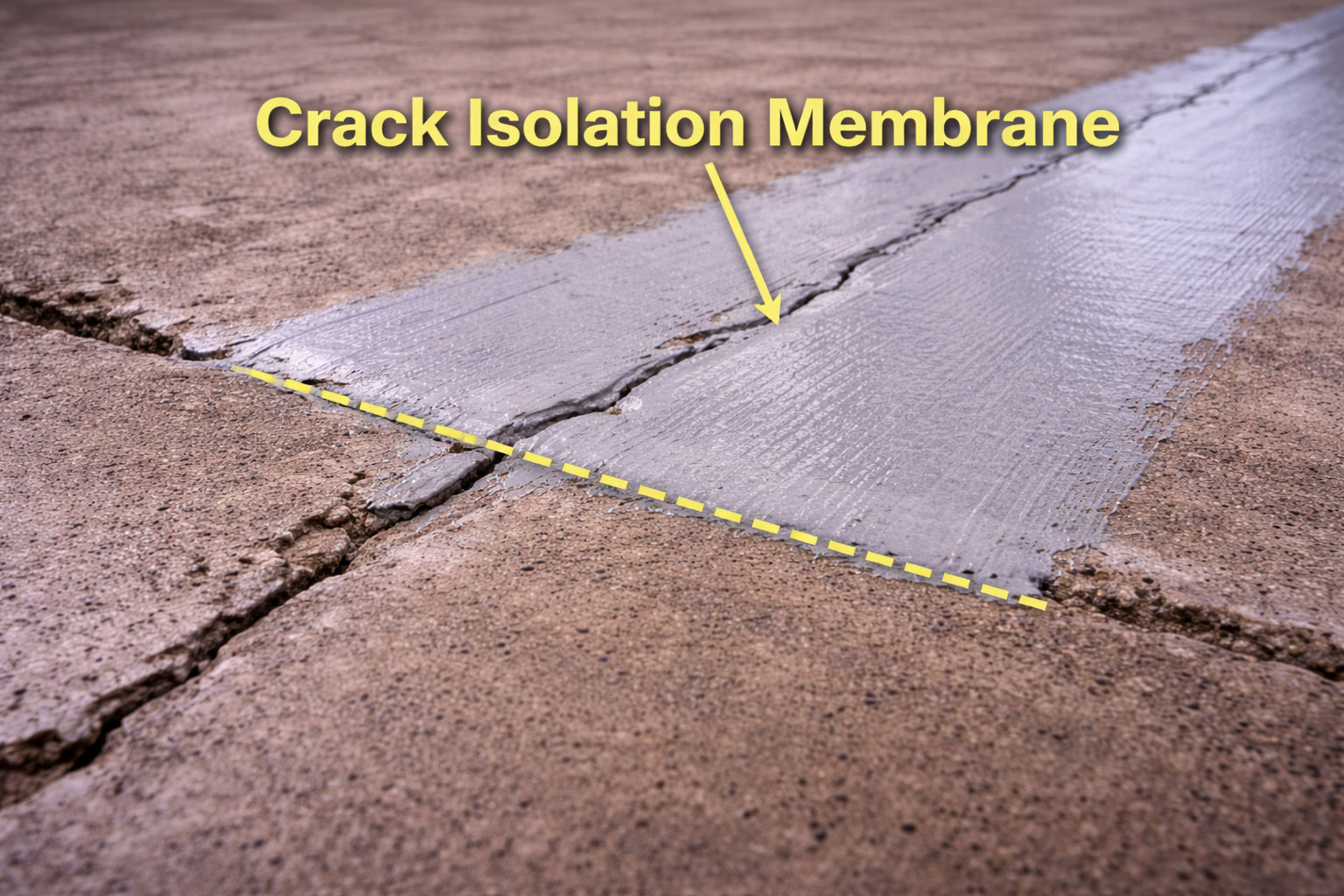
Concrete Surface Profile (CSP) and Surface Preparation (Concrete / Substrates)
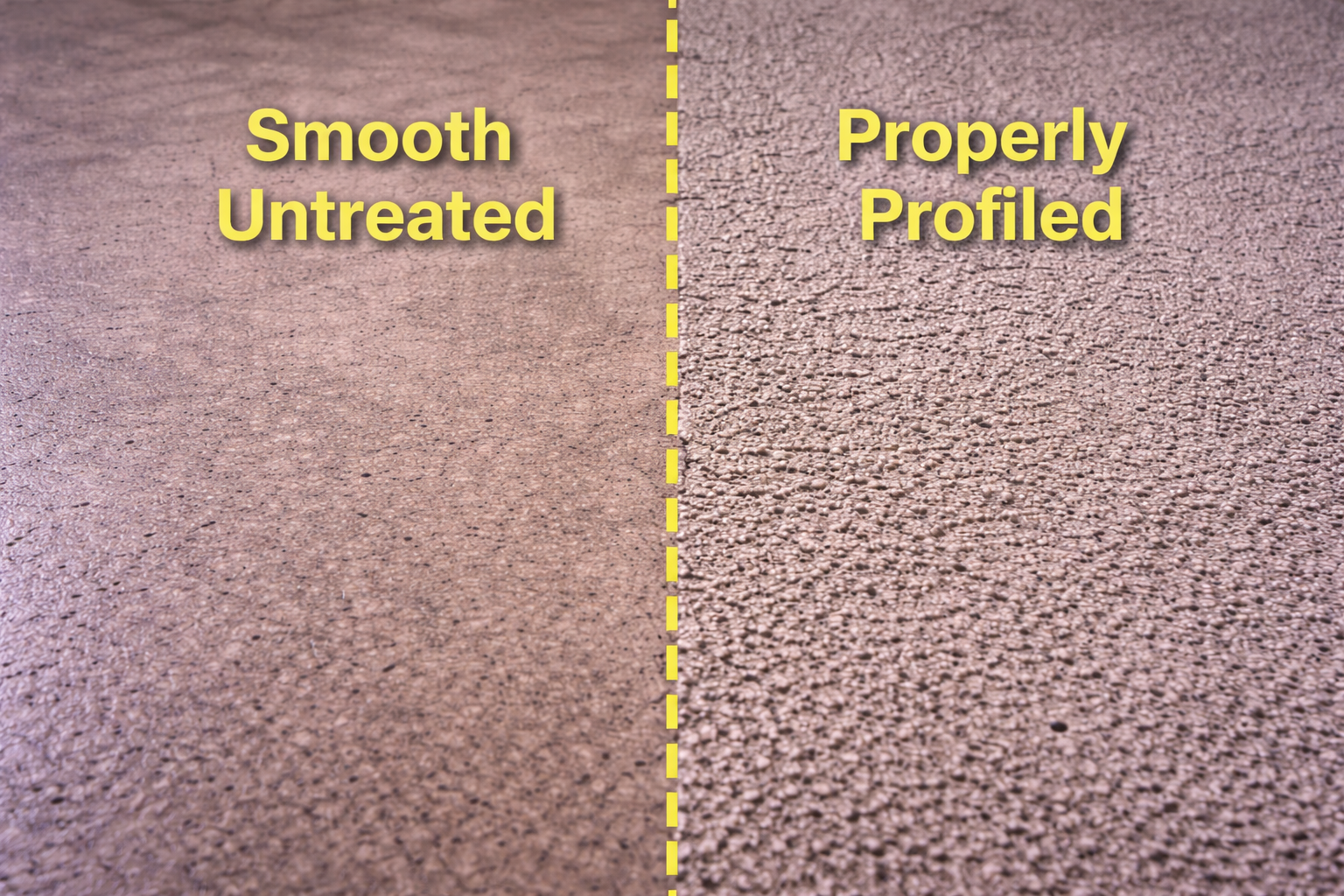
Hydrostatic Pressure and Capillary Moisture Movement (Concrete / Substrates)
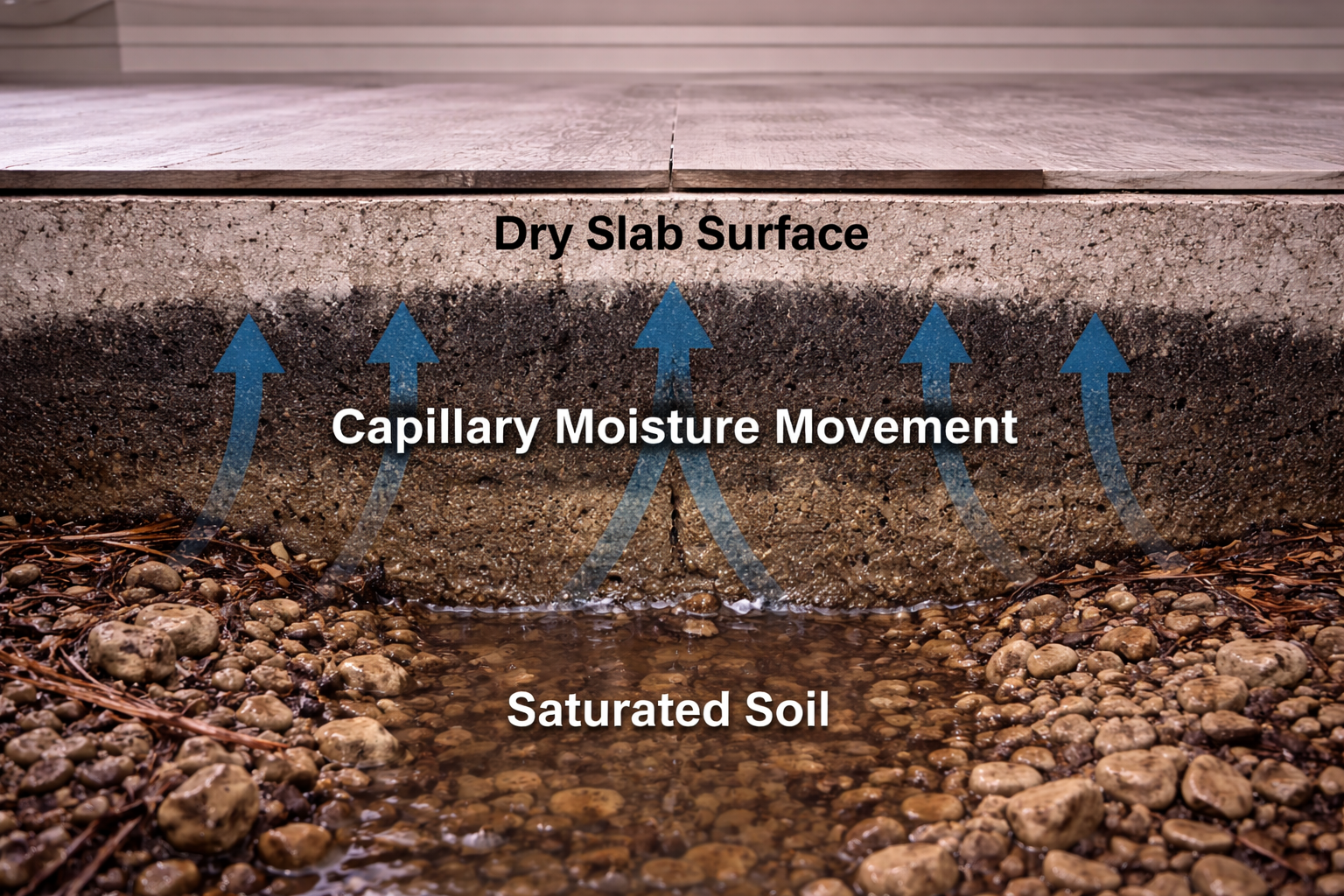
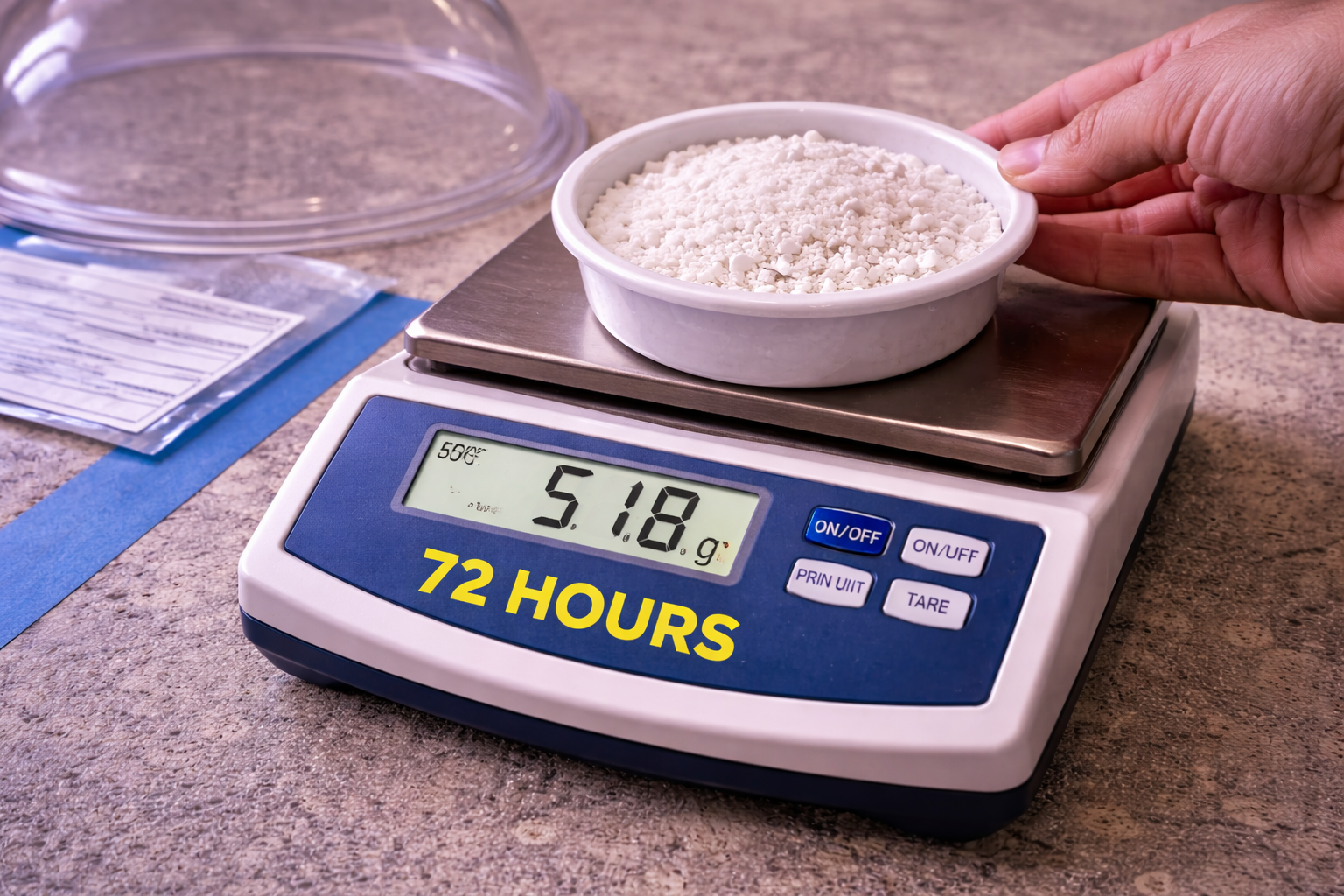
Calcium Chloride (MVER) Moisture Vapor Emission Testing (Concrete / Substrates)
In-Situ Relative Humidity (RH) Testing (Concrete / Substrates)