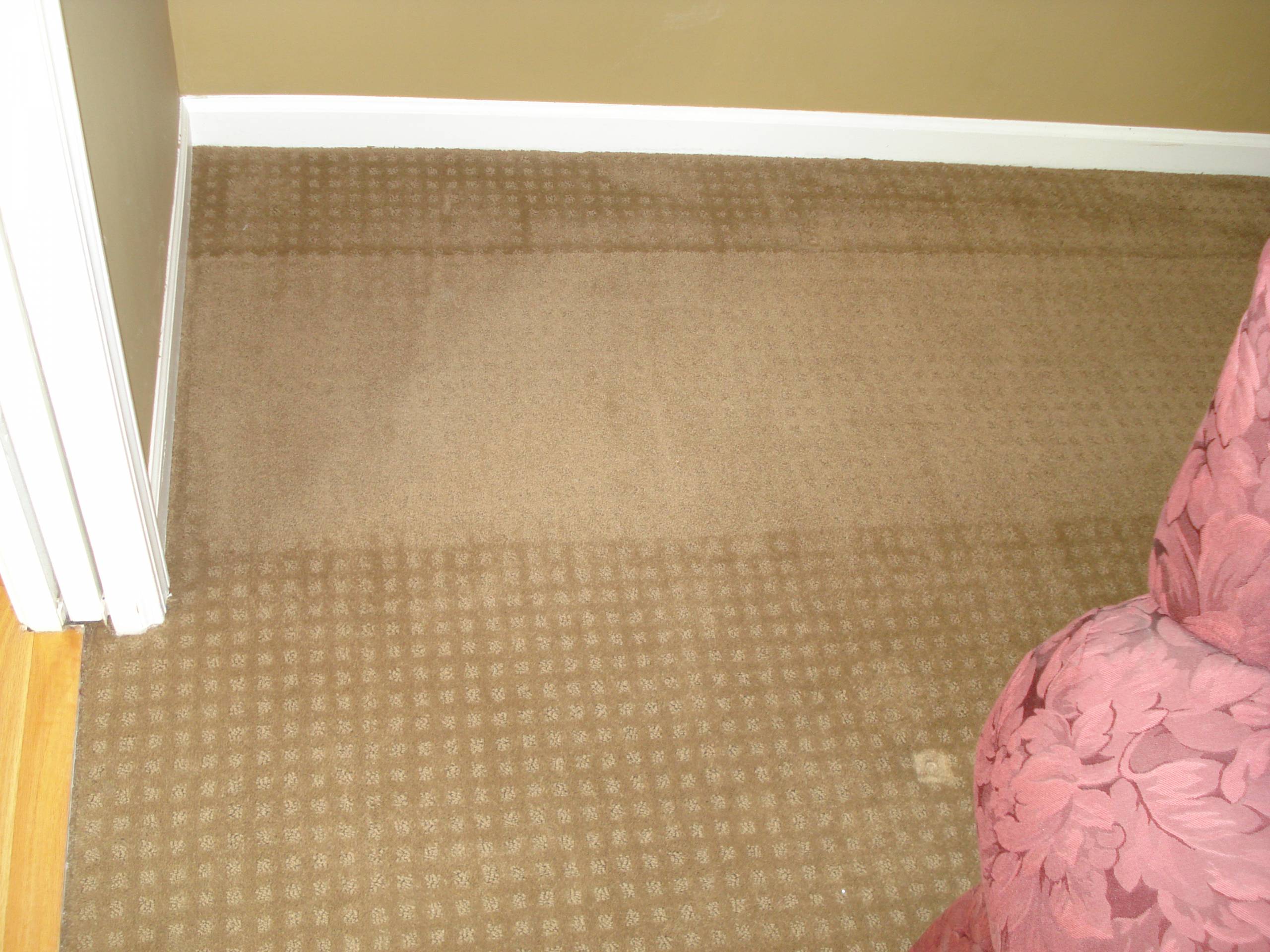
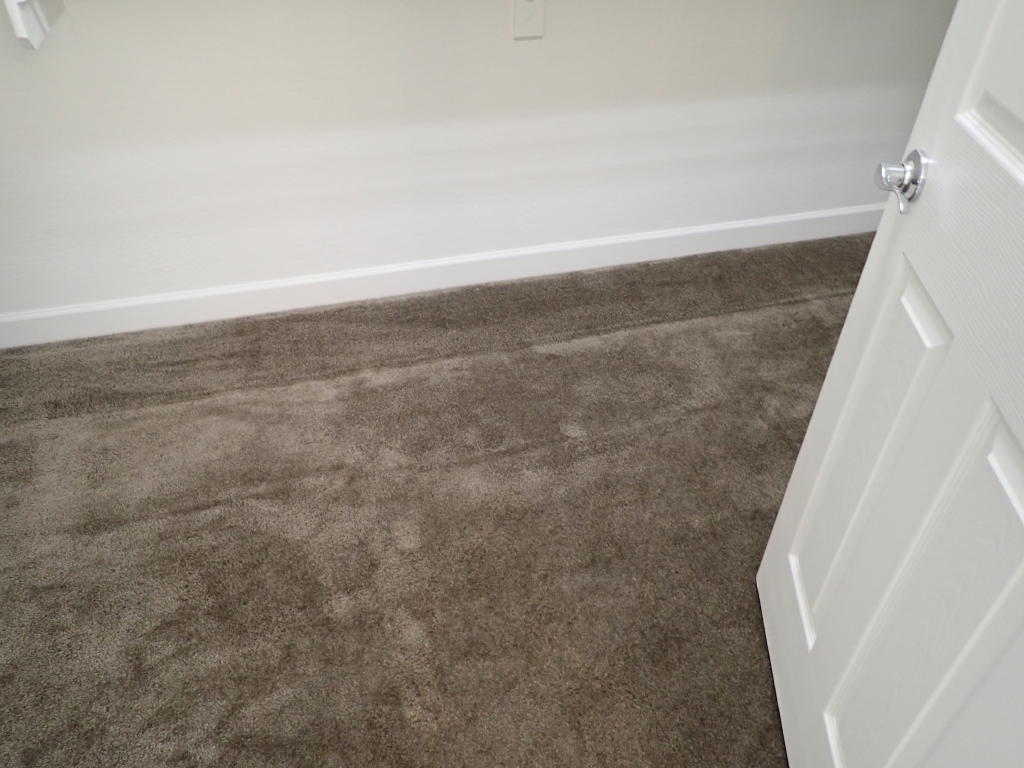
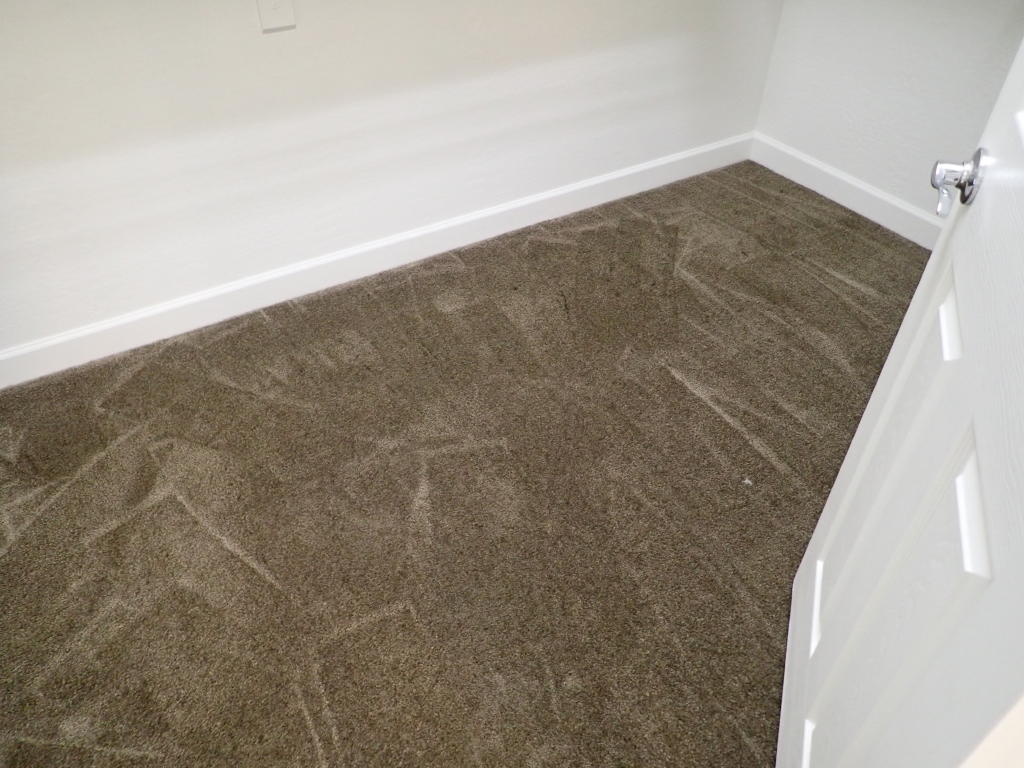
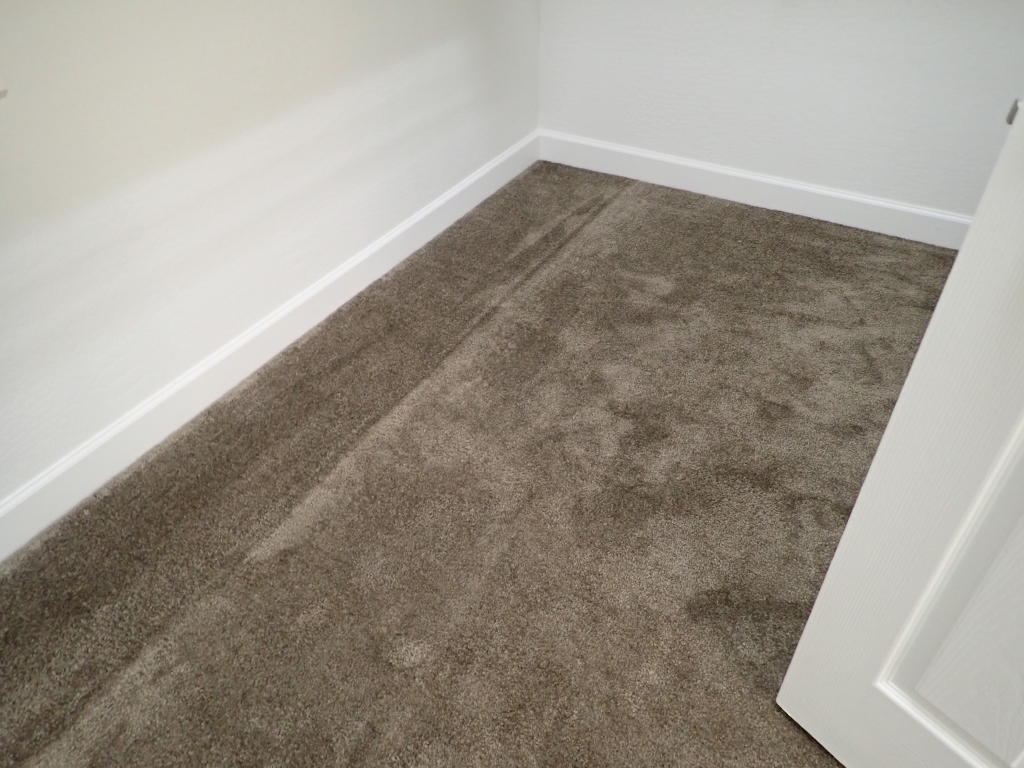
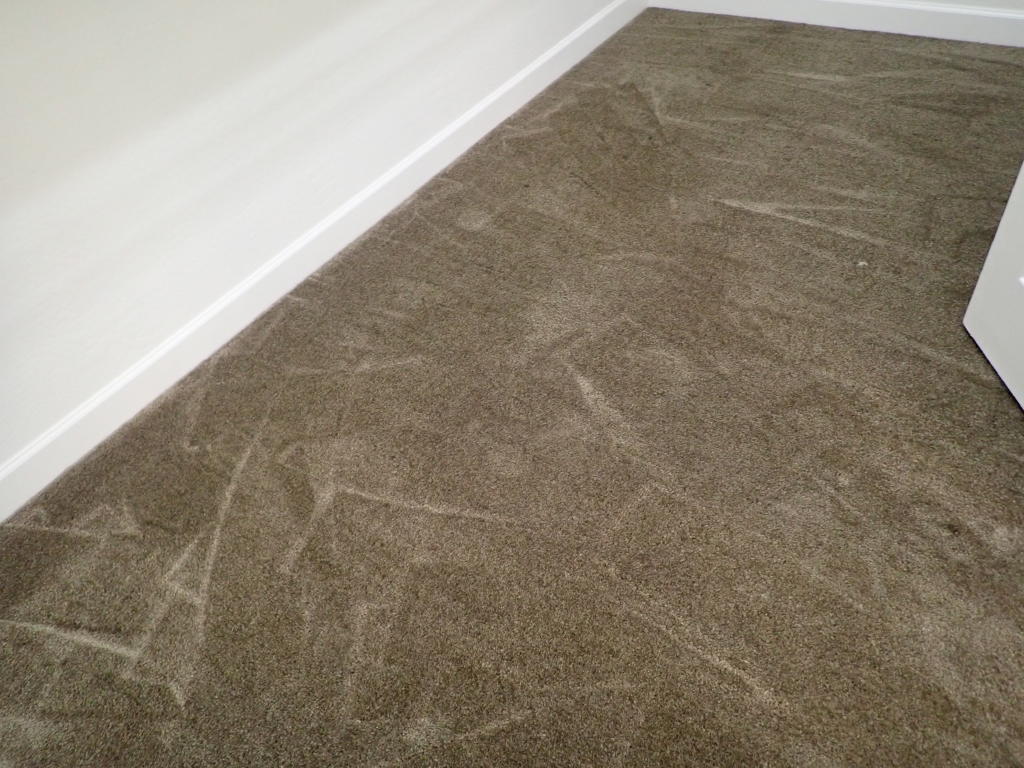
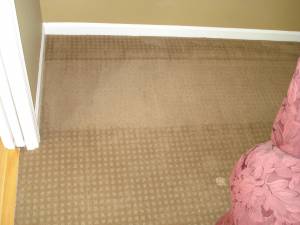
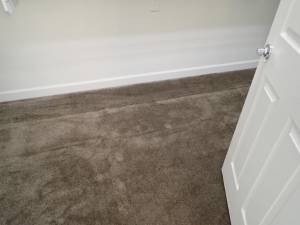
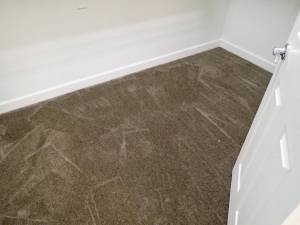
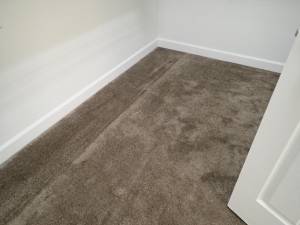
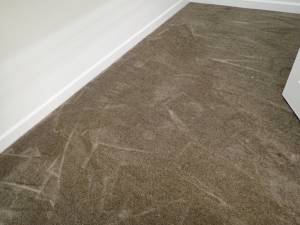
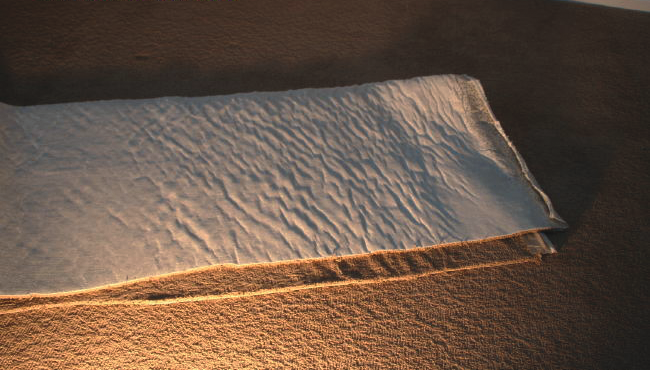
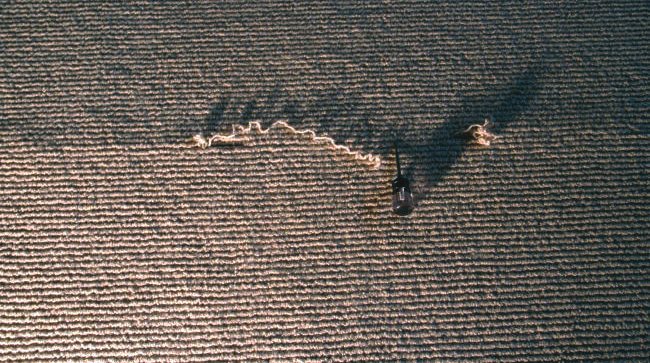
This can easily be steamed to correct
Before correction
After correction
Before steaming
After steaming
Steam to correct
Steam to correct
Roll-Core Crush / Pile Reversal (Carpet)
Floor Detective® Claims and Conditions Guide
Summary
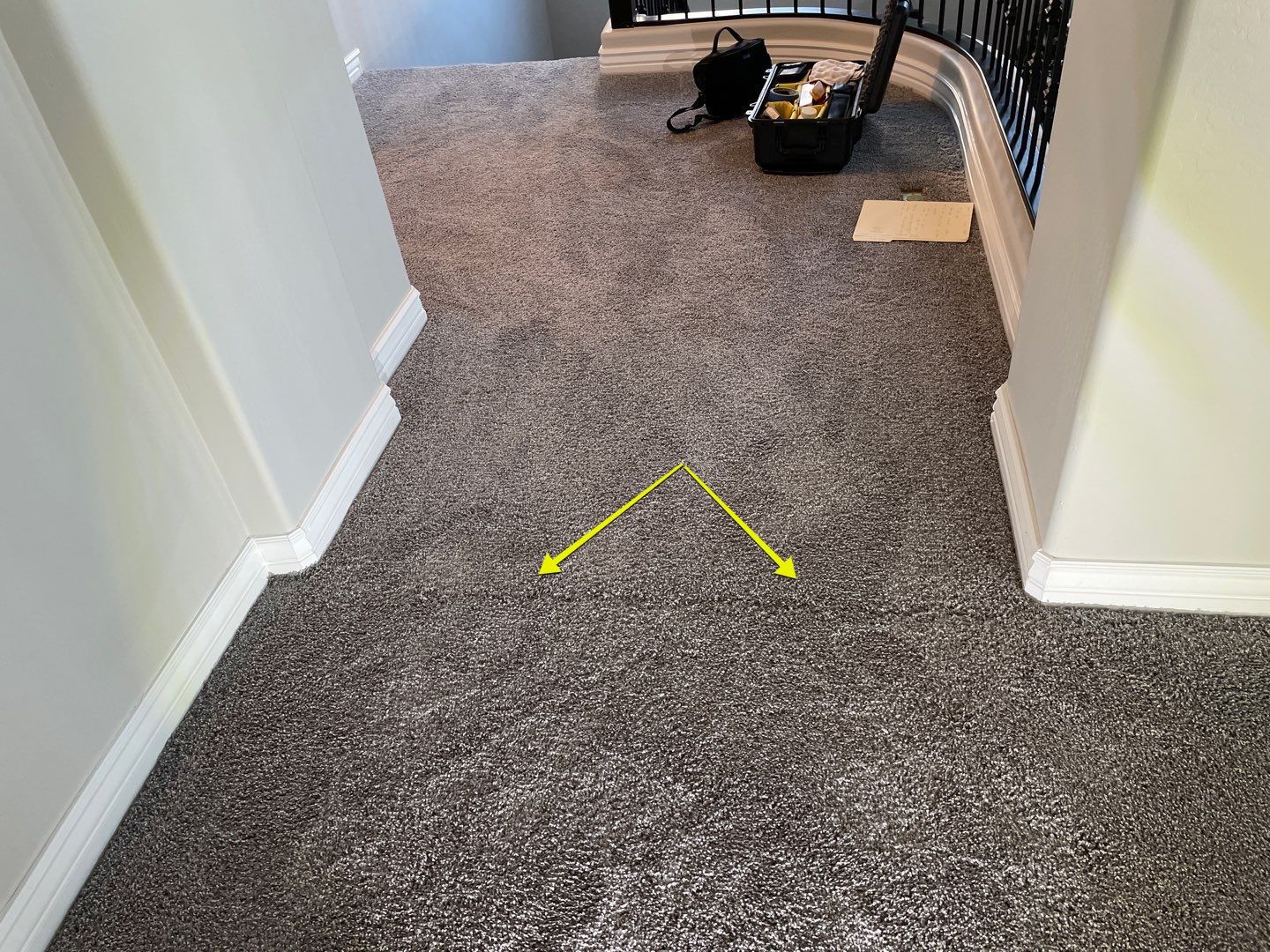
Roll-core crush, sometimes referred to as a tube line, is an appearance condition that develops near the beginning of a carpet roll when pile yarns are tightly wrapped and compressed around the roll core during packaging, storage, and transport. The compressed pile may bend opposite its normal lay direction, creating a visible light or dark band extending across the carpet width when the material is unrolled and exposed to directional lighting. The appearance change results from altered pile orientation and surface reflectance rather than true color change, fiber damage, backing failure, or structural breakdown. Visibility may increase under directional or low-angle lighting and may reverse when viewed from opposite directions. See also Shading, Pile Reversal, and Carpet Problems for broader context.
Please subscribe to see all content
April 4, 2026
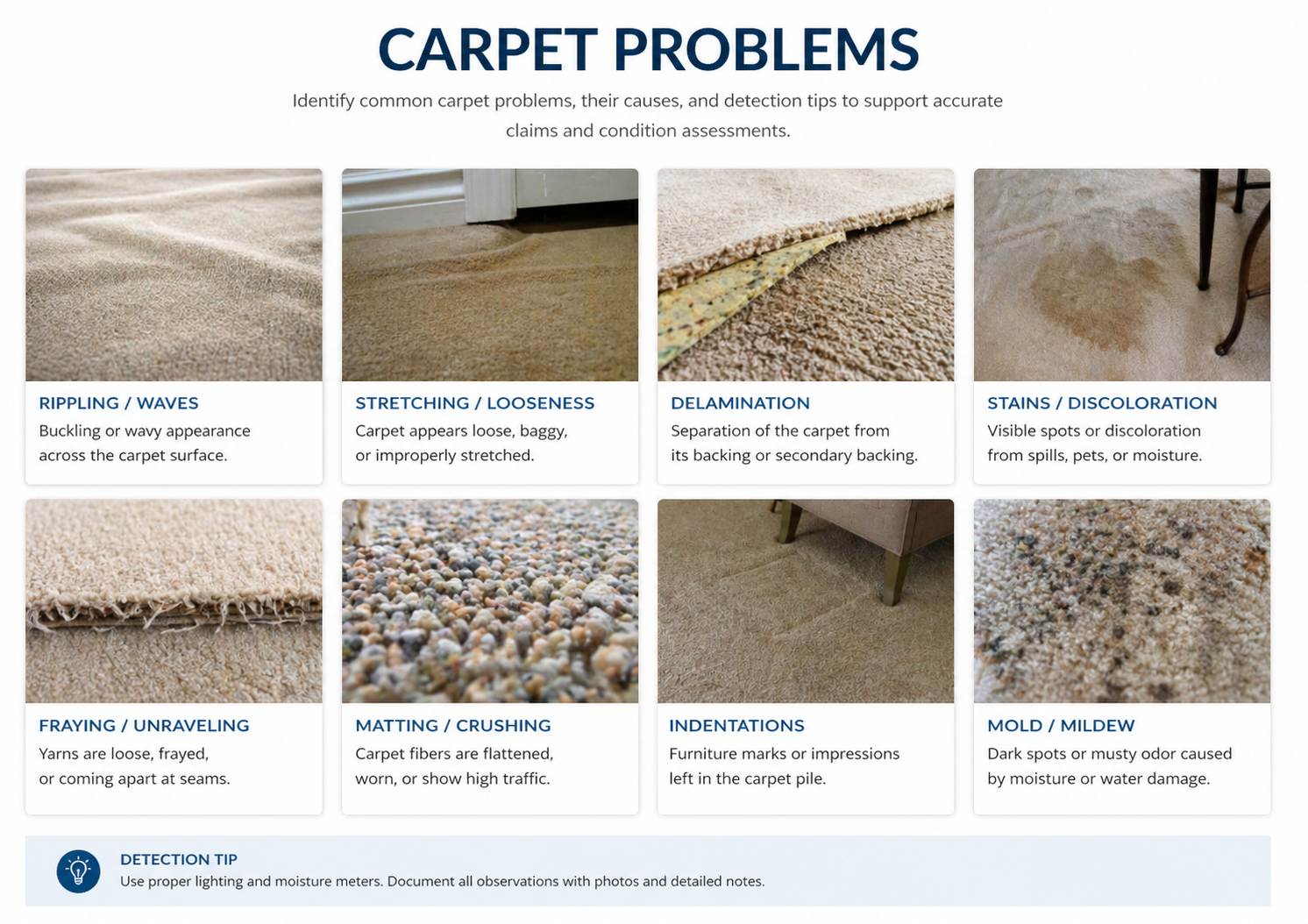
Carpet problems may involve seams, backing systems, texture changes, traffic wear, mechanical damage, or installation-related conditions.
Read More
February 22, 2026
Carpet fiber identification helps determine how carpet may respond to heat, moisture, cleaning chemistry, abrasion, and environmental exposure.
Read More
December 27, 2025
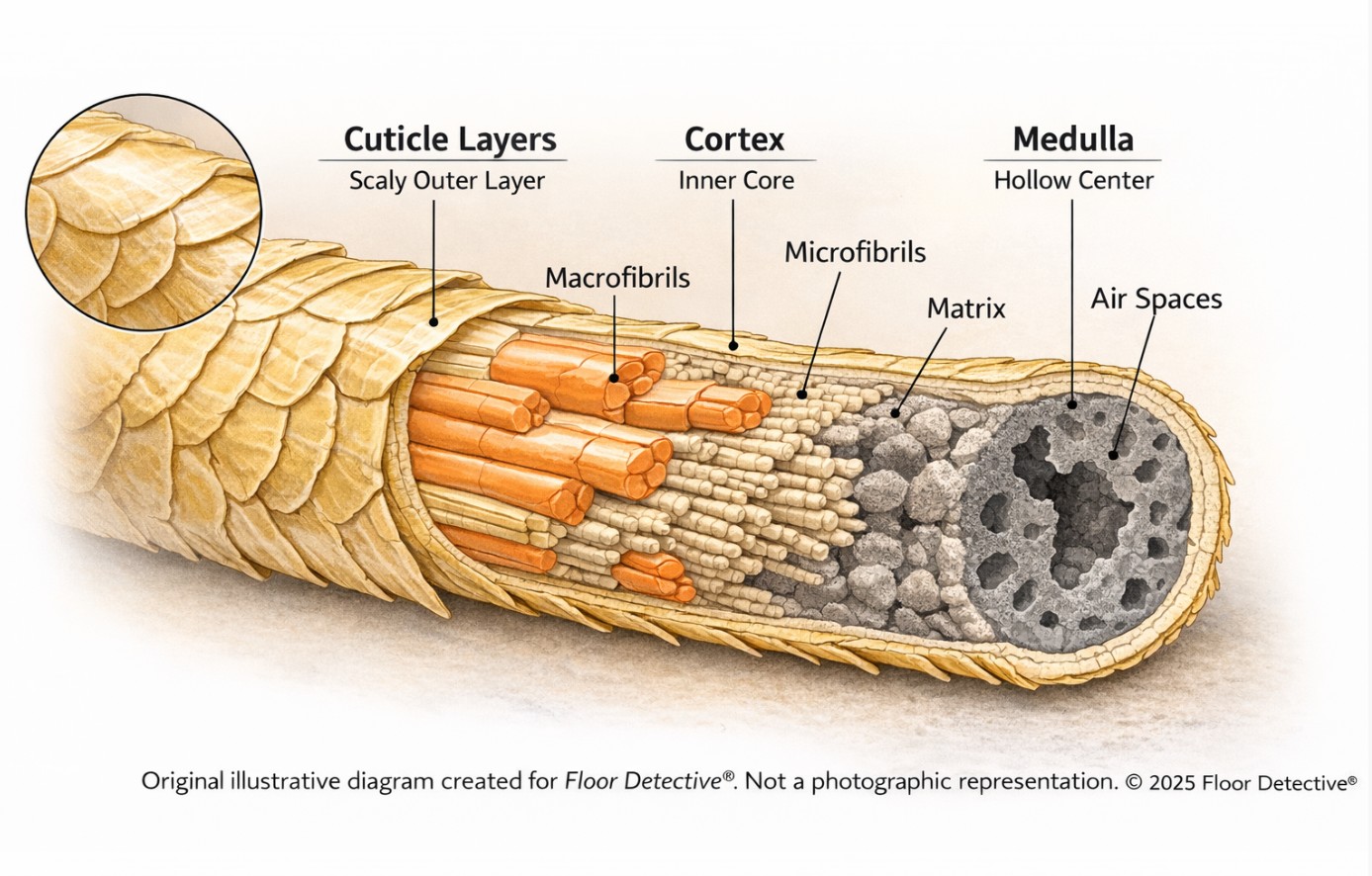
Wool carpet properties include moisture absorption, chemical sensitivity, shedding, and appearance variation associated with natural wool fibers.
Read More
December 13, 2025
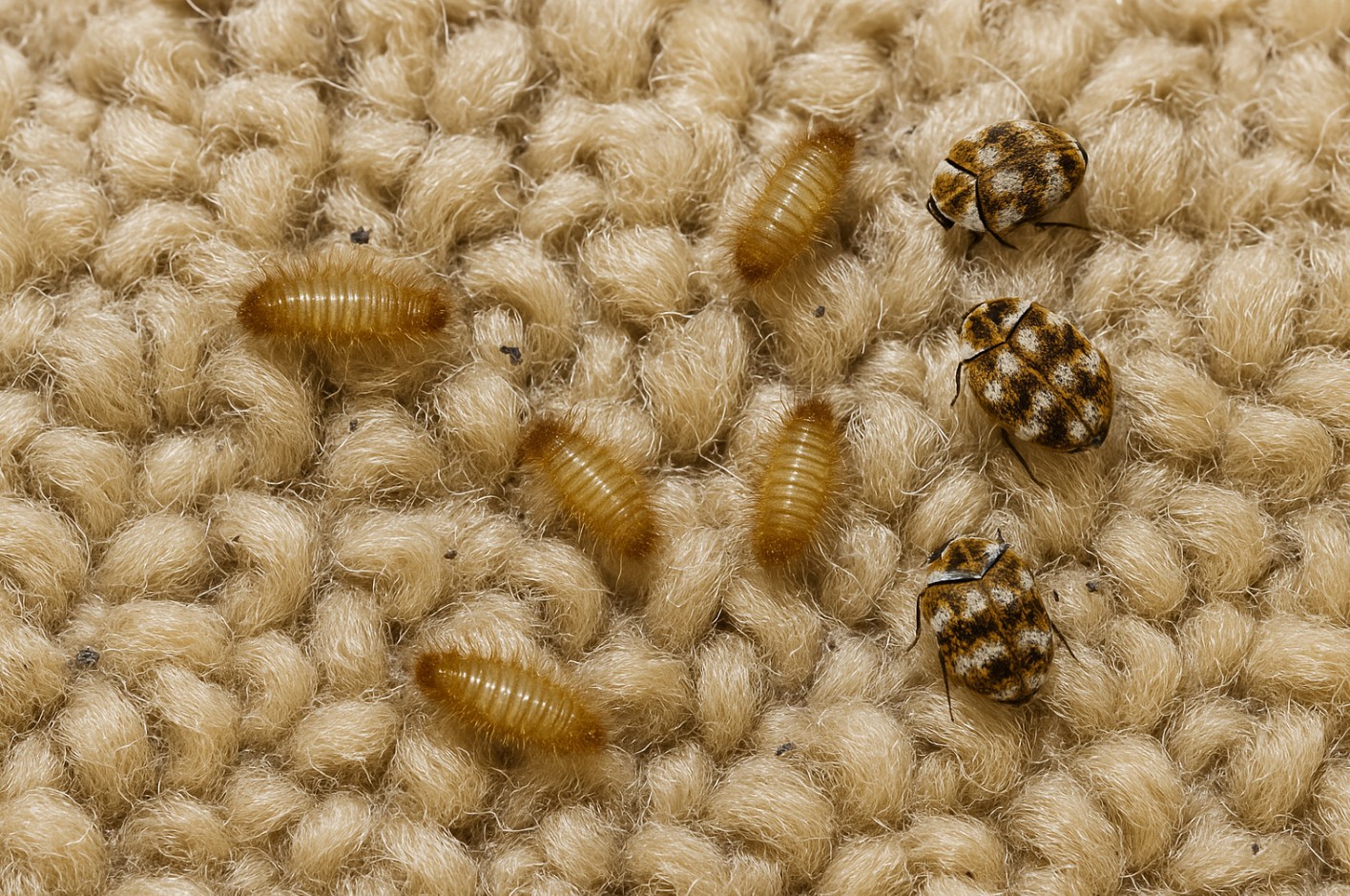
Carpet beetle damage is localized fiber loss caused by larvae feeding on organic materials within carpet, often occurring in concealed...
Read More
May 12, 2023
Carpet fiber properties determine durability, resilience, and how flooring performs under traffic and environmental conditions.
Read More
December 15, 2022
Carpet missing rows are manufacturing-origin tufting conditions involving absent yarn along machine-direction rows.
Read More
September 1, 2022
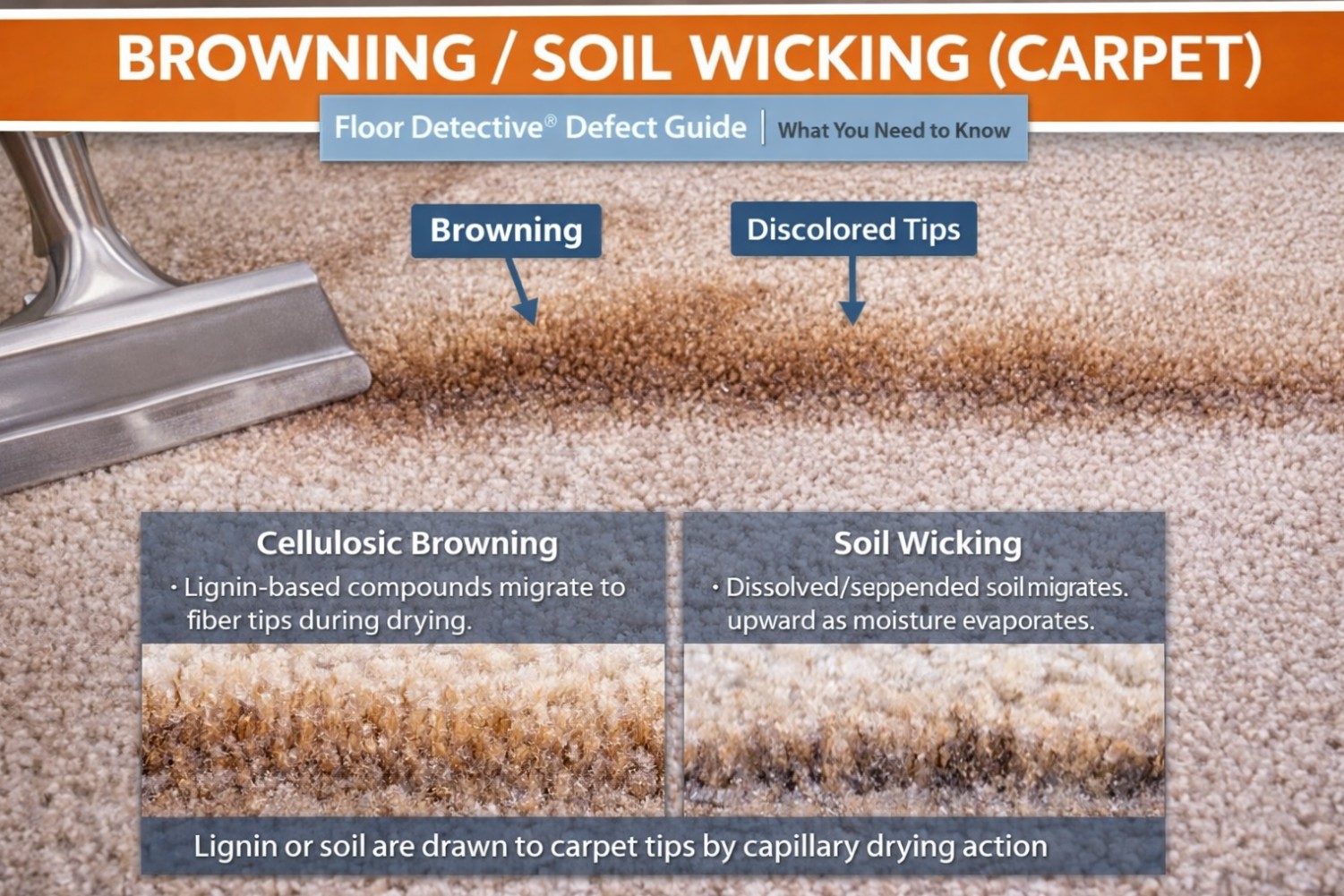
Browning and soil wicking are discoloration conditions caused by moisture-driven migration of materials to the carpet surface during drying.
Read More
March 13, 2021
Carpet backing wrinkles are manufacturing-related distortions caused by backing misalignment, tension variation, or latex lock-in.
Read More
March 13, 2021
Carpet unraveling runs are progressive yarn withdrawals that follow tuft rows in continuous filament carpet constructions.
Read More
March 13, 2021
Carpet roll-core crush occurs when pile yarns become compressed around the roll core, creating visible light or dark banding near...
Read More