
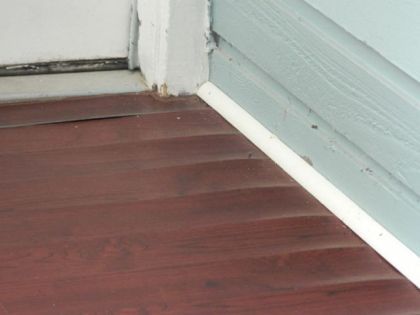
LVT / SPC Floor Problems
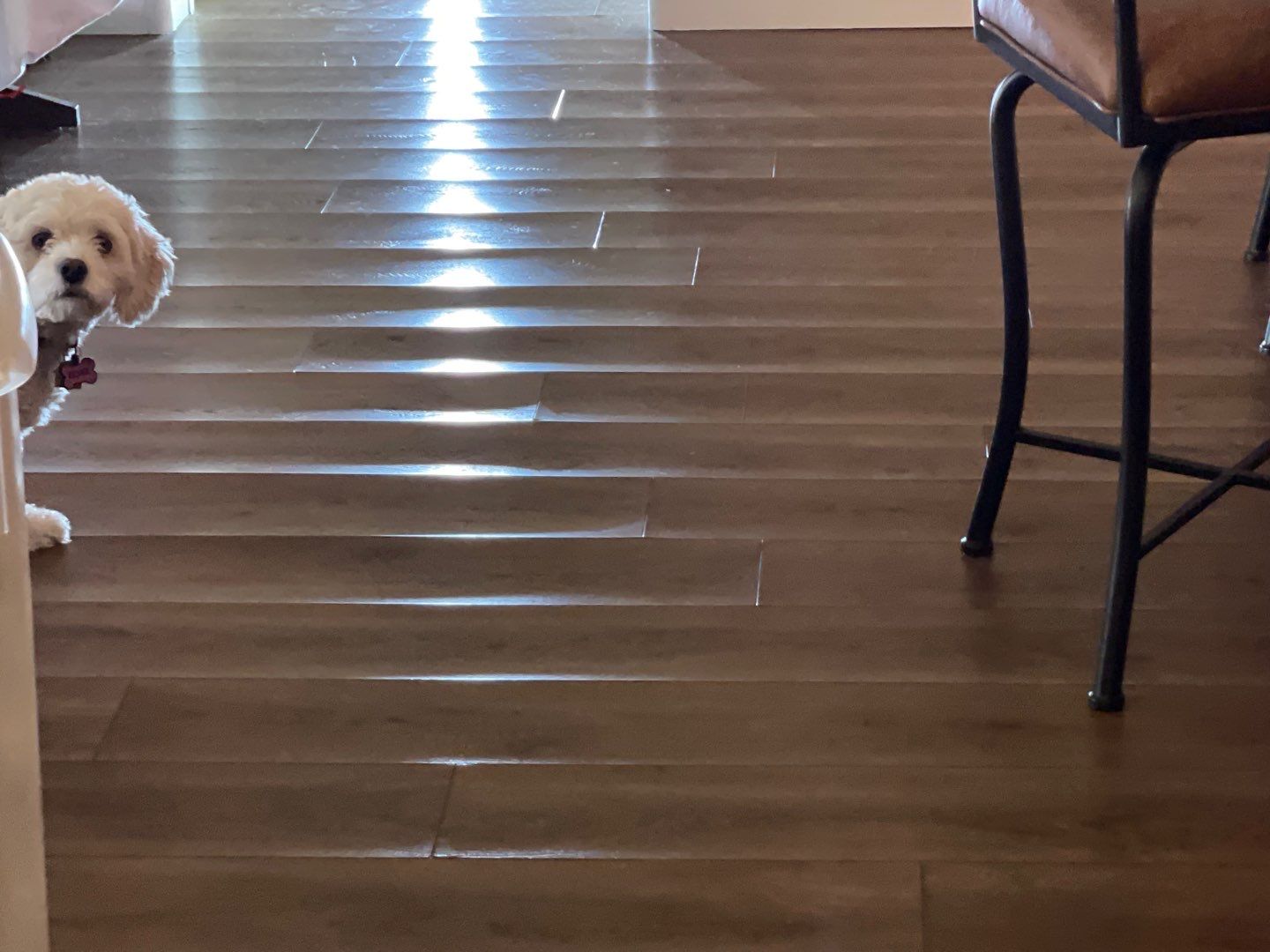
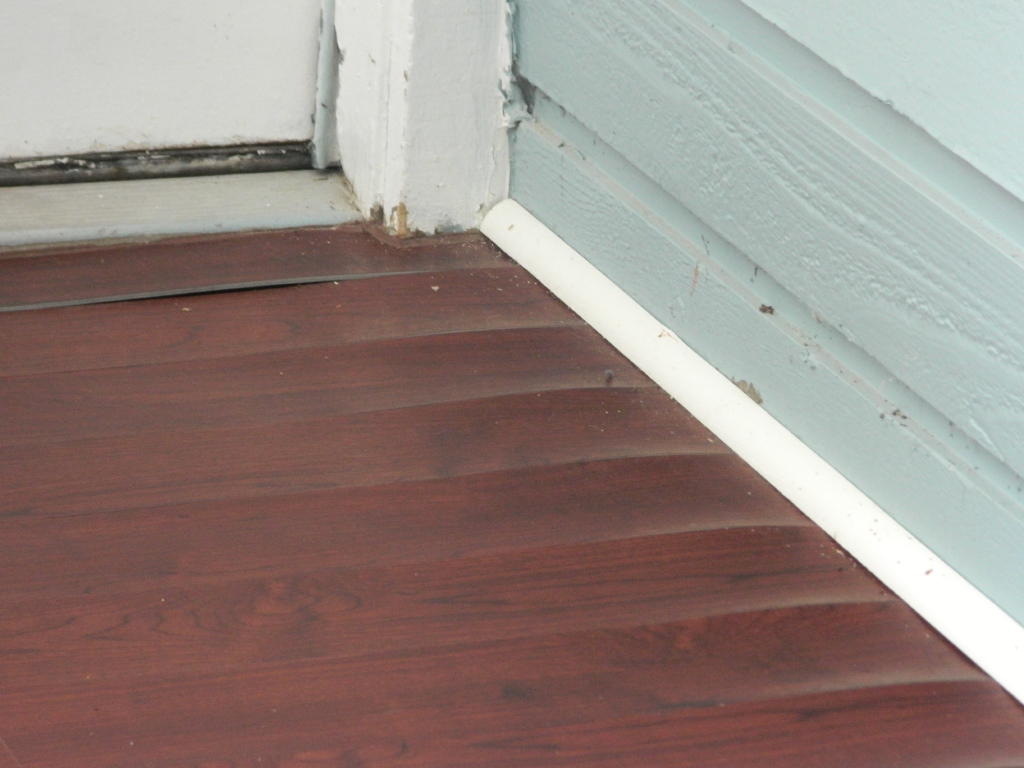
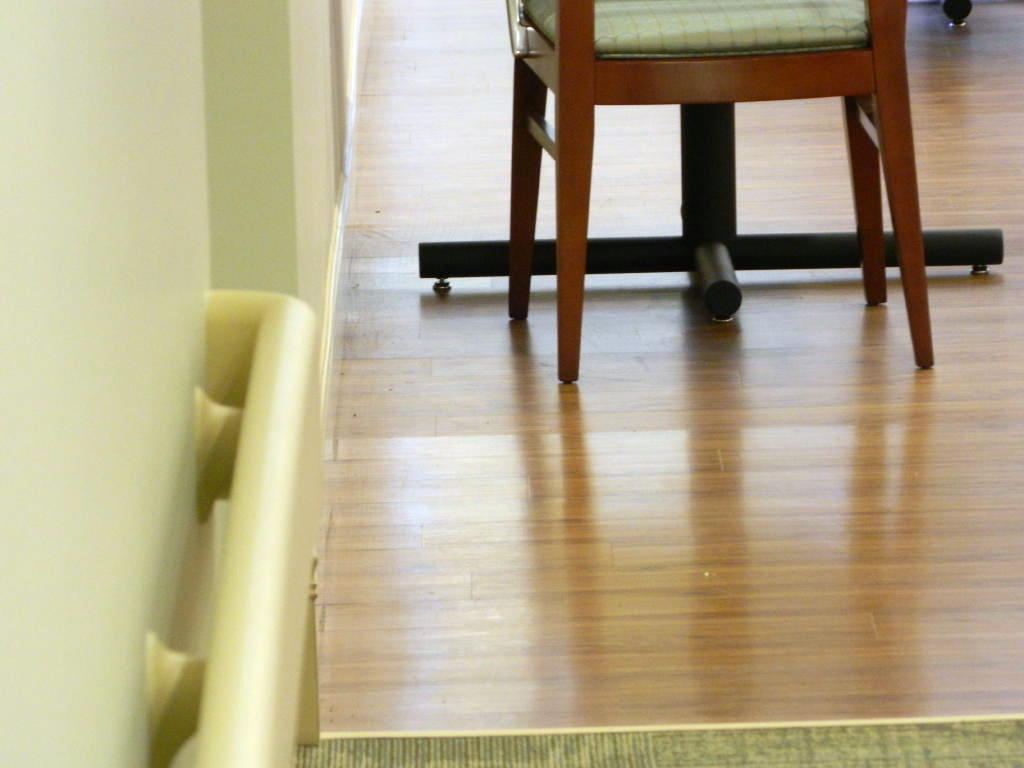
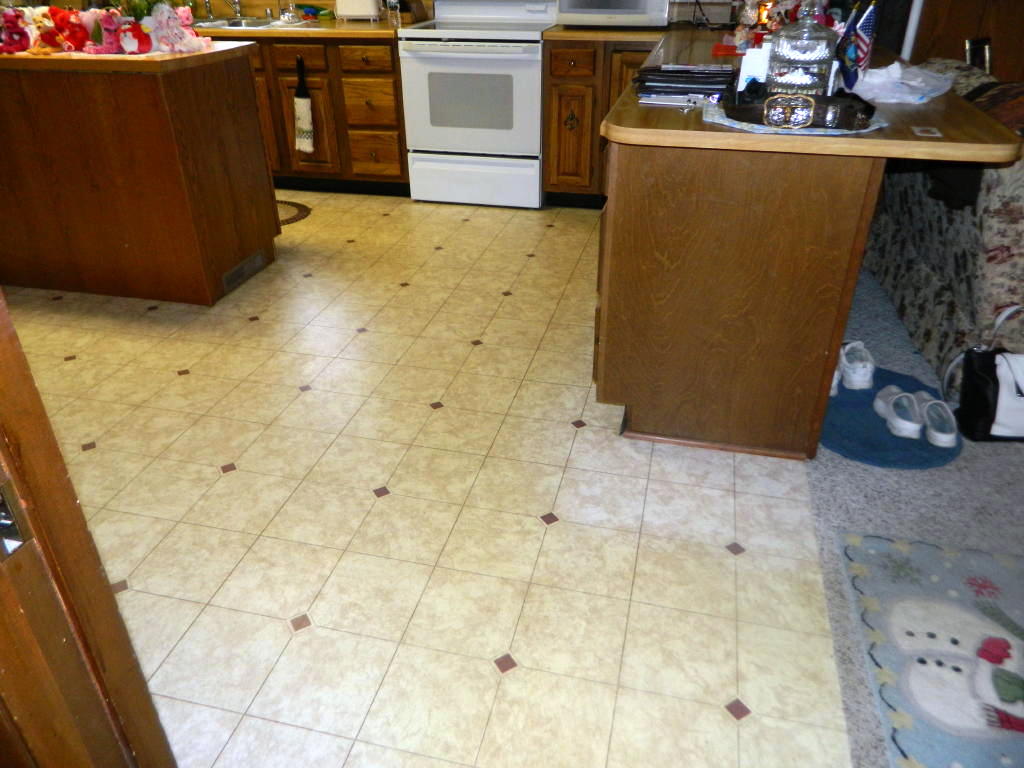
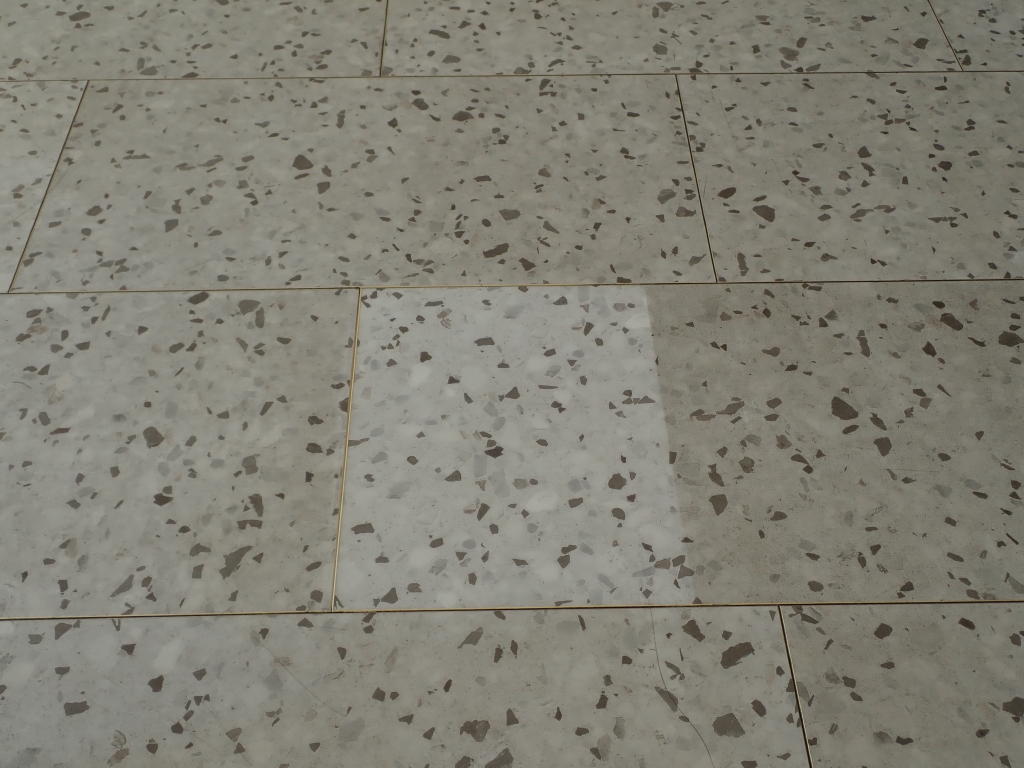
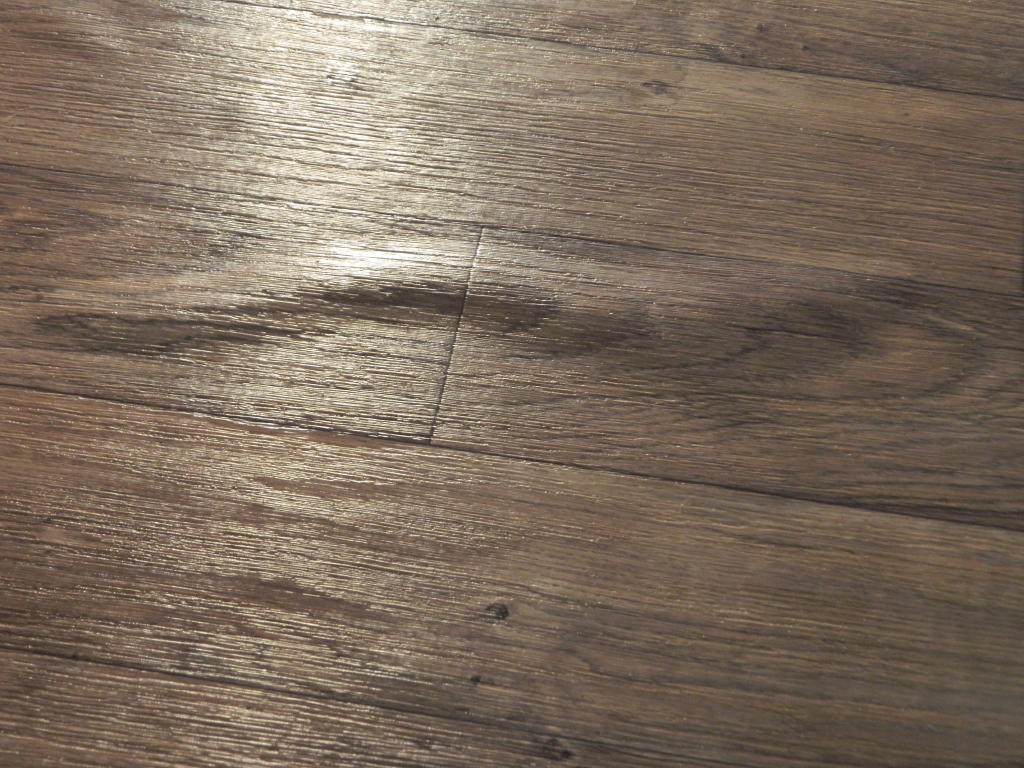
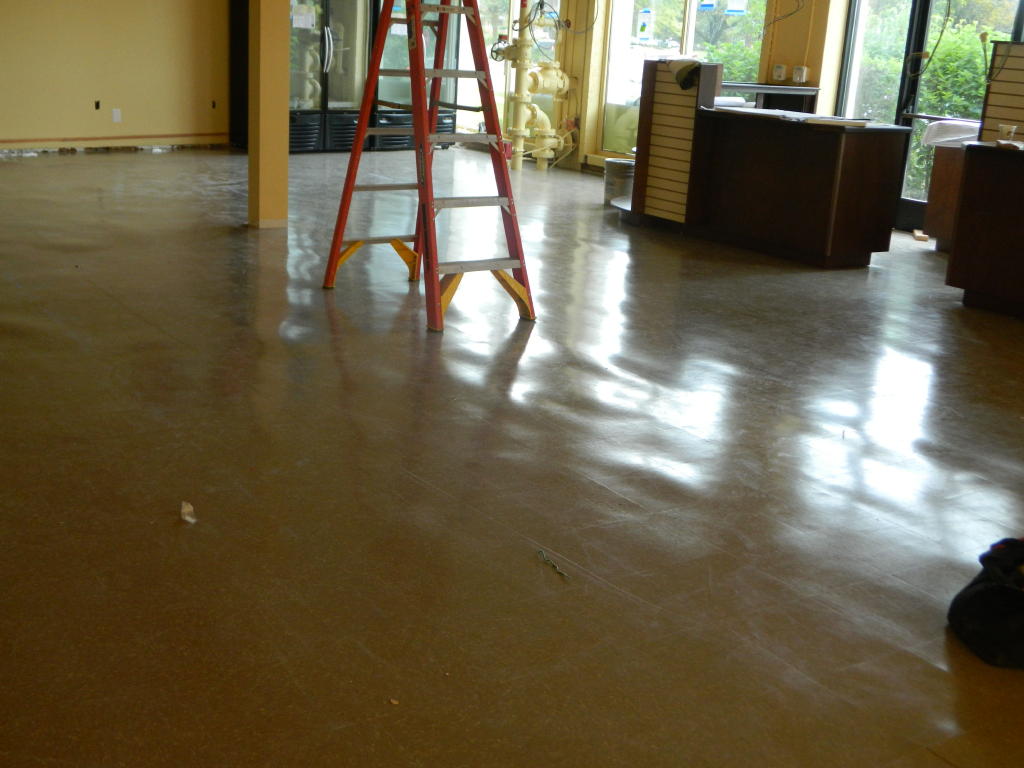
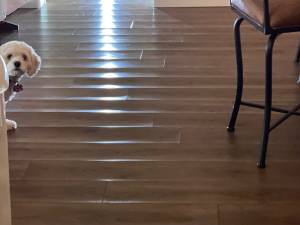
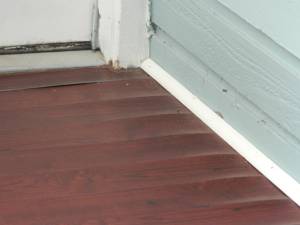
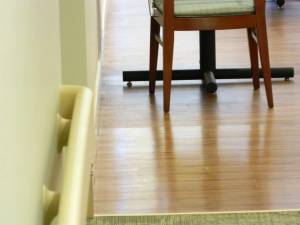
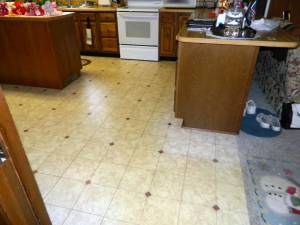
LVT and SPC Floor Problems
Floor Detective® Claims and Conditions Guide
Summary
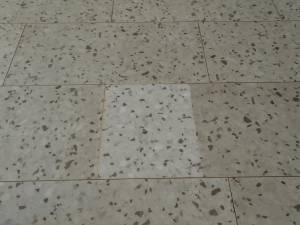
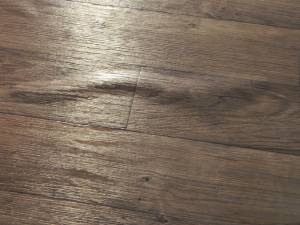
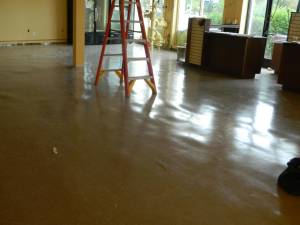
LVT, SPC, WPC, and resilient floor problems may involve movement, gapping, buckling, peaking, curling, noise, indentation, surface distortion, discoloration, telegraphing, or substrate-related effects. These conditions are commonly influenced by flooring-system interaction involving subfloor flatness, support continuity, expansion restraint, environmental exposure, moisture vapor, loading, maintenance, and product construction. Although many resilient flooring products are dimensionally stable, they may still respond to heat, sunlight, rolling loads, point loads, moisture conditions, and substrate irregularities. Proper evaluation requires review of distribution pattern, severity, product type, installation method, substrate condition, environmental exposure, and service history rather than appearance alone. Common conditions include Gaps Resilient Plank, Curling, Cupping, or Edge Lifting, and Buckling Resilient Flooring.
What You Need to Know
• LVT, SPC, WPC, and resilient floor problems may involve appearance, movement, support, surface, or joint-performance conditions.
• Similar visual symptoms may develop from different underlying mechanisms.
• Floating resilient systems depend heavily on subfloor flatness, support continuity, expansion space, and freedom of movement.
• Glue-down resilient systems may be influenced by substrate preparation, adhesive transfer, moisture conditions, and service exposure.
• Heat, sunlight, moisture vapor, rolling loads, point loads, and environmental cycling may influence flooring performance.
• Proper evaluation considers pattern, location, severity, installation method, environmental history, and flooring-system interaction together.
• Visual appearance alone does not independently establish product defect, installation-related cause, or site-related cause.
Movement, Expansion, and Joint-Related Conditions
• Buckling Resilient Flooring
• LVT Buckled Over Concrete or Wood Subfloor
• Gaps Resilient Plank
• Peaked End Joints
• Broken Locking Profiles LVT
• Uni-Push Joint Damage
• Vinyl Plank Floor Noise
Edge Lift, Curling, and Profile Distortion
• Allure Edge Lifting
• Curling, Cupping, or Edge Lifting
• Doming
• Deformed Packaging
Substrate, Support, and Telegraphing Conditions
• Telegraphing
• Cracks in Planks Over Existing Floors
• Construction Dust Contamination Flooring
• Core Void Resilient Plank
Moisture, Mineral Migration, Blisters, and Sheet Goods Conditions
• Blisters
• Bubbling Sheet Goods
• Efflorescence-Like Mineral Migration at LVT/SPC Joints
• Sheet Shrinkage and Seam Opening Resilient Sheet Flooring
• Heat Weld Seam Failure Resilient Sheet Flooring
Surface, Wear, Gloss, and Appearance Conditions
• Scratches, Indentations, and Surface Abrasions
• Gloss Variation Resilient Plank
• Edge Damage
• Yellowing
• Yellowing Discoloration LVP SPC WPC
• Cross-Machine Direction Width Shading and Texture Variation Resilient Sheet Vinyl
Delamination and Product Construction Conditions
• Delamination Resilient Plank
• Core Void Resilient Plank
• Broken Locking Profiles LVT
Maintenance and Use Conditions
• Resilient Flooring Maintenance
• Scratches, Indentations, and Surface Abrasions
• Yellowing Discoloration LVP SPC WPC
Testing and Evaluation Context
• Resilient flooring evaluations commonly involve review of product type, installation method, substrate condition, flatness, moisture conditions, expansion space, restraint points, loading patterns, environmental exposure, and maintenance history.
• Field observations may include condition mapping, plank movement, joint alignment, floor flatness, substrate support, moisture indicators, surface condition, and correlation with traffic or exposure patterns.
• Laboratory evaluation may assist when field observations alone do not sufficiently explain dimensional stability, product construction, surface change, or material-performance concerns.
• Additional analytical evaluation may be available through Professional Testing Laboratory when testing is appropriate for the condition being evaluated.
Key Terms
• LVT — Luxury Vinyl Tile flooring commonly manufactured in plank or tile form.
• SPC — Stone Polymer Composite or Stone Plastic Composite rigid-core flooring.
• WPC — Wood Plastic Composite or Waterproof Polymer Core resilient flooring depending on manufacturer terminology.
• Resilient Flooring — Flooring category that includes LVT, SPC, WPC, sheet vinyl, and related flexible or rigid-core products.
• Telegraphing — Visible transfer of substrate irregularities, seams, cracks, or texture through the flooring surface.
• Expansion Restraint — Restriction of normal flooring movement by walls, cabinetry, trim, transitions, or other fixed obstructions.
• Locking Profile — Mechanical joint system connecting floating resilient planks together.
• Point Load — Concentrated pressure from furniture legs, appliances, casters, or other small contact areas.
• Rolling Load — Repetitive moving load from chairs, carts, appliances, or wheeled traffic across the flooring surface.
• Delamination — Separation between bonded product layers within a resilient flooring component.
Related Pages
• Buckling Resilient Flooring
• Gaps Resilient Plank
• Curling, Cupping, or Edge Lifting
Contributors
Independent peer review (non-authoring) — this page only
David Zack, Mike Harde, Fred Gamble, Drew Kern, Claudia Lezell
© 2015–2026 Floor Detective®
Last revised: 05/21/2026
Chair-Caster Damage (LVT/SPC Flooring)
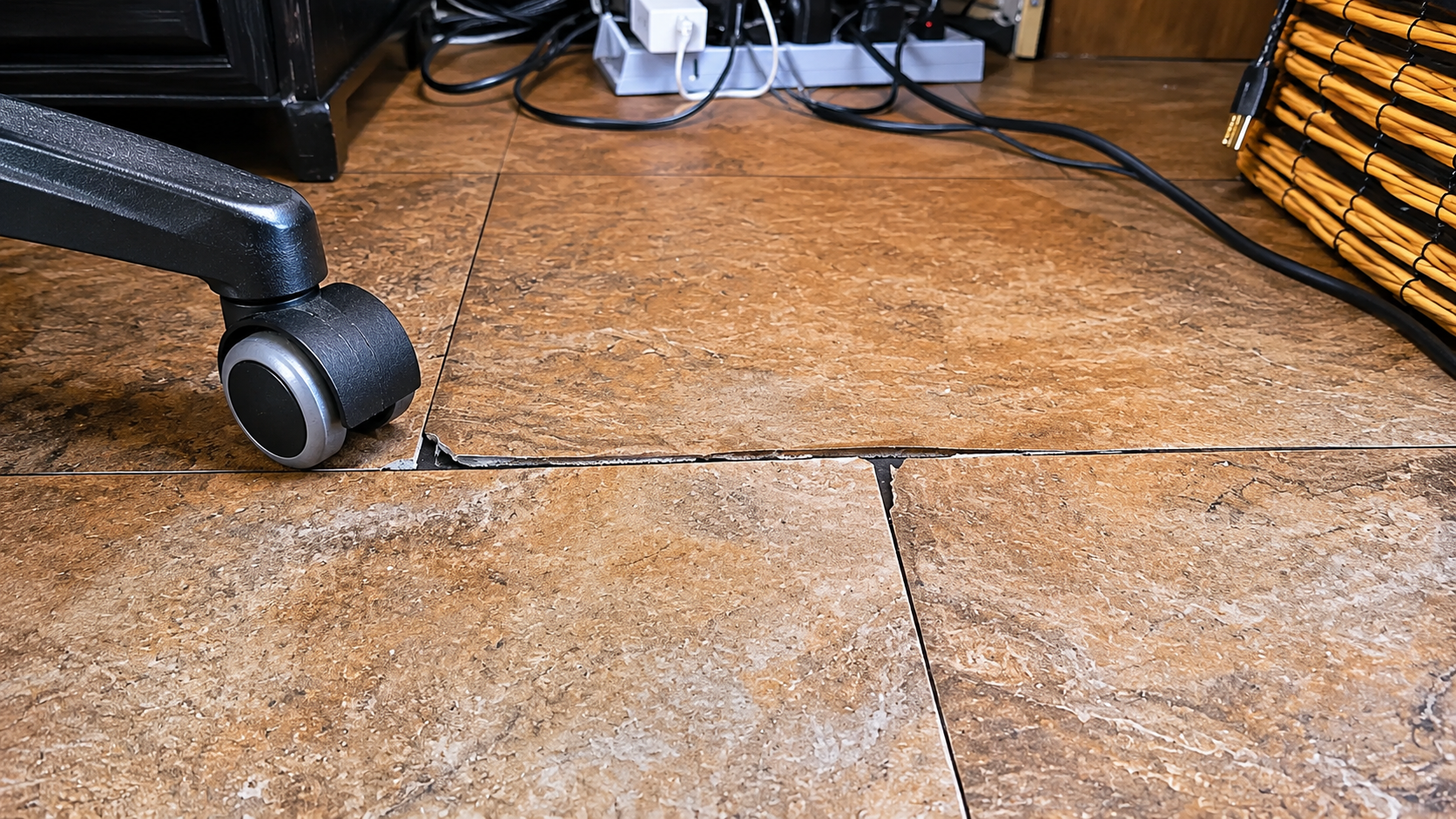
LVT and SPC Floor Problems
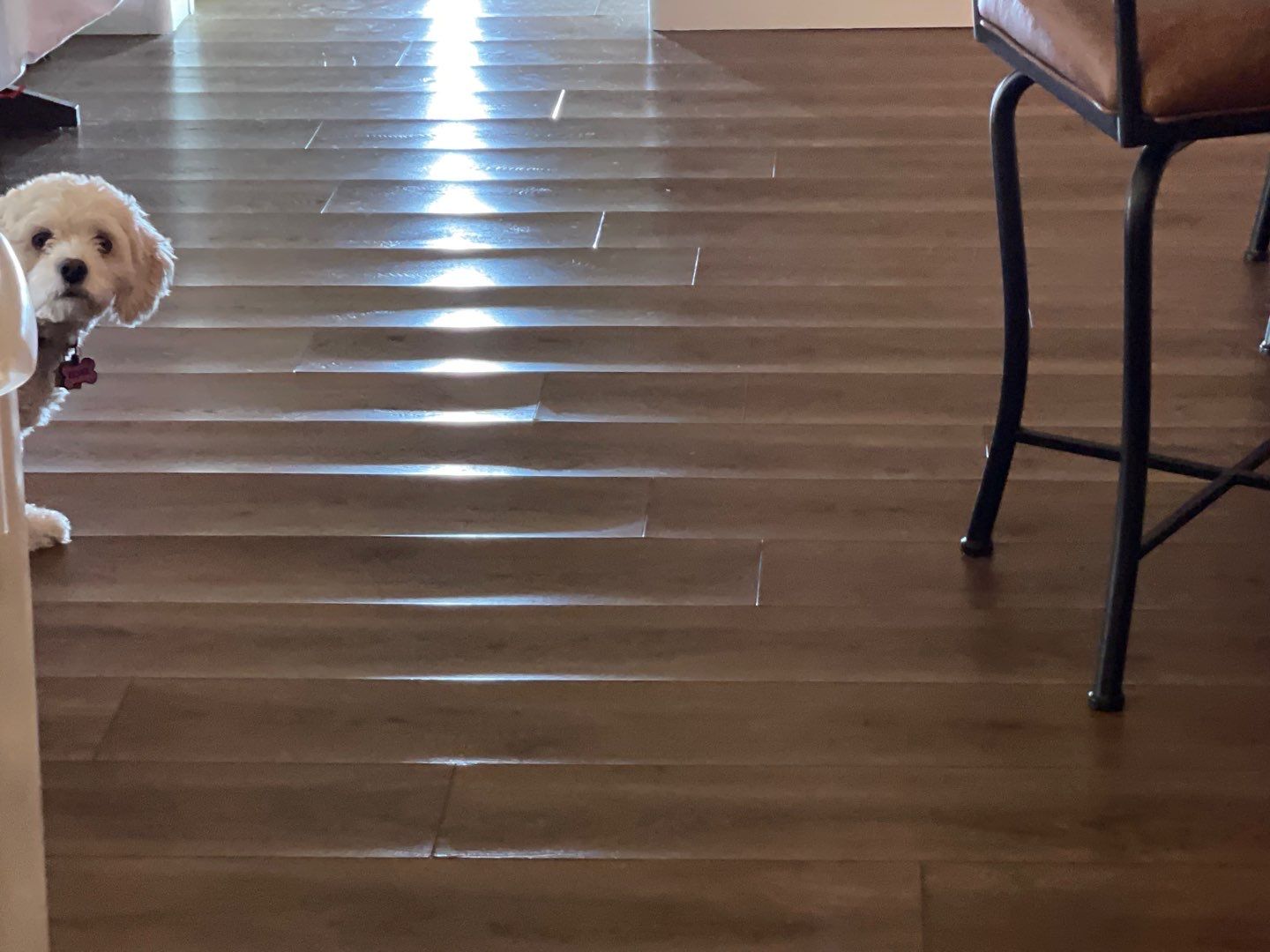
Cross-Machine Direction (Width) Shading / Texture Variation (Resilient Sheet Vinyl)
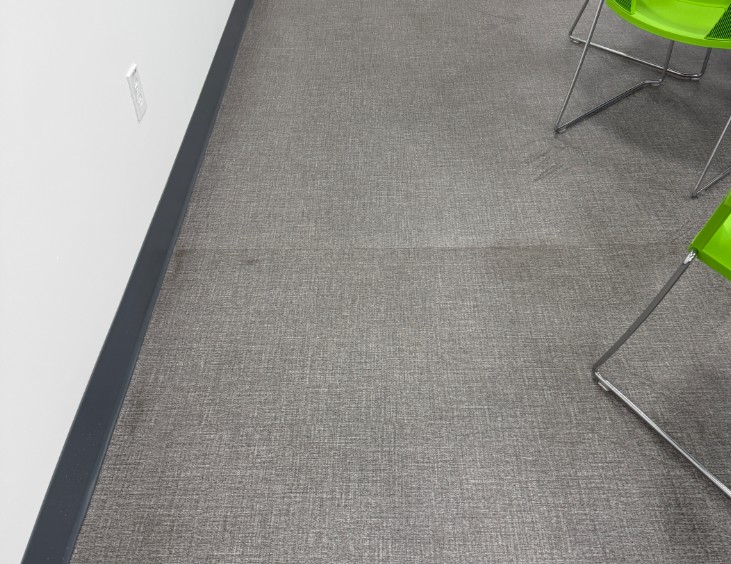
Sheet Shrinkage / Seam Opening (Resilient Sheet Flooring)
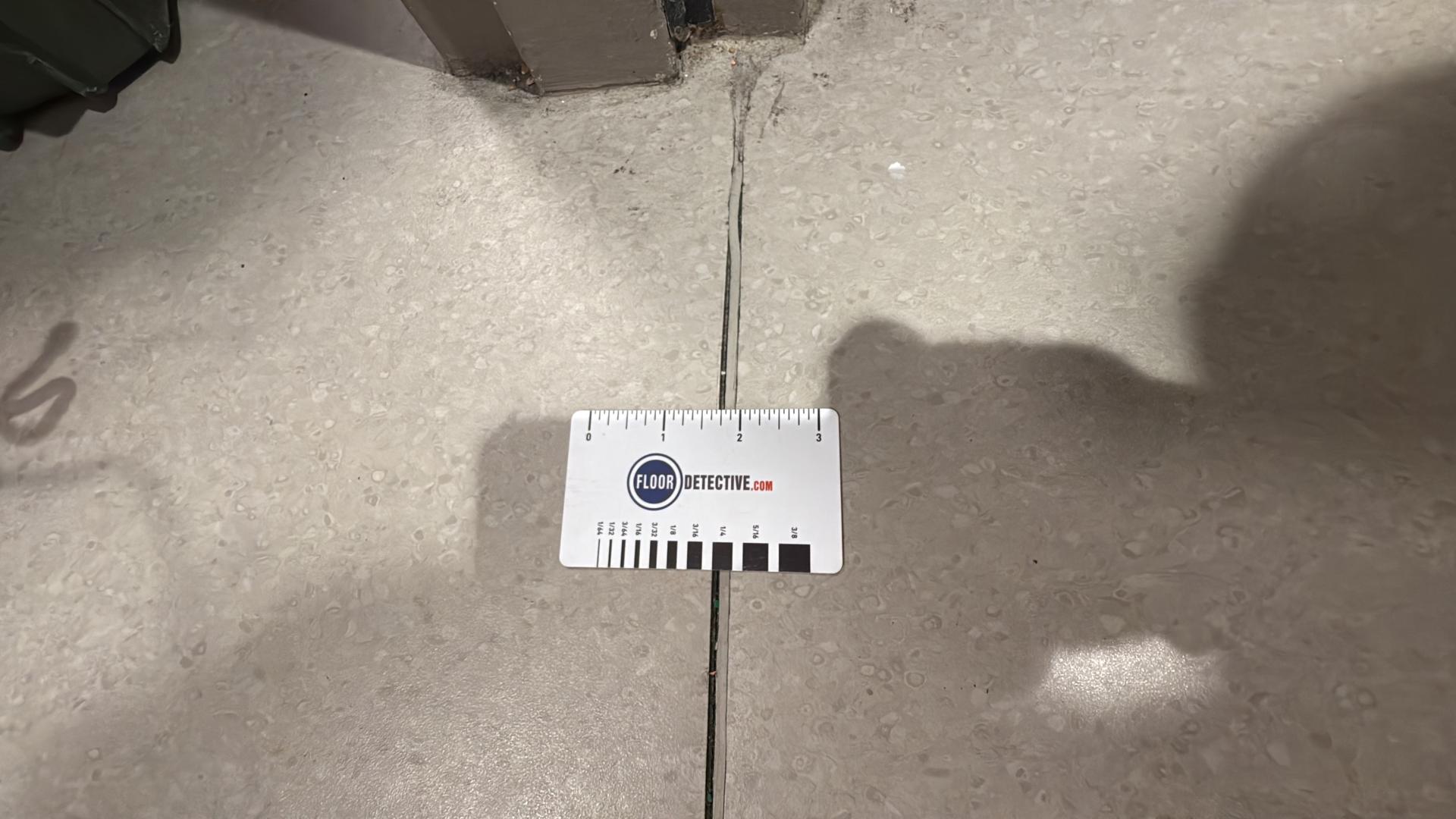
Heat Weld Seam Failure (Resilient Sheet Flooring)
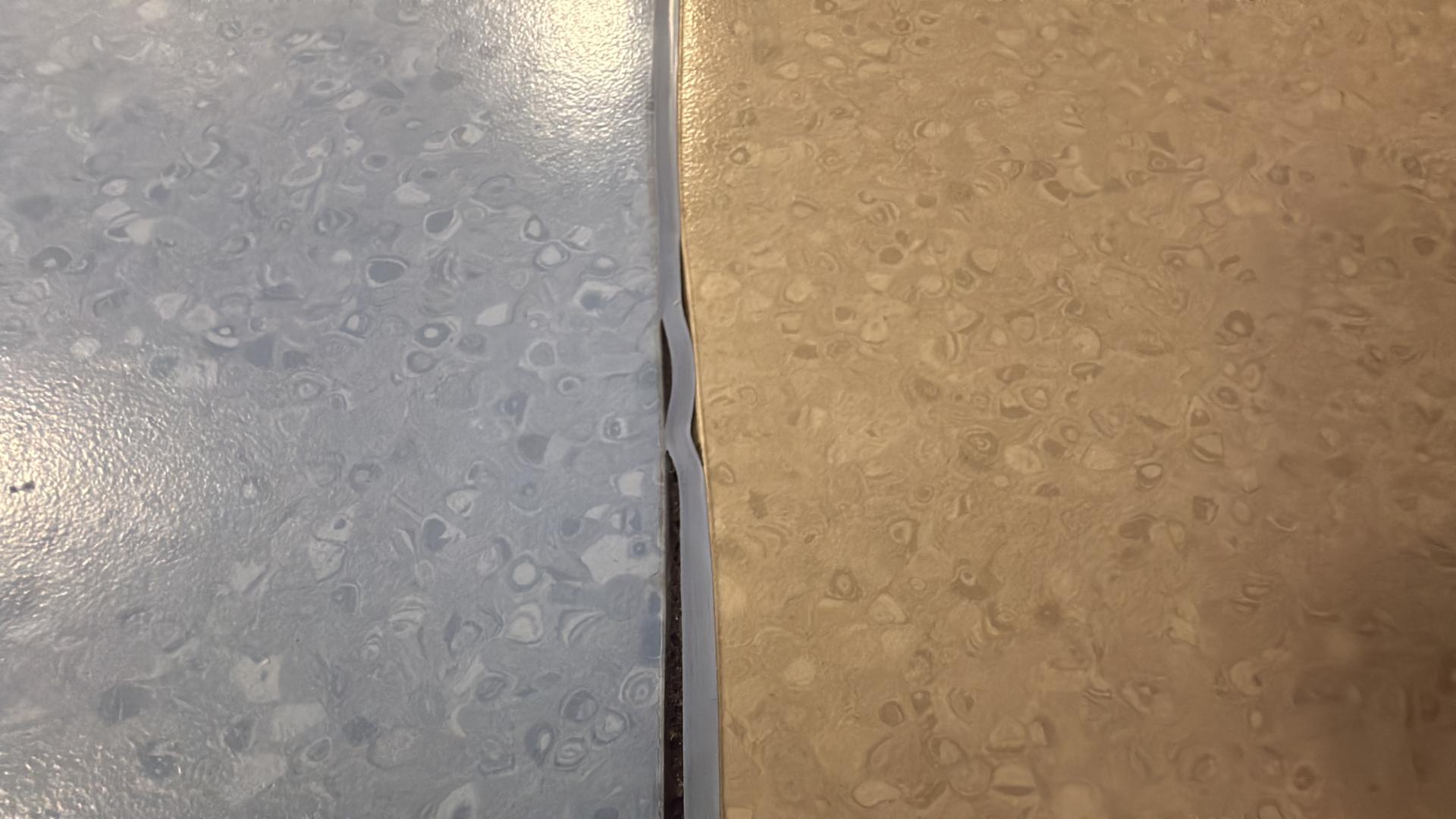
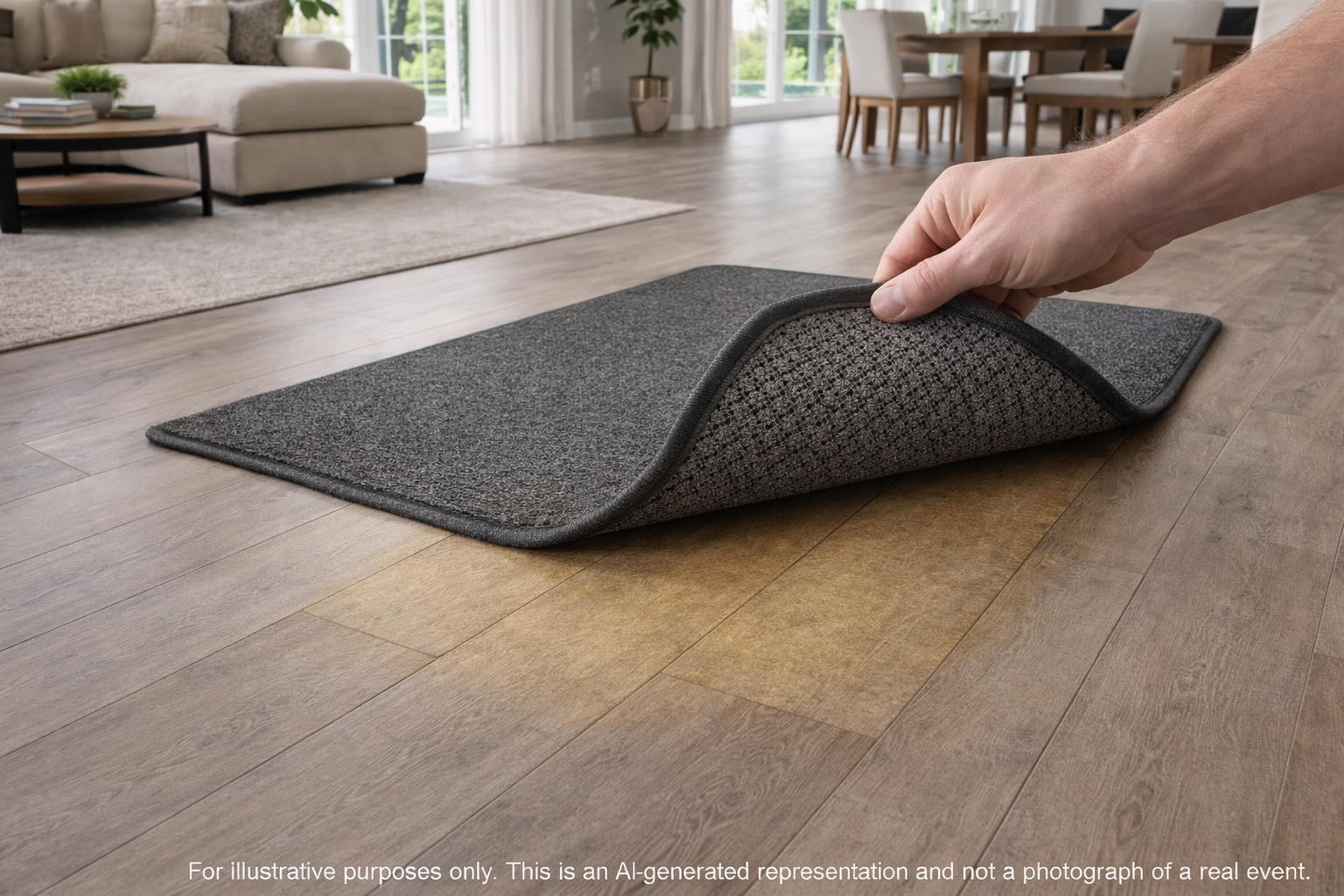
Yellowing / Discoloration (LVP / SPC / WPC)
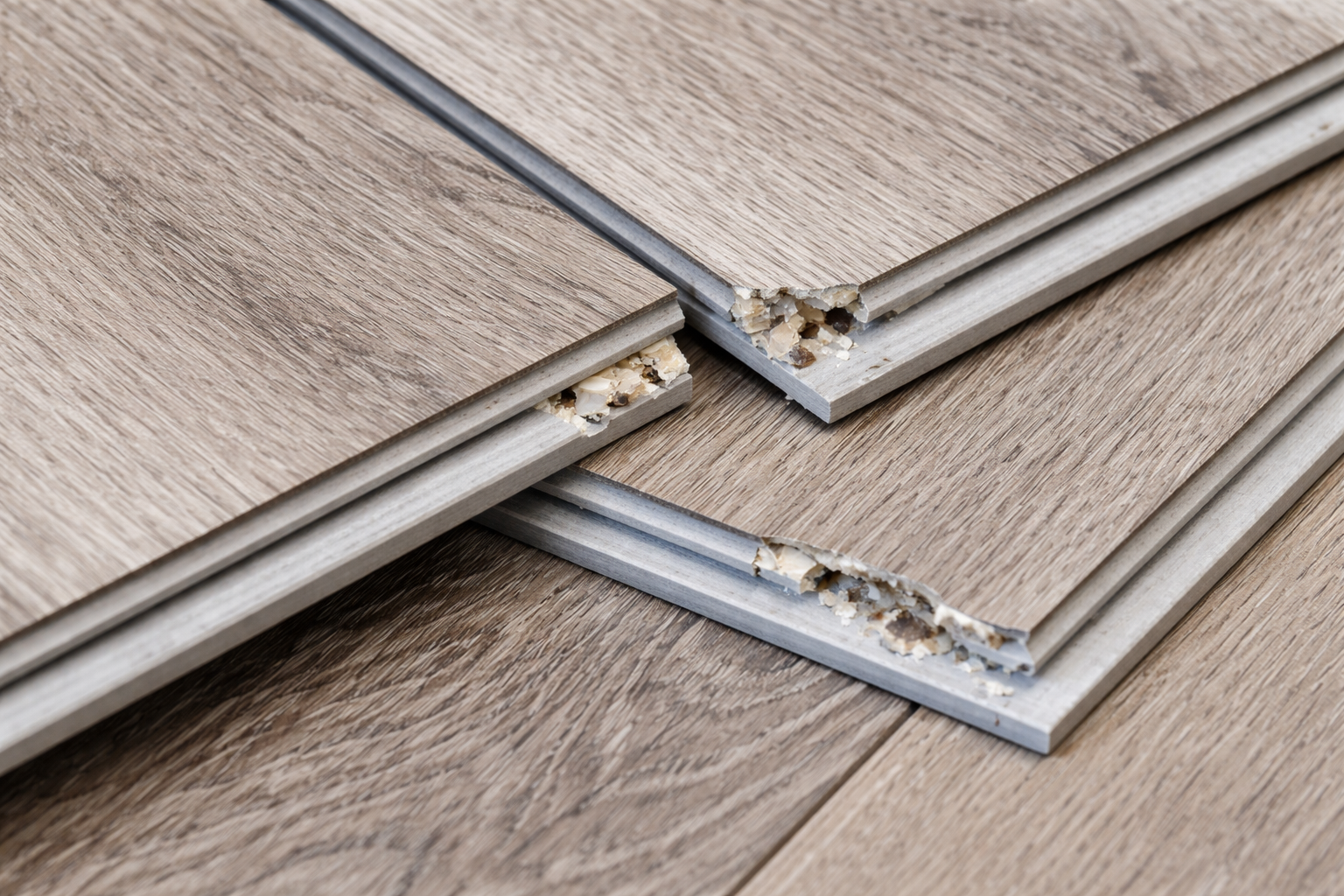
Broken Locking Profiles / Mechanical Joint Compromise (Resilient Plank)
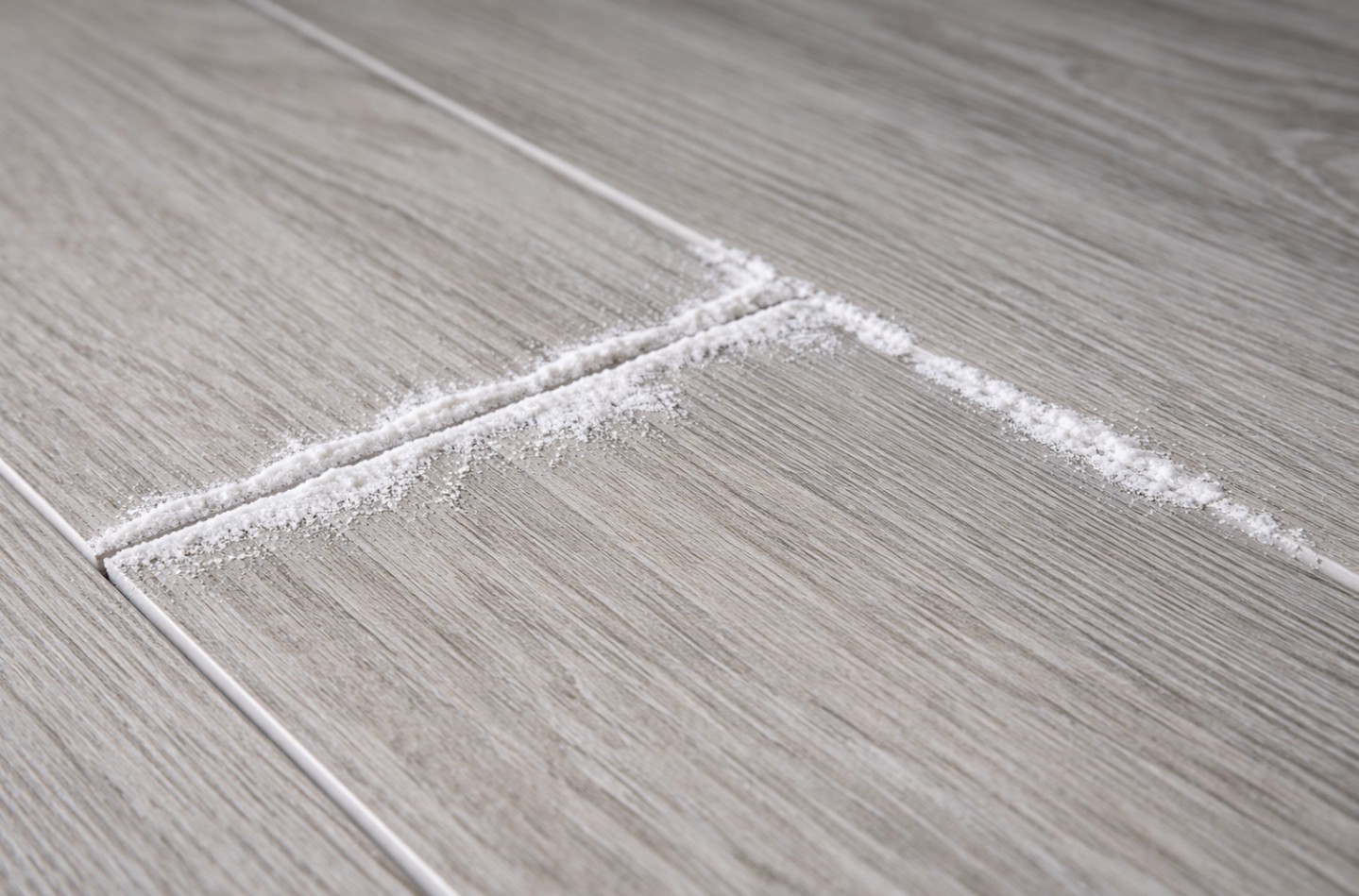
Efflorescence-Like Mineral Migration at LVT/SPC Joints
Blistering / Surface Blisters (SPC Flooring)

Cracking Over Existing Substrates (LVT)
